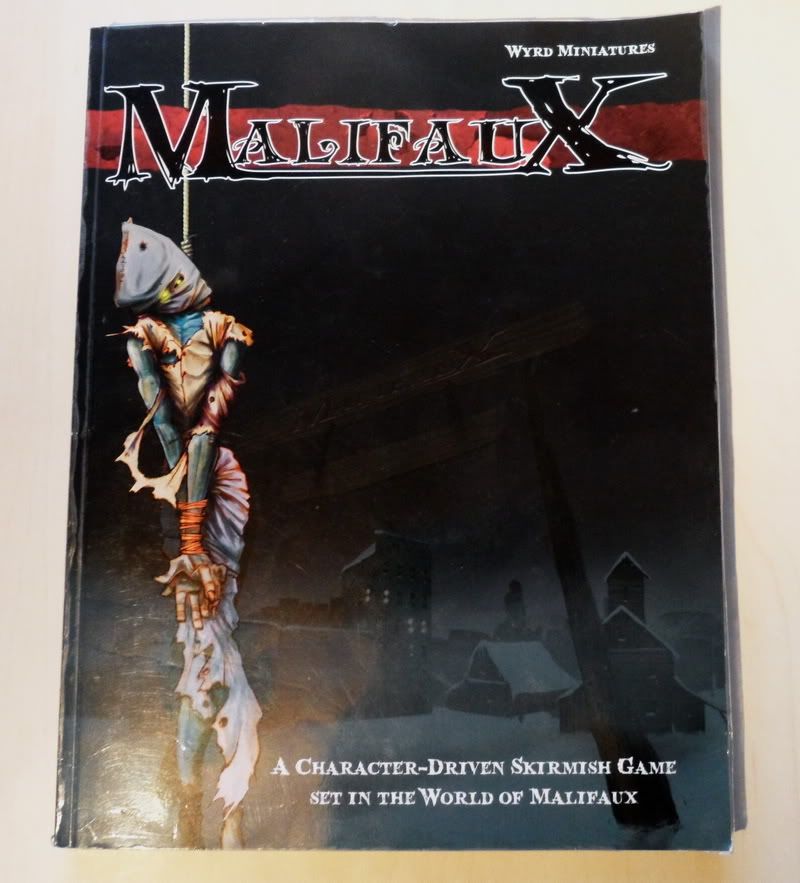

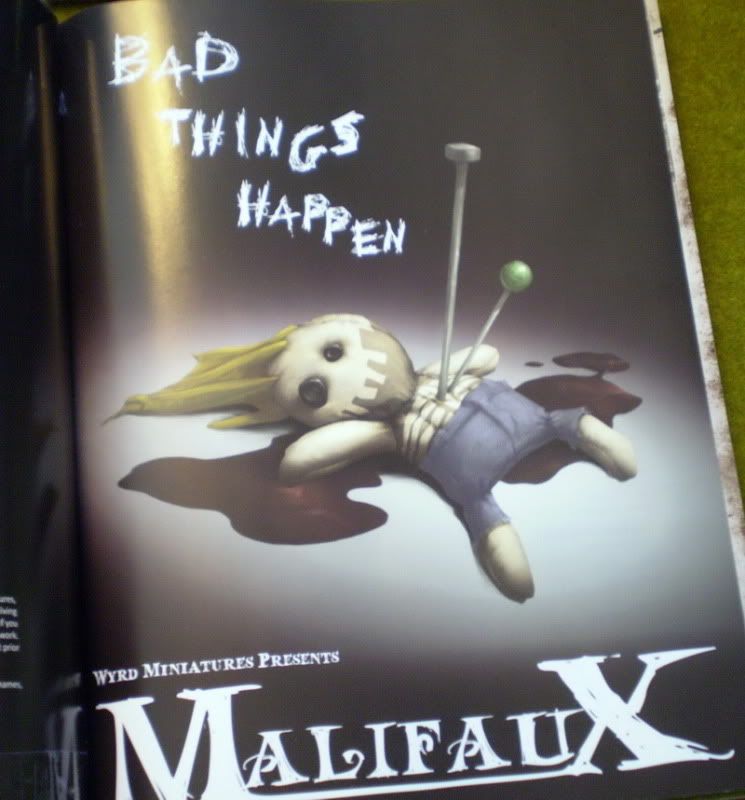
 Malifaux is a bit hard to explain when it comes to the setting of the game. I guess I would say it is a mix of Age of industrialism/Victorian horror/Wild West/Tim Burton’esque madness. What makes the game unique is the mix of styles but mostly the backbone of the rules that use cards instead of dice. Use of cards may not be exclusive to Malifaux, but I think the way it is handled in Malifaux is unique.
This game is the most complex skirmish game in my collection, and explaining it coherently requires a bit of work – I hope this rule review will be as clear and understandable as I wish. Feel free to ask questions in the comment field if you want to know more about something specific.
Story and factions
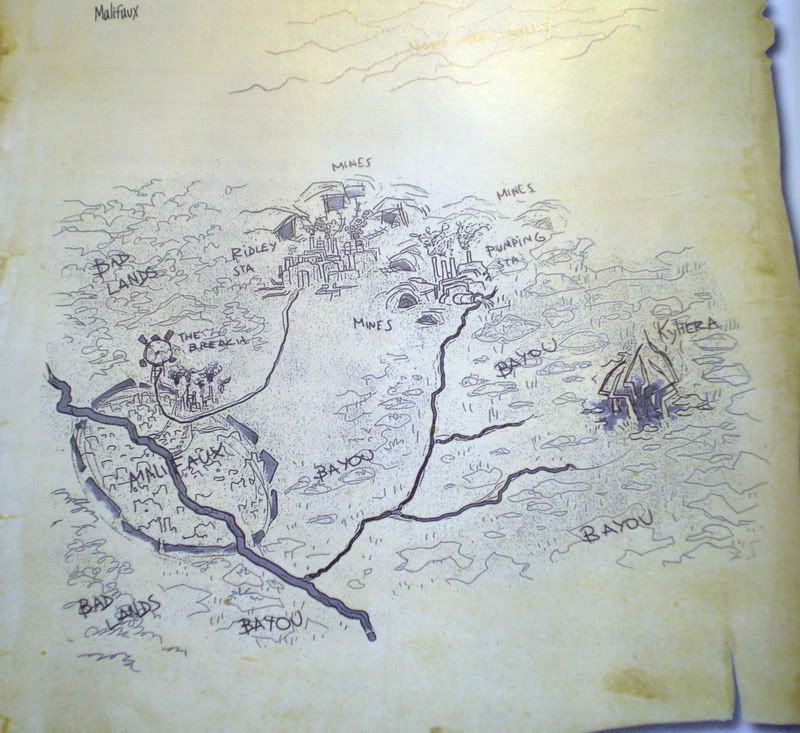
The story of the game is probably best read by yourself to fully understand and appreciate it. But in short Malifaux is a town inside a alternative universe which can be reached through a portal from earth. Everything revolves around the so called “soul stones”, precious gems filled with the trapped souls of dead people – the stones can be used to once again cast magic, something that has been impossible for a long time. Earth sends in people to exploit the soul stone resources of the alternative universe and much of the game is about various factions wrestling for control over Malifaux and the soulstone trade.
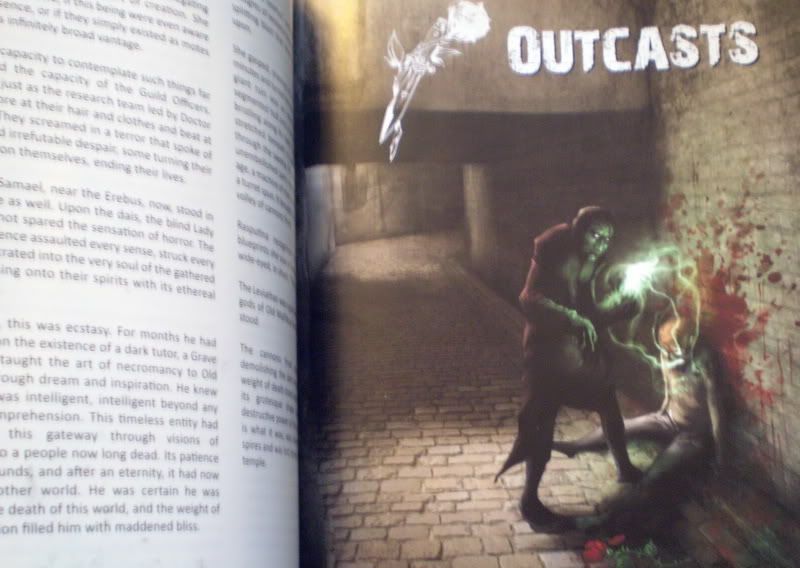
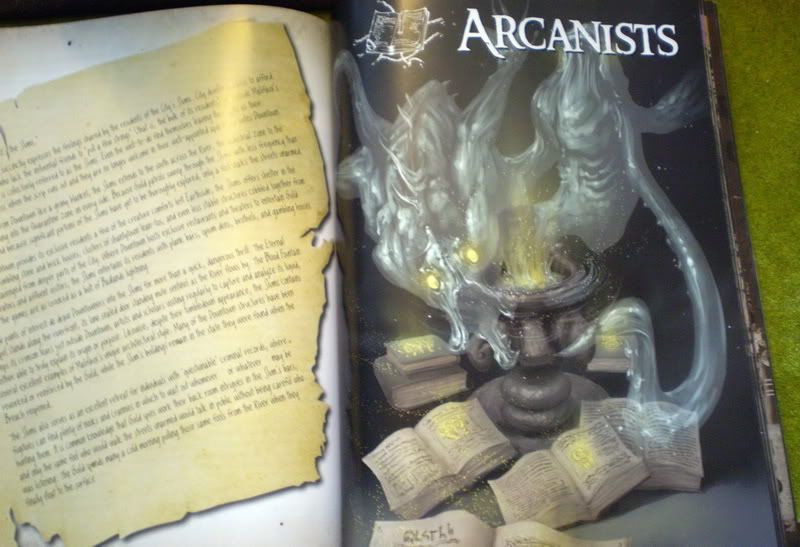
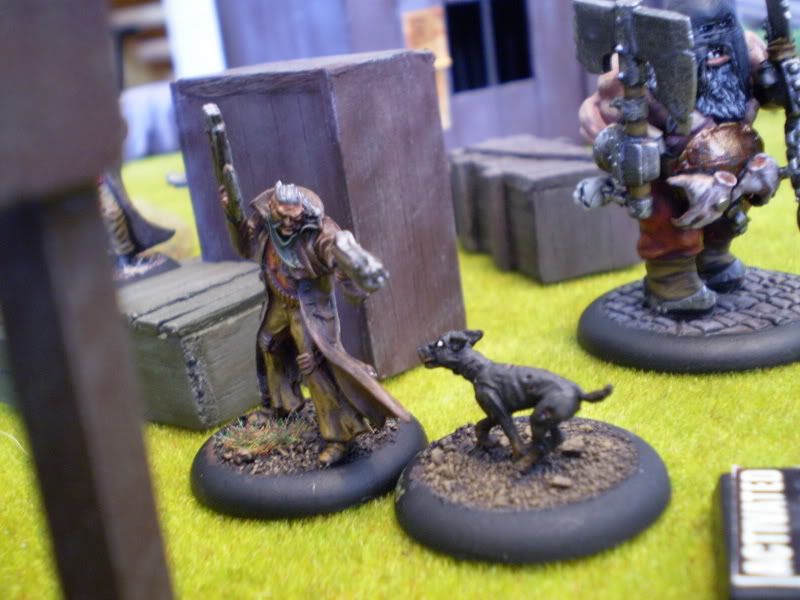
The factions are made up of “the Guild”, the lawmen of Malifaux and the ones controlling the soul stone trade. The Guild has a very strong Western theme to them and rely on shooting a lot. The “Arcanist” faction are magicians that can summon beasts and weird monsters to their aid. Arcanist rely a lot on magic to get the job done. “Ressurrectionists” that are the graverobbing necromancers of the game; they rely strongly on raising dead and overwhelming the enemy with their numbers. The “Neverborn” are demons resident demons of the Malifaux world, they want to reclaim the world from the humans. This faction is made up of strange monsters, demons, nightmares and really crazy stuff. Neverborn use a mix of close combat and magic. Then the “Outcasts”, as the name suggest they belong to no one. They can be played as a faction of their own, or you can hire members of this faction into your crews for an additional cost. The units of the Outcast faction cover all categories, from shooting to casting strong spells.
The Fate deck and action points

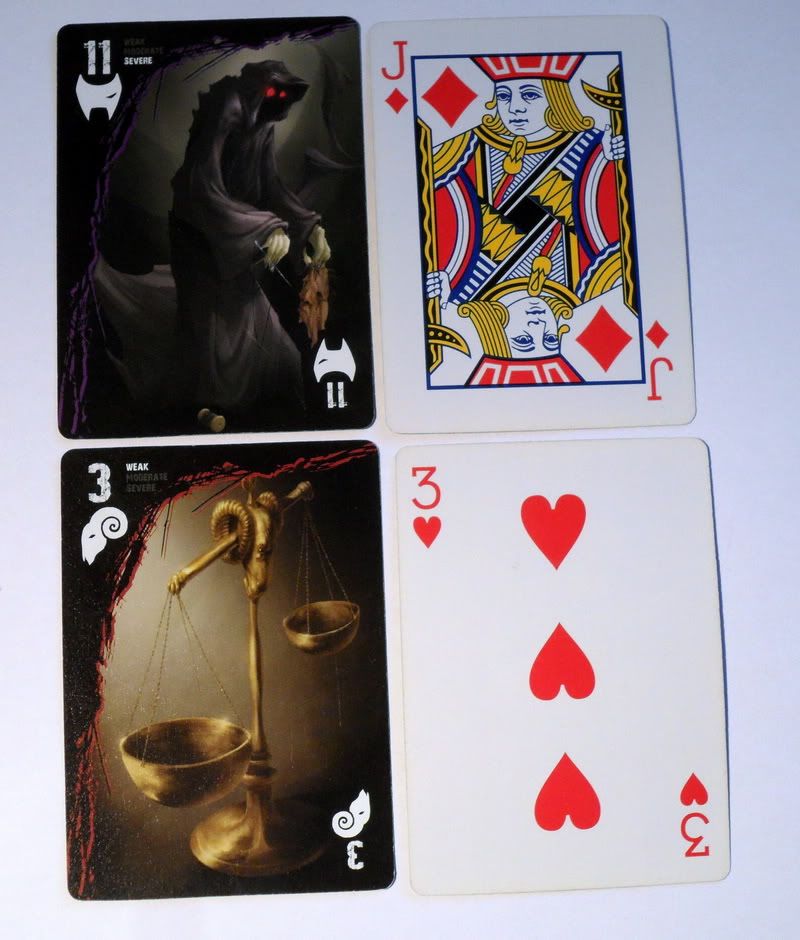
 Malifaux uses a “Fate Deck” instead of dice. The Fate deck is a deck of 54 cards including 2 jokers, and you can use a regular deck of playing cards as the rulebook has a translation of “regular suits” into “Malifaux suits”. The cards have a value of 1-13, Black Joker that is worth 0 and Red Joker that is worth 14. Both jokers also have special rules to that aren’t necessary to explain at this point. Suffice to say Red Joker is the best cards you can get, and Black Joker is the worst for multiple reasons.
Each player has his own Fate Deck, you shuffle the cards, and then at the start of each game turn you draw a “hand” of 6 cards.
Each model in the game, per default, has 2 actions that can be spent on movement/shooting/casting spells/charging/close combat. Each model also has a set stat line so there are no unit upgrades or any customization.
When a unit wishes to perform any action beyond movement/charge it is called a “duel”. What happens is you attack with one statline, and the opponent has to defend with the appropriate statline himself. This happens simultaneously and includes drawing cards from the fate deck and combining the card value with each models set statline.
If you like to cast a spell at an enemy, you combine your Casting value with a card drawn from the fate deck, the opponent combines his Willpower stat with a card from the fate deck. Whoever draws the highest wins the duel. If the defender wins, the spell has no has no effect. If the attacker scores equal to the defenders defense or higher – the attacker get to draw a new card from the fate deck and see what sort of damage is inflicted (weak/moderate/severe)
Remember that hand of 6 cards you draw at the start of each turn? That is your “cheat fate” hand. Should you, during a duel, draw a card that you don’t want to use for one reason or another then you are free to “cheat fate” by discarding the card you drew and replace it with a card from your hand.
The opponent is free to counter that with a cheat fate swap of cards of his own. This gives the game a bit of player control. Cheating fate is best reserved for when you really need to pull off an attack or defense move, or want to do something specific and want to be 100% sure you will succeed.
Advanced Fate Deck rules


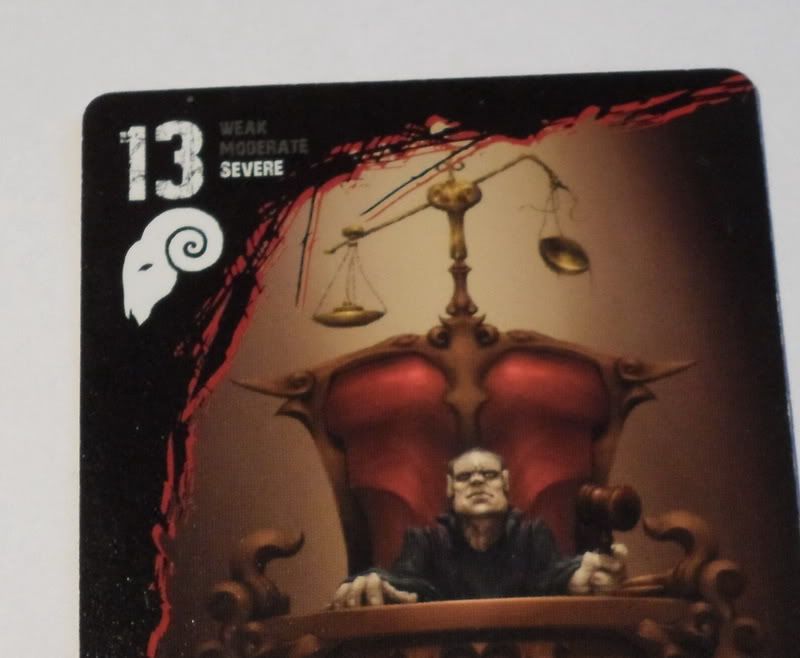
 “That sounds interesting” you might think, it is a bit more complicated than that. Beside each card having a value of 1-13, which is combined with your chosen stat, the cards are divided into 4 suits. And 3 categories of damage.
 Each faction in the game has their own “suit”, for instance the Resurrectionist faction has “Crows”/Spades as their core suit. This means that whenever they want to pull off an attack and they draw a Crow/Spade they get a bonus to their action. Some high end spells always require a high value to be cast AND the correct suit as well. This makes having a few good cards on your hand worth saving for those particular actions.
Furthermore, each spell and weapon in this game has a set damage value, divided into “weak/moderate/severe” damage. So once you win a duel, you calculate how many cards you will draw from the fate deck as a result of winning and whether you will use the lowest or the highest card drawn. You flip the cards and look at their value to see how much damage you inflicted.
Composition of the crews
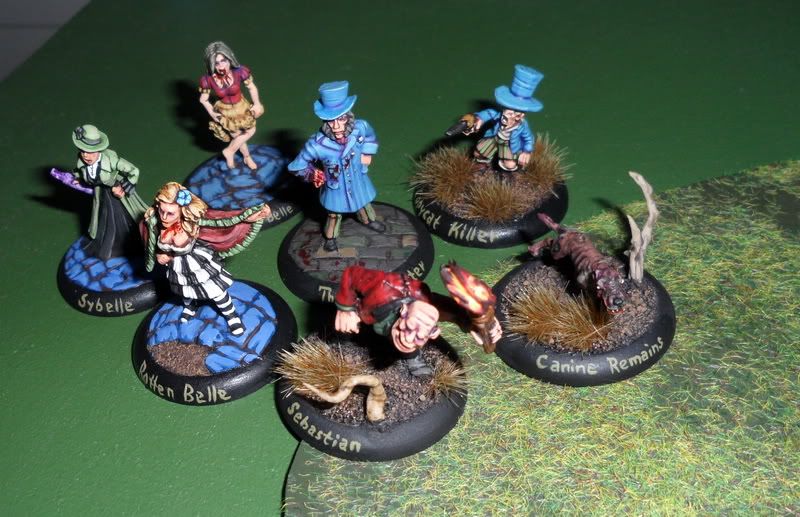
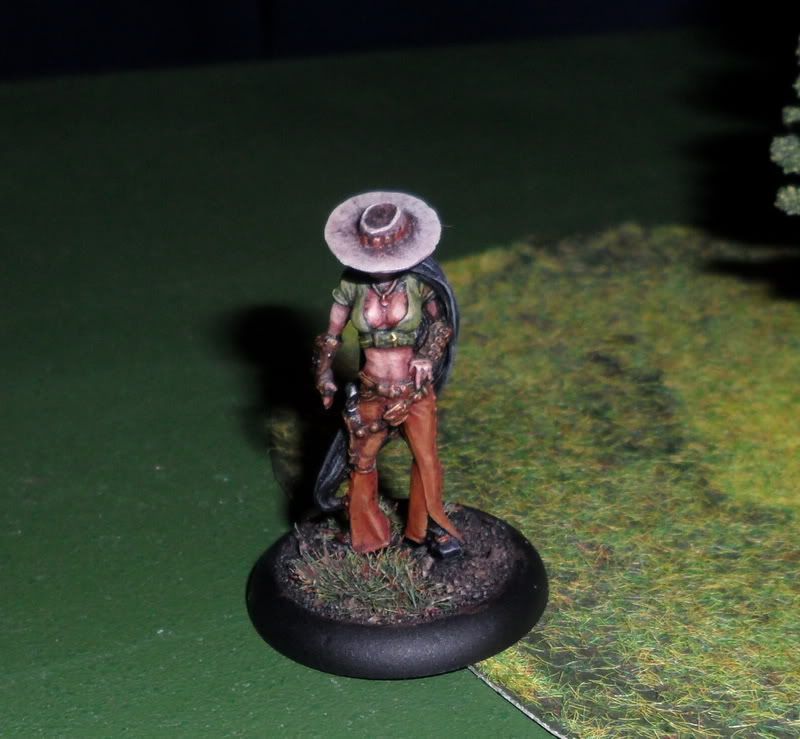 When you play this game, you decide upon how many “Soul stones” you will play, Soul Stones is the same as “points” in other games. 35 is the regular number and makes for a game with enough models to give you diversity and choices but still being restrictive enough to keep you from buying every cool and dangerous unit from your army list.
Each faction has a number of “Masters” and “minions”. Your crew is required to include 1 master, this model is always added for free – and often brings a few personal soul stones (more on that later). What you really pay for are the minions accompanying your master.
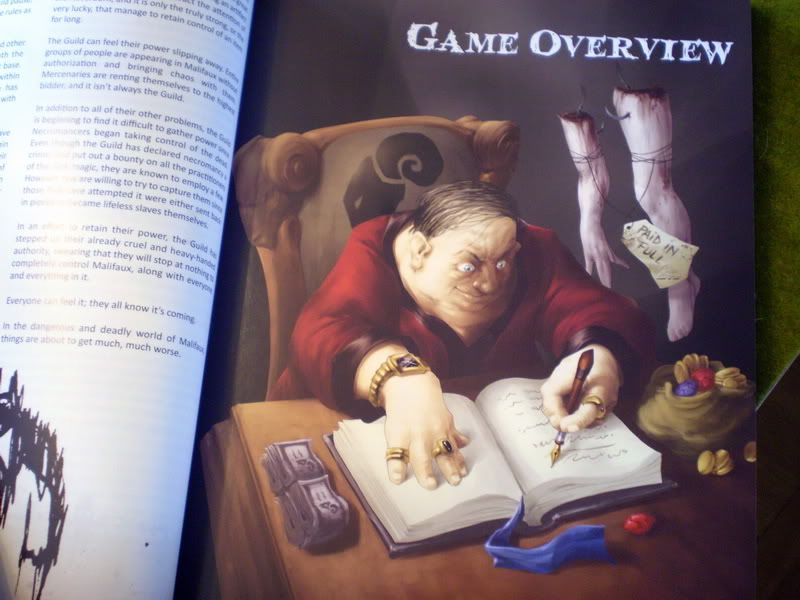 You are free to spend all 35 soul stones on units – or save a few soul stones and keep them in reserve. Minions are divided into a few groups, like “insignificant”, “unique characters”, “rare” and just regular minions.
 Each master has a few minions and unique characters that work better with him than any of the other masters – allowing the minions and the master to use their skills to boost each other. Crews tend to be made up of a handful to a dozen units.
Using Soul Stones
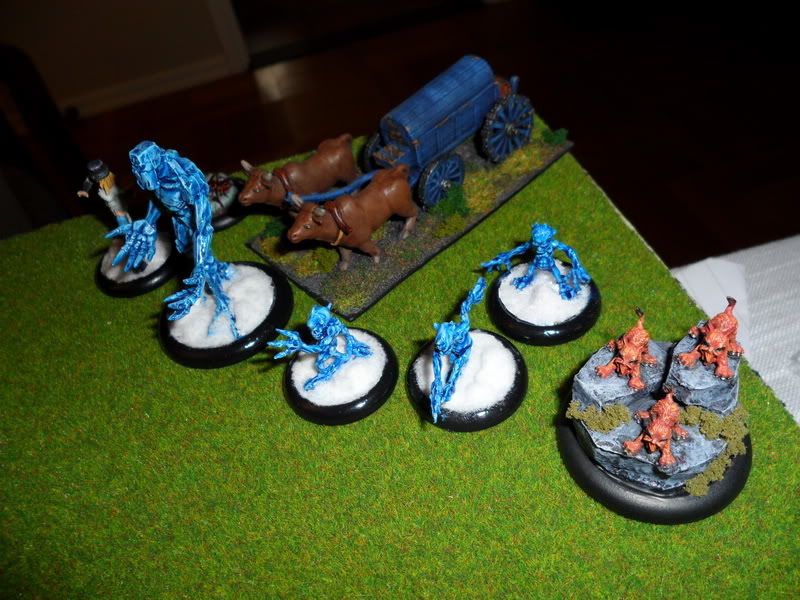
Soul Stones are not only the currency for which you buy your minions, the masters of this game can use Soul Stones to boost their combat/casting abilities further. Only masters and models that have the “use soulstone” can do the following and most basic uses of soul stones within the game “Pay 1 soul stone to Re-flip initiative” and “Pay one soul stone to add a second card from the fate deck to the one you had drawn”.
The second ability is a advanced form of “Cheat fate”, but you aren’t allowed to use cards from your hand when doing this, so it can become a bit of a gamble. It can also turn out to be a huge success. Say that your statline for casting spells and the fate deck card combines to 17 AND you pay one soulstone to draw one additional card and combine the total value of your attack to 25 – no enemy will be able to resist that attack.
Gameplay – Encounters and schemes
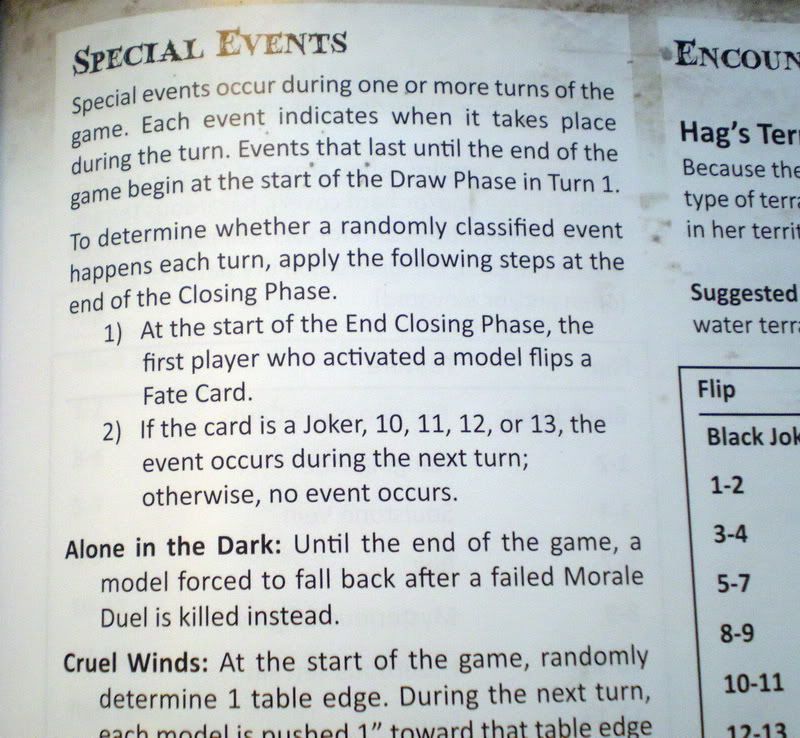 Another thing that is pretty cool with this game is the “encounter” and “scheme” mechanic. The encounters is the “main mission” of a crew and is generated randomly from the book. Each player will most likely end up with a completely different mission. The schemes are additional victory conditions picked by the players from a list. The schemes can be picked and kept secret yearning a lower amount of victory points if completed – or revealed to the opponent and double their worth.
 So while your main mission might be to kill the master of the enemy crew – the opponents main mission might be to get as many units into your deployment zone as possible and keep your units from crossing into his deployment zone. Your schemes might be to kill a specific model in the enemy crew and to sabotage a building in the enemy half of the table – the enemy could be out to kill at least as many models of your crew as you killed of his and to bodyguard a master or henchmen model in his crew.
As you see Malifaux is a very asymmetrical game when it comes to both playing mechanics and objectives in missions. But it works remarkably well.
Additional cool stuff
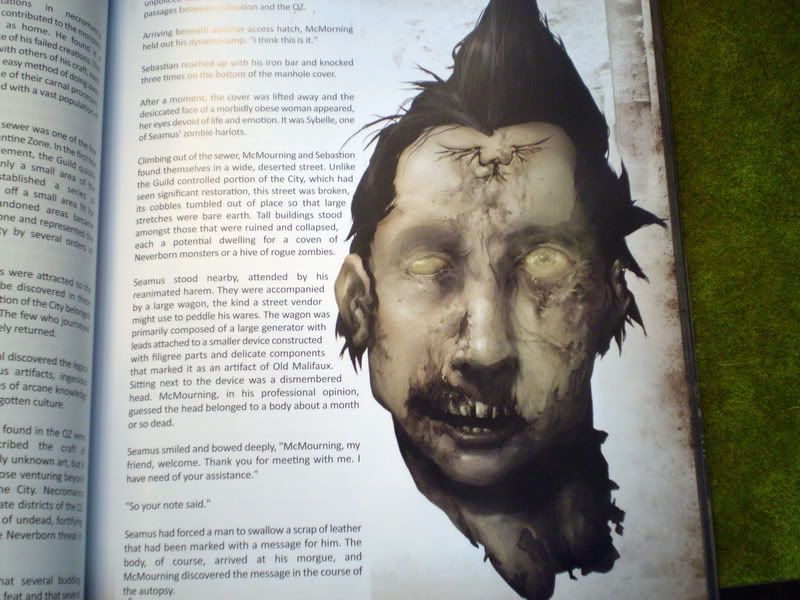
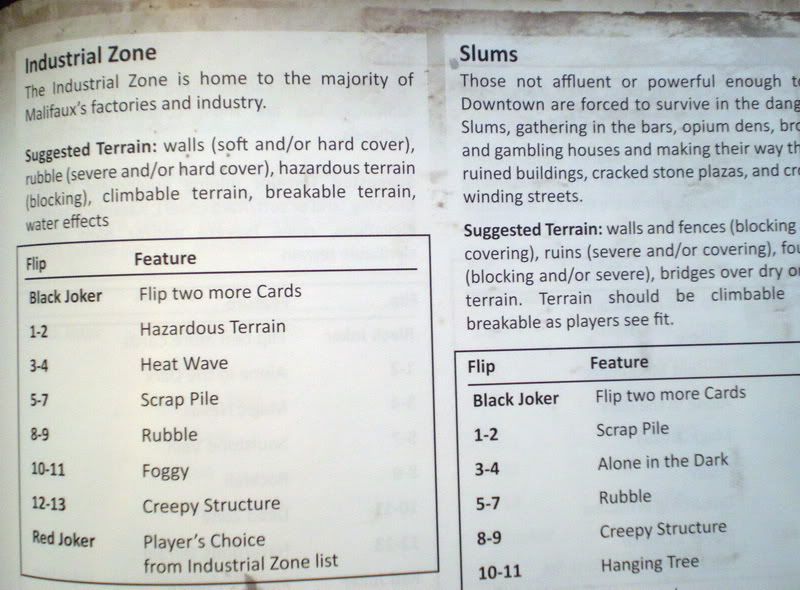
 The book has a list of locations from the Malifaux world that you can generate, from fighting in the Malifaux outskirts to trespassing into the “hags territory”. Each such location comes with additional location specific events (also generated form a list), it could be hard winds, a magical structure, a creepy old building etc. This throws in another element of uncertainty and unpredictability into the crazy skirmish, and may affect your battleplans to various extent. You don’t have to use these additional location events – but they are great fun.
Each unit in the book has a lot of options, from close combat attacks to casting spells, each unit is versatile to some extent. Learning to use each unit of your faction, how to combine that units powers with a specific master and vice versa is a lot of fun – but takes at least 5-6 games before you get the hang of it and start to really unlock the potential of your particular faction. Playing one faction does not get boring, as the amount of units, and unit skills is so numerous that there are plenty of combinations to keep you interested for a very long while.
........................
However, I must say that the rulebook is frustrating at times. The layout mixes backstories with rule sections making the search of a particular rule tedious. The rulebook also has an extensive combined errata+FAQ document which can cause you headache when you first see it. The impact of that compendium isn’t that hard if you only play one faction – I don’t have to worry about rule changes to Arcanist units when I only play Resurrectionists.
The rules are also quite advanced compared to an easy game of dice rolling such as Warhammer 40k. But once you learn how it works and how to play your faction the game is a blast.
The expansion, “Rising Powers” has taken a different approach, and keeps rules and fluff apart in a well organized fashion. A review of Rising Powers will follow next week.
 You can get all models and rulebook/expansion book from GameManiacs or directly from Wyrd Games. Nothing stops you from playing with alternative models; the original models come with “unit cards” which are great for quick reference. You can also buy loose individual unit cards from Wyrd Games. The unit cards have all the errata applied to them and are 100% up to date.
 I would recommend to use a "real" fate deck, as it makes gameplay faster since you can instantly identify the suit, card value and amount of damage influcted. But at the same time I would recommend the "vanilla" fate deck over the "puppet deck". You can read about why here:
http://anatolisgameroom.blogspot.com/2010/10/malifaux-fate-deck-puppet-deck.html


No comments:
Post a Comment