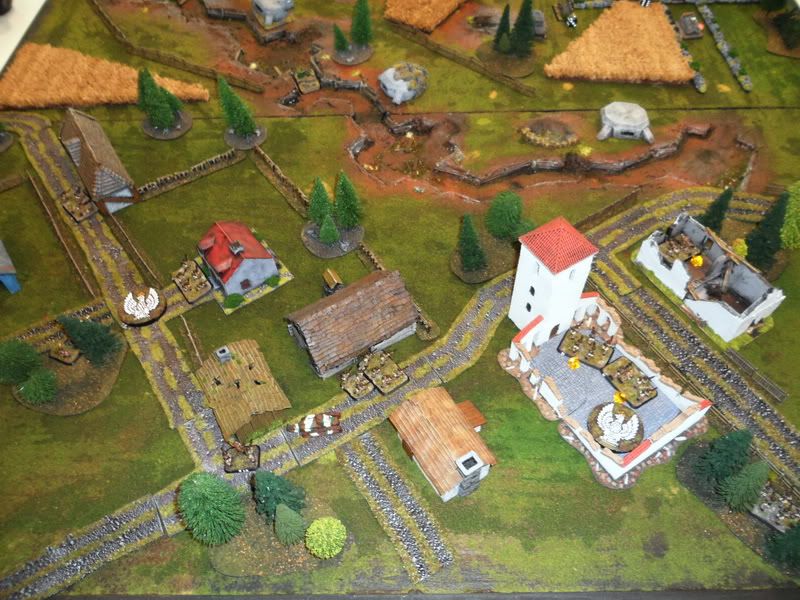
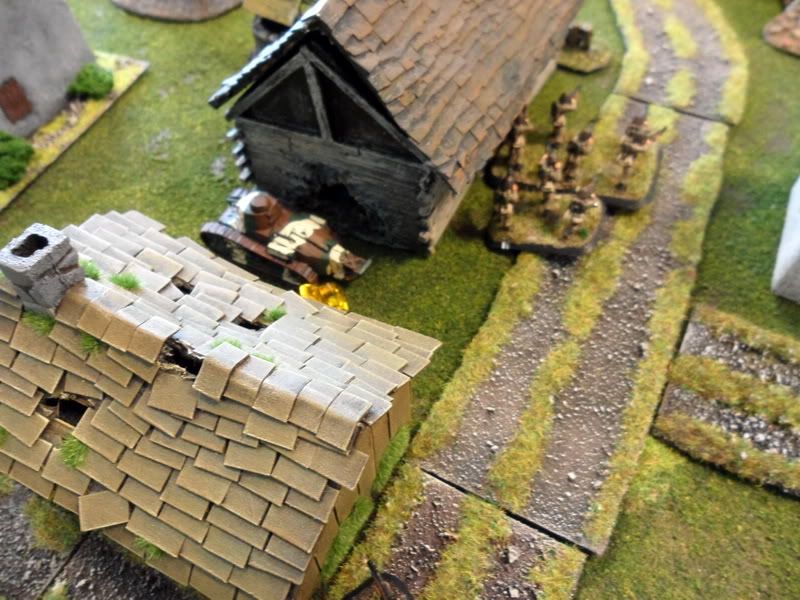
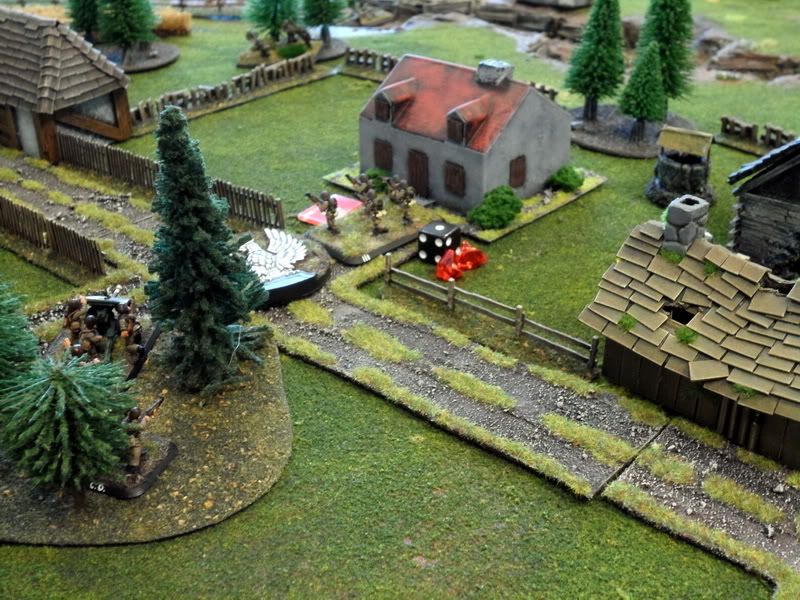
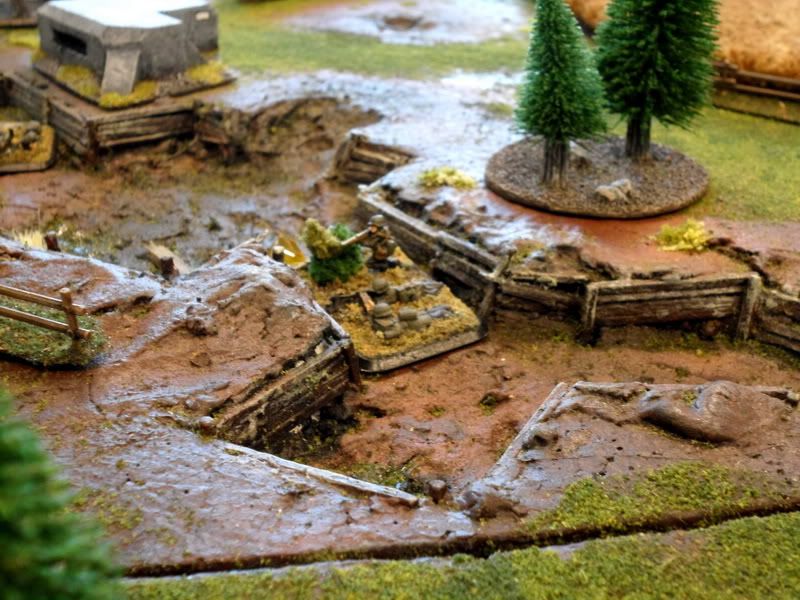
This review is based upon the core rules for Victory Decision.
Victory Decision is a set of rules written for WW2 gaming allowing players to play battles on large platoon scale with single or multibased miniatures. The rules adapt to multibased miniatures in a meaningful way instead of just counting the entire base as one model. The game offers everything you might want in a game played at this scale, called in artillery bombardments, squads of soldiers and single vehicles roaming the battlefield. The game uses single unit activation, so players take turn in activating units and resolving their actions independently rather than moving their entire force at once.
There is a certain degree of simplicity to the rules which make them flow extremely fast in a way that reminds me of my old days of playing WH40k (but don’t run off screaming in horror just yet!). The way the rules are written gives each unit a clear cut set of roles and possible actions each turn. There is a very basic game design here that makes it extremely easy to learn the basic rules. Let me just run down the basics of this game, I’ll try to explain each thing in more detail while doing so.
Players mainly use D6 with the occasional D10 thrown in to generate results (with modifiers and occasional re-rolls).

Everything is measured in inches, and pre-measuring is allowed. In case of single based miniatures you measure from center of base to center of base. Multibased miniatures measure from model to model.
Soldiers have but a few stats which you can easily memorize, those being:
Critical: What the enemy has to roll to score a critical hit on your soldier.
Hit: The unmodified required result that the enemy has to roll to hit your soldier.
Save: The unmodified result you have to roll to prevent getting killed.
Leadership: The leadership value of your soldier, also the required unit coherency to your leader.

Special: Special rules, like being a Medic, being able to infiltrate etc
Weapons have a similar amount of stats, those being:
U/T: Use per turn, tells you how many times you can fire a gun in one turn.
Range: Max range of your weapon.
Damage: How many and what kind of dice you roll to hit the enemy.

Features: Special rules such as high explosive blats.
Also, all infantry have a generic static statline describing their movement speed, amount of close combat attacks, health points and their reach when fighting close combat. These particular values are shared by all infantry units.

 Suppressing fire and unit morale
Each time a unit comes under fire it receives 1 suppressed marker. Having suppressed markers lowers the initiative of a unit when you try to activate it. Also, when the amount of suppressed markers reach the amount of models left in your unit – the unit becomes shaken and may start to flee away in panic from the source of fire. In subsequent turns you have to rally suppressed and shaken units by rolling equal to your unit leadership.
Turns and activation.This is the unique part of the game. Both players nominate 1 unit in their army which they want to activate. Both players then test their leadership value for the unit they want to activate to see which one seizes the initiative. The player who wins this roll gets to activate his unit and perform actions.
Players do this until all units have been activated, when one side is completely finished activating units – the remainder of the

opponents units may then activate without any required initiative roll.

What happens here is the representation of better trained units seizing the initiative and outwitting the enemy squads by being able to go first. However this does not render the opponents completely useless as they are still able to activate and fight – but will only have to do so later. This system also allows one side to activate multiple units in a row, potentially inflicting casualties and suppressed markers on the enemy units. No unit can be activated more than once per game. When all units have activated the turn ends.
Where you have two roughly equal forces I can see the initiative jumping back and forth between players. However, if you imagine a elite formation defending against an ill trained horde – chances are the defenders score solid blows before getting hit themselves.

 Actions
All infantry units have 3 action points which they can spend on the following actions:
Assault
Close combat
Concentrate fire
Hide
Infiltrate
Move
Regroup
Shoot
Spot
Take cover
You are free to spend you action points as you see fit. Spending all 3 on movement or 1 action point on movement, 1 action point to concentrate fire and your final 1 action point to fire with your guns.


There are several additional special rules for specific units such as medics, engineers, fire teams, command squads, individual models, recon units, tank hunters and so on. Each infantry squad that you buy comes with a specific additional rule telling you what their specialty may be. Command teams may for instance

re-activate friendly un-shaken units by spending their own action points. Infiltrating units may deploy deeper onto the table. Untrained troops are really bad at making use of cover and will not receive as good a cover bonus as they should etc.
There are flamethrowers, artillery strikes, high explosive shells and mortars included in the rules as well as your expected plethora of small arms and machine guns specific for each nation during WW2.
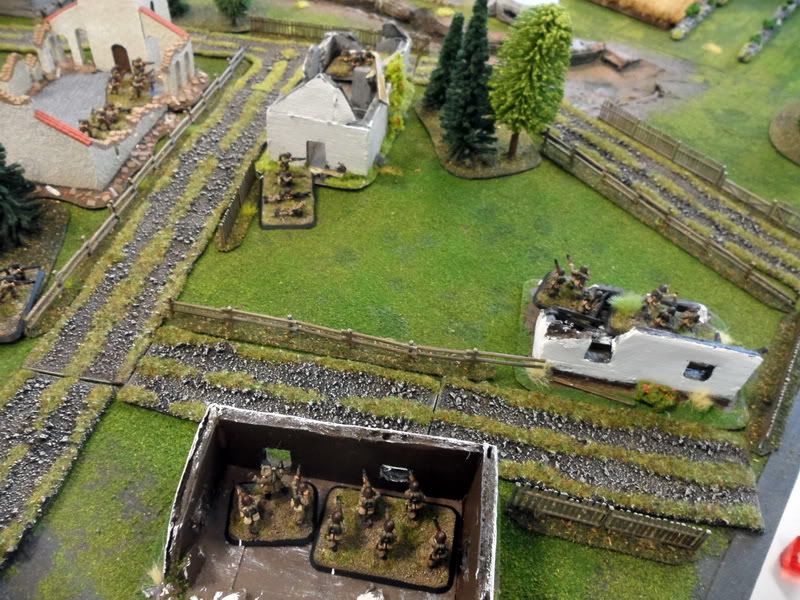
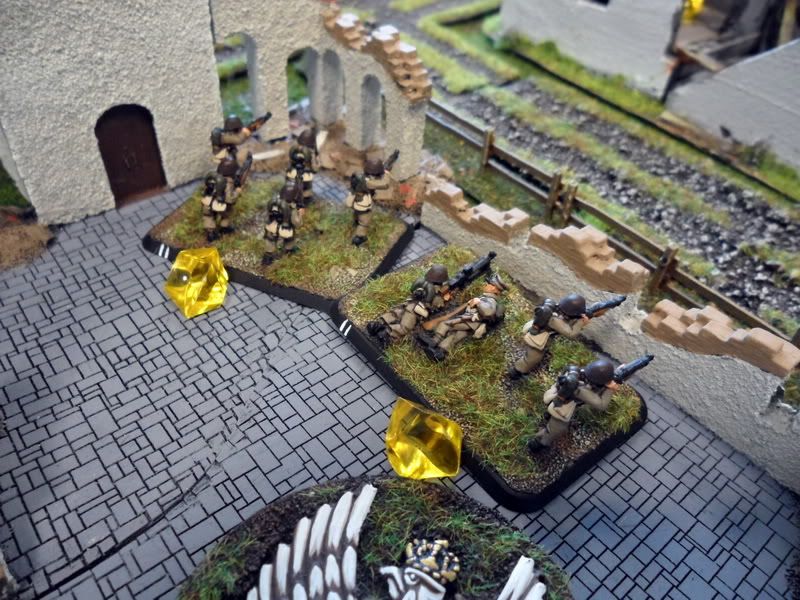
Multi based miniatures also have 1 single wound, but since the base may contain several soldiers you have to keep track of the losses somehow. They still act in a very similar way when they fire their guns and assault other units – but the main tradeoff is their increased vulnerability to blast templates due to their tightly packed unit composition. In those cases when multibased units are hit, you don’t count the base when checking for casualties , but place the blast template over the unit and check how many soldiers are directly under it and only count those as hit.
 Vehicles
Vehicles are mighty beasts, sporting a main gun and several machineguns. To balance things up a little, vehicles only have 2 action points. These can be spent on:
Close combat
Move (movement rate depends on wheel/halftrack/tracked type of vehicle)
Shoot
Concentrate fire
Spot

Vehicles like infantry have a few stats of their own. They have front/side/rear armor Save values telling you what you need to roll when hit in a specific area to avoid being knocked out. Likewise, the chance to score a critical hit increases when you target thinner rear armor sections rather than shooting straight at the front armor.
 Actual gameplay
So I’ve described the various actions and roughly what you can do with infantry and vehicles. How the game actually plays is a fast paced flow of activations and generating results. The game mechanics have a few things baked together to speed things up further.
For instance you only roll to hit – and the enemy only rolls to save against being hit. If they fail their save they are dead, you don’t roll to wound. Furthermore, the “To hit” value is increased on vehicles making regular infantry weapons pretty much useless against armor since armor may require something like 8+ to hit and you have rifles firing D6’s. I think this is a clever and easy way to adjust the durability of vehicles. The “to hit” roll does not only symbolize actually being able to score a hit – but involves the bullet penetration and chance to wound/damage into one. This is why the game uses both D6 and D10. Anti tank weapons used by infantry, AT guns and main guns mounted on vehicles all use D10 and additional modifiers to make it easier for them to hit stuff – and also able to do potential damage to enemy armor.
Combine this with each unit having a number of actions, each weapon being able to fire multiple times each turn and you get a fast paced shooty WW2 game that is easy to get into and that does not bog down in lots of individual unit stats.
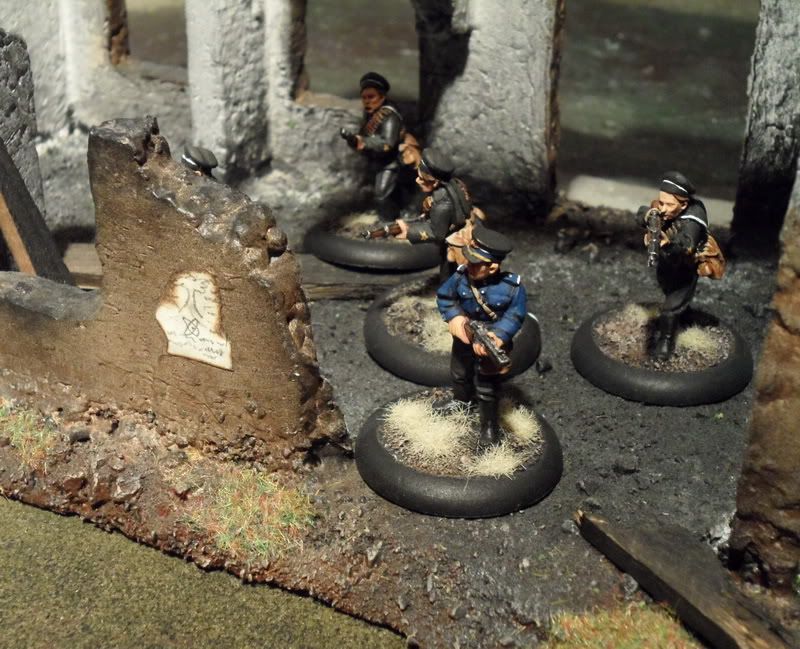
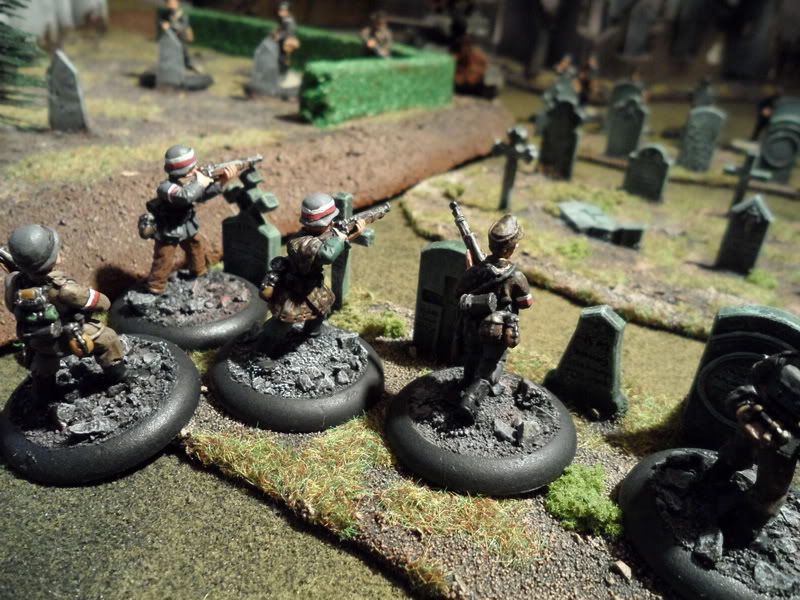
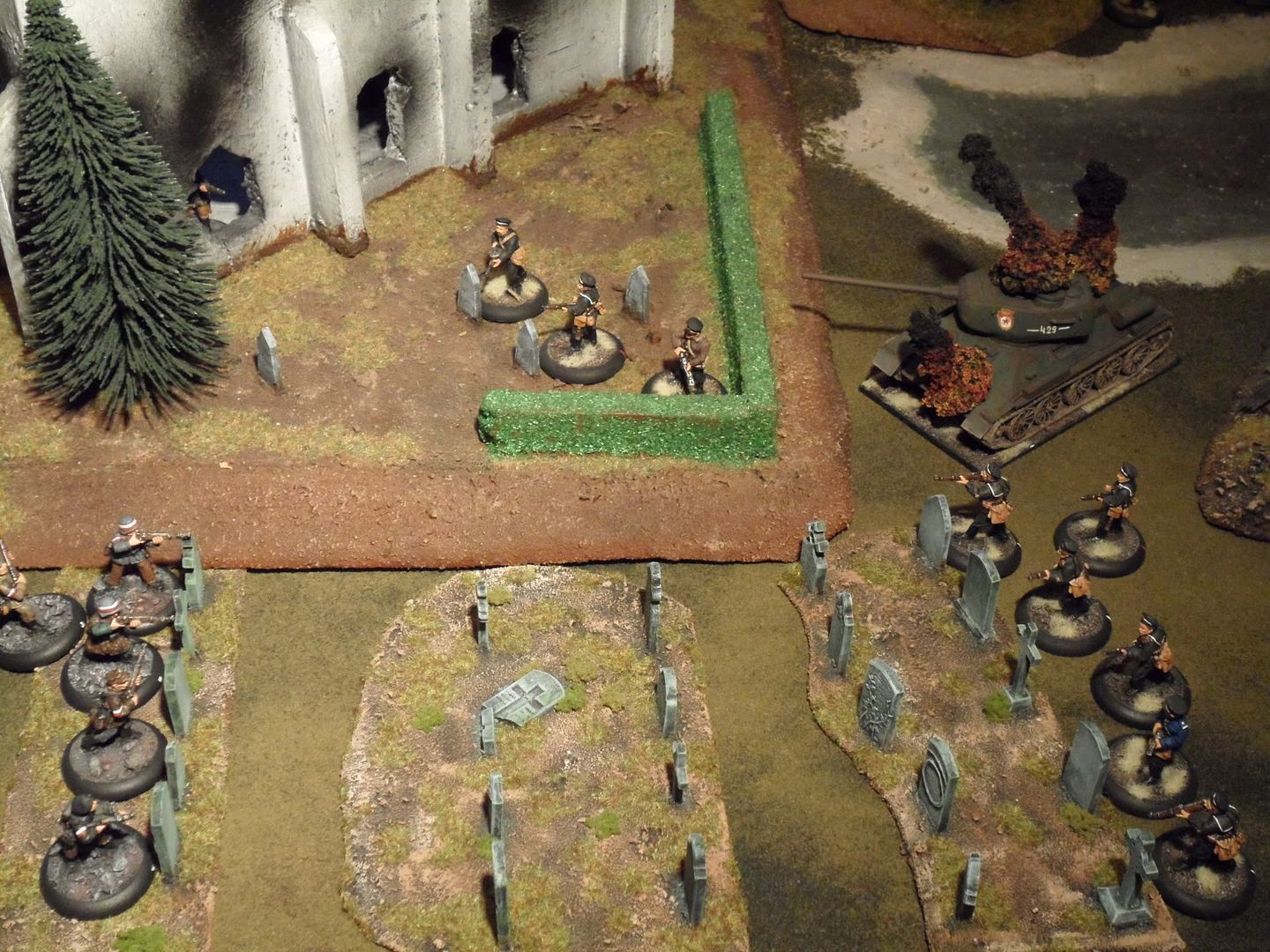
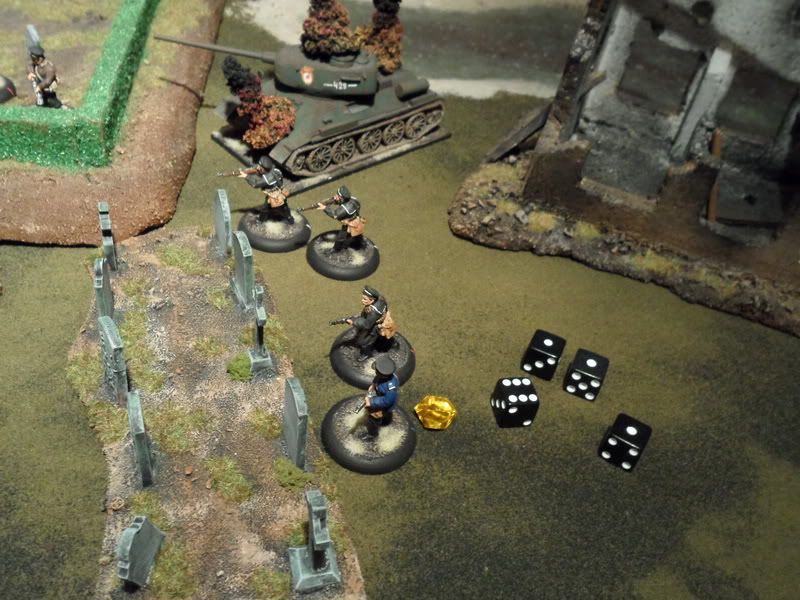
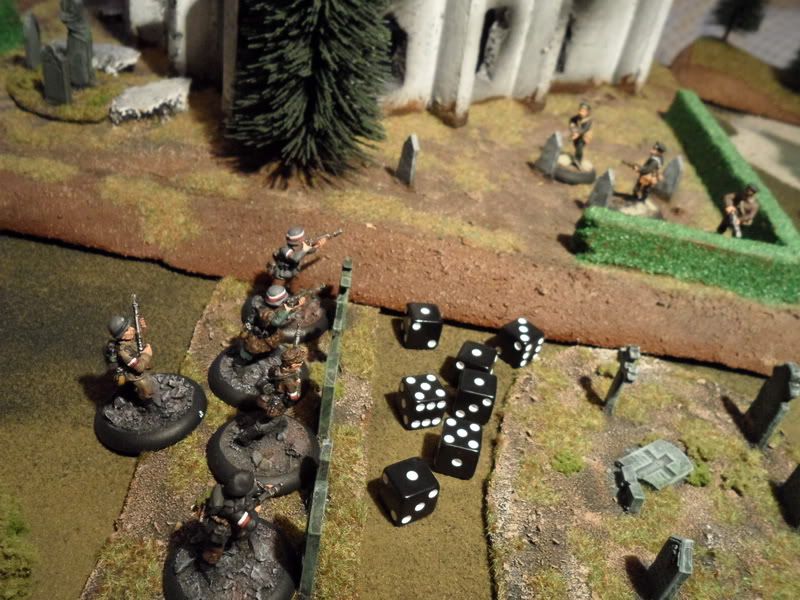
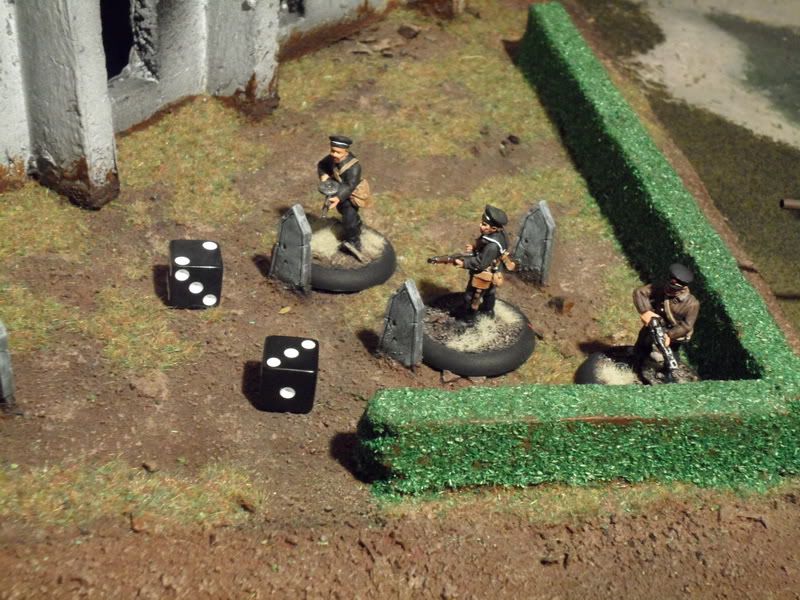
As an example of infantry combat. A unit of Soviet sailors armed with 4 rifles and 1 SMG. The rifles shoot 1D6 per action. The SMG shoots 3D6 per action. Weapons don’t have a “strength” or “damage value”, but only contain information on the amount of dice that you roll.
In this case the unit spends 1 action on shooting which generates 4 rifle shots and 3smg shots = 7D6
They fire at enemy infantry which is 4+ to hit, so any 4+ result counts as a hit. If the enemy stands in cover the chance to hit is decreased, while the infantry save gets increased.
Enemy in soft cover are +1 to hit and get a -1 infantry save.
So 7 shots, 3 of which end up being 5+ which is required to hit enemies in soft cover. The enemy takes these 3 dice and roll infantry saves, 5+ because of their soft cover. They roll 1,5,6 meaning that a single soldier is removed as a casualty while two soldiers avoid damage altogether. Now the firing unit may elect to spend the remainder of their actions to keep shooting or relocate to another position or whatever they see fit. Units with good field of fire and weapons with high rate of fire on top of that will quickly become very dangerous able to fire at multiple units each turn!
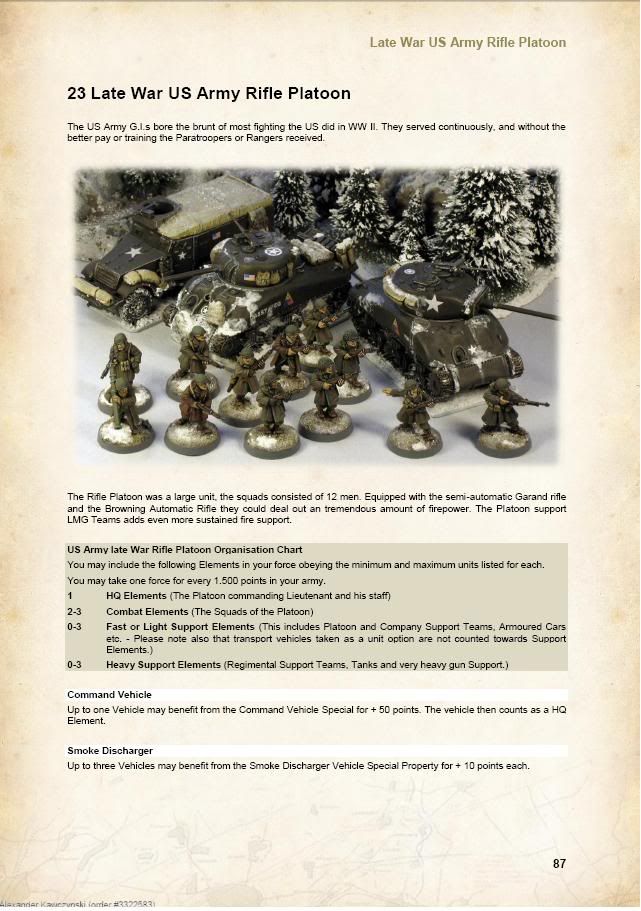
The book itself The core rulebook is 102 pages, roughly 60 contain the basic rules, rules for vehicles and a lot of specific advanced rules for building and bunker assaults. The remainder of the book is filled by generic army lists allowing you to play Late War Soviet/Germans/British/US forces. These forces are made up of historical units but form no historical force per se. If you want to play a specific force, such as the US Airborne you buy the army lists and force book separately for that army (they are very cheap – around 4 USD per book). This give you the choice of picking what you want to pay for beyond the core rulebook. No point of selling you a thick tome containing all Late War armies if you only want to play Germans for instance. The core rulebook also includes scenario special rules and maps for deployment zones, calculating victory conditions and all that is needed to get a framework for your games.
The books are sold as discretely watermarked PDF files with your name and customer number in one corner. You get to download two versions of the book, one full color and one printer friendly version. The printer friendly has white background and minimal amount of pictures, focusing on the rules alone. This makes it 85 instead of 102 pages long.
You can get the core rulebook and army book add-ons over at
Wargame Vault (where you can also download a freebe crib sheet and 20 page long preview of the rules).
These rules are great for anyone interested in WW2 gameplay as platoon/company sized level. Easy to learn rules that provide a fast paced flow of the game while giving you enough tactical options and abilities to make the game interesting and fun to play.

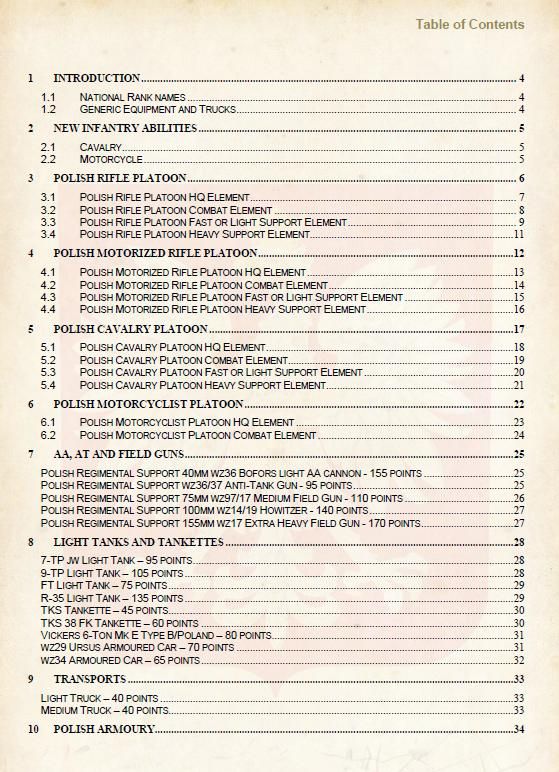 I'm very happy to say that the writer of Victory Decision, Agis Neugebauer, took the time to write some Early War supplements for his ruleset. The most recent additions to his collection of Army Guides/Field Manuals are the Early War German infantry and the Polish Army books.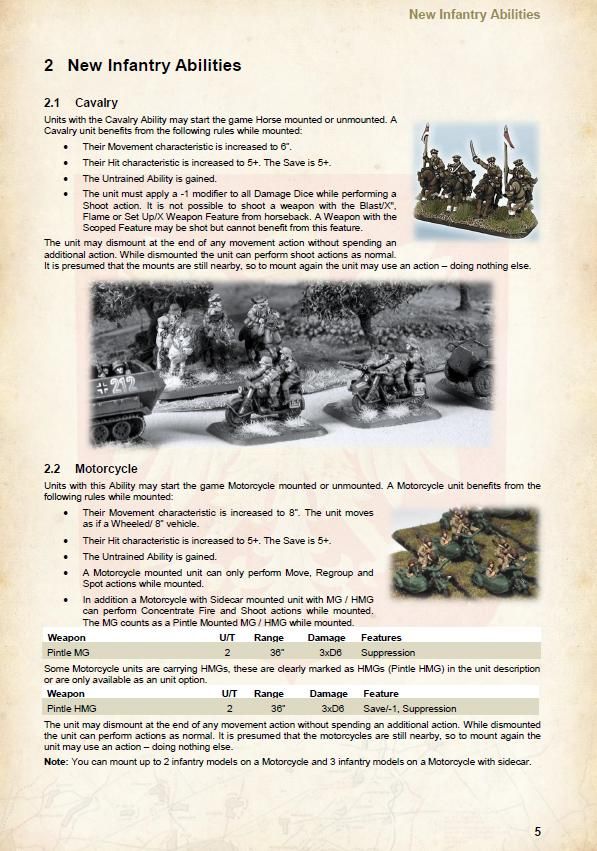
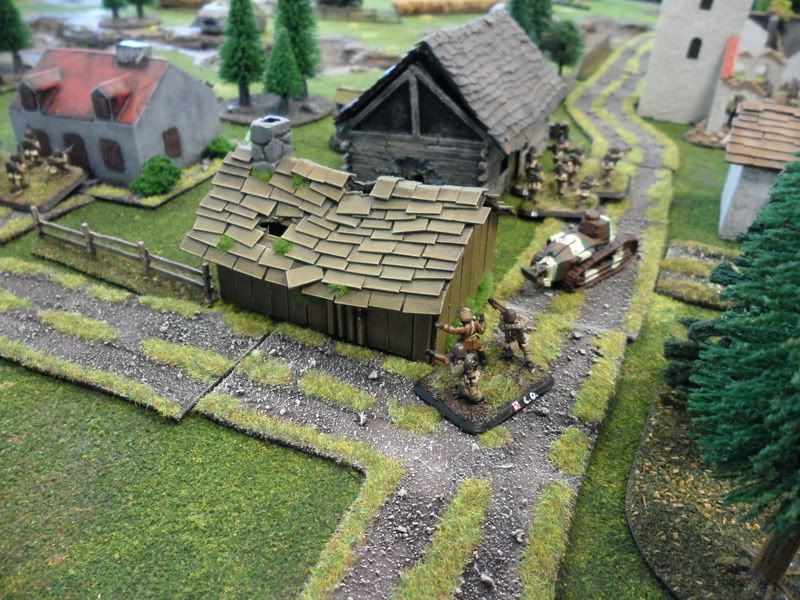
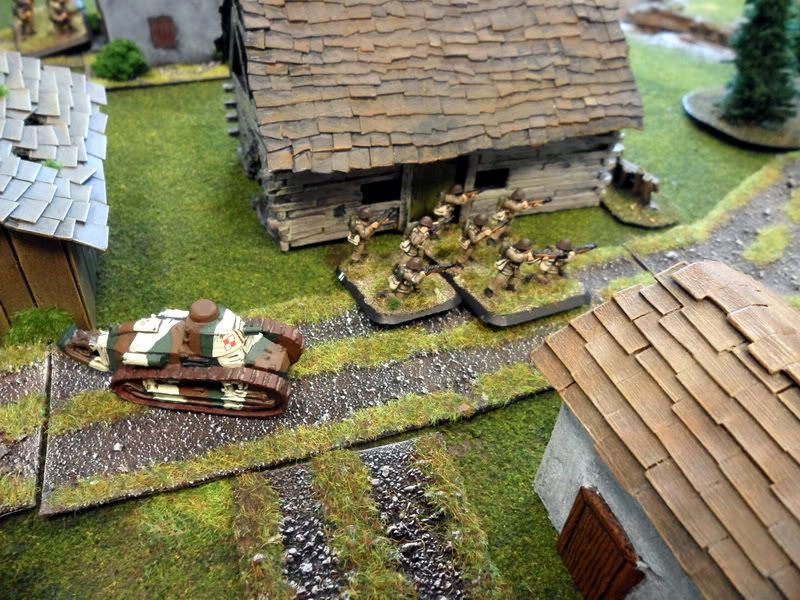
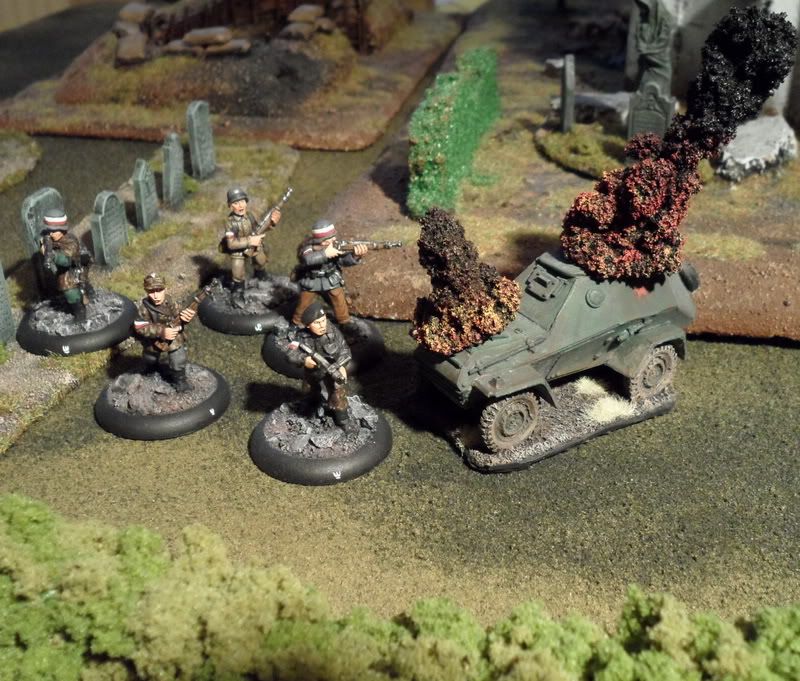
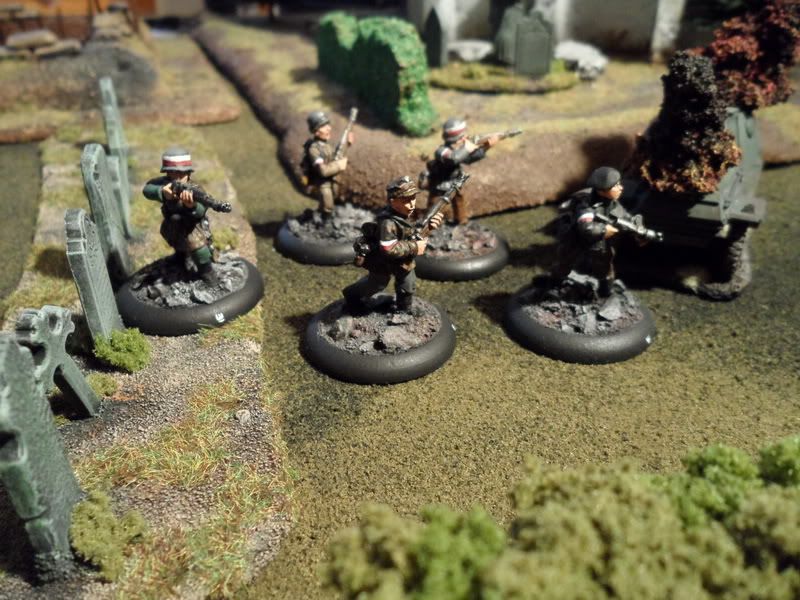
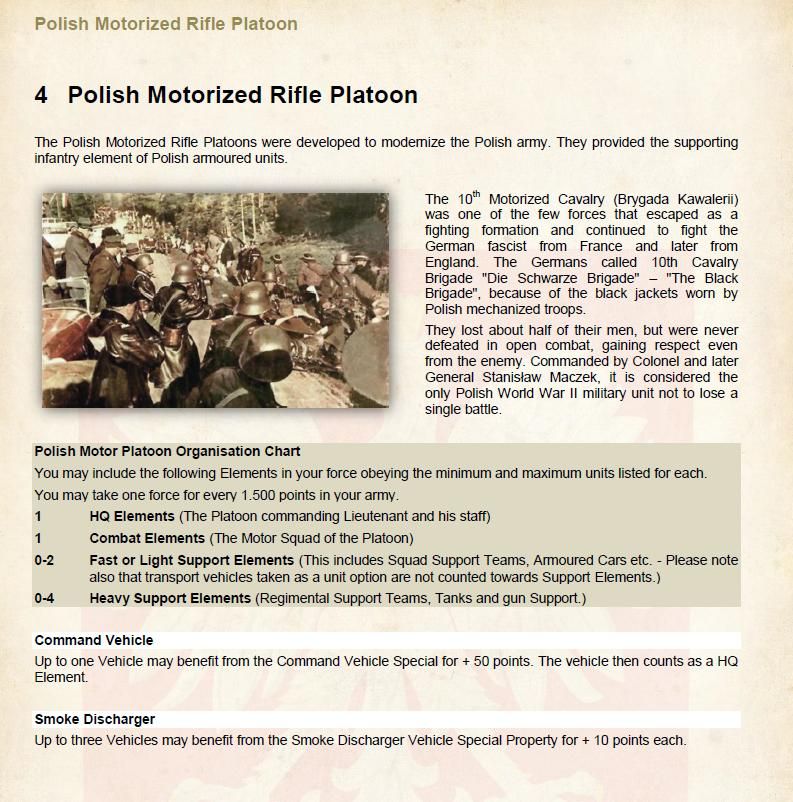 The book includes Polish Rifle, Motorized, Cavalry and Motorcycle platoons and offers units mounted on horses, trucks, motorcycles - fighting on foot and most important of all, the rulebook supports a lot of vehicles and tanks that often get overlooked but which the Polish army actually had at their disposal. Such as the R35 and 9TP tanks and the older and heavier armoured reconnaissance vehicle wz.29 Ursus.
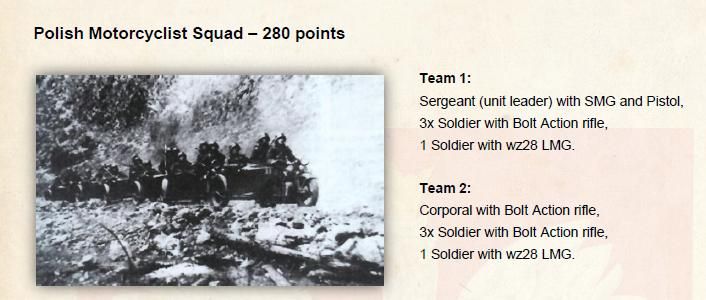 Just like with the main rulebook and other supplements you get unit profiles for both single and multibased infantry, so no one gets left out. As usual you get the PDF book in two copies, one full color and one “printer friendly” if you buy it through Wargame Vault.