Showing posts with label books. Show all posts

Thursday, July 25, 2013

Alpha Mail: missing the point

In which I am implicitly asked why I am not resentful of Dr. Helen's success with her new book:
ask [Dr. Helen] why she doesn't use her husband's last name and if she'll be sharing the profits from the book with bloggers like yourself & heartiste that she "borrowed" from your blogs.
This question was, of course, in reference to Dr. Helen's Ask Me Anything on Reddit yesterday.  And it revealed a fundamental misunderstanding of what drives intellectuals, or at least, some intellectuals.

First, I am very pleased that Dr. Helen to utilize some of the concepts introduced here at Alpha Game, and I strongly suspect that Roissy et al feel the same.  I am much more concerned with the ideas I have articulated becoming popular wisdom than I am about receiving public credit for them; note how my demolition of the religion causes war has entered the mainstream and even scientific journals without credit ever being given to me.  Dr. Helen was very generous and careful to credit her various influences, which is considerably more than I can say for a number of public commenters and scientists.

To the extent she borrowed them, she is welcome to keep them and utilize them to the best of her ability. Die Gedanken sind frei.

Second, ideas are not only free, but modular. I built on Roissy's ideas.  Roissy built on Neil Strauss's. Dr. Helen hasn't necessarily built on them, but she is performing an equally important role in popularizing them and putting them in front of an audience that will never consent to listen to either Roissy or me.  As I've noted with regards to Susan Walsh, it is women who will ultimately bring the truth of Game into the mainstream, not the men who developed its concepts.  In our society, most women simply disregard men's opinions to the extent they are even capable of understanding them, which means that female translators are more or less necessary if any coherent new ideas are going to penetrate the female-dominated mainstream.

Third, I have written nine or ten books.  I never bothered writing a book about Game or the socio-sexual aspects of society because I am more interested in writing other books, such as The Irrational Atheist, The Return of the Great Depression, and A Throne of Bones.  I have published nearly 1,400 pages of fiction in the last year, I am in the middle of writing the second of five 850-page novels, and so I am glad Dr. Helen wrote Men on Strike because, among other things, it means I didn't have to do it.  And I am delighted that her book is meeting with such success because it is an important subject and one of vital interest to millions of men and women across the Western world.

As for Dr. Helen's, I don't even know if that is her actual name or simply her professional name.  Regardless, that's her business, not mine or anyone else's, and I could not care less if she wishes to call herself Dr. Helen Smith or Helen of Troy.  It is the individual who merits one's regard, not the label.

Sunday, June 30, 2013

Dr. Helen rocks Fox

It's great to see Dr. Helen doing what the androsphere cannot do, in bringing the revolutionary message of Men on Strike to the mainstream media:
TUCKER CARLSON: That's all true, I agree with that completely, but it still doesn't absolve men of the responsibility to stop complaining about the cards are stacked against them, and man up and become me. Because you don't become a man until you assume responsibility.

DR. HELEN: What man would take such a raw deal?  I don't consider that a man.

TC: Well, it's not, actually, it's not a raw deal.  You derive deep satisfaction, as a man, by taking responsibility for other people.  That's the only place you get deep satisfaction

DH: So, men are supposed to take a really bad deal and sign their rights away, and you call that a good deal?  Look, you don't understand economic reward -

TC: Well, I did!

DH: You did, well, that's good, maybe you have a really good wife, but a lot of men don't feel that way.

OTHER GUY: Why hasn't a man written this book?

DH:  Because men can't speak up. I'm here to speak up because people will actually listen to a woman.  It's really unfortunate, I want the next man, and I'm hoping by this book, that this next man is out there.
She's doing a fantastic job in her interviews and I'll be doing an interview with her about the book and its reception once she finishes her current round of media appearances.  She is, quite literally, giving a voice to the voiceless, because as she knows very well, the media will begrudgingly give her the microphone it will never permit the likes of Roissy, Roosh, or me, still less the men who are incapable of articulating the male case.

Wednesday, May 22, 2013

Book Review: Men on Strike

MEN ON STRIKE
Dr. Helen Smith
Rating: 8 of 10


With the publication of Men on Strike, Dr. Helen Smith fires an important shot in the ongoing cultural war for the soul, and indeed, the survival, of Western Civilization.  It is a shot she fires in defense of the defenders, in defense of the barricades, in defense of the gates, against the lawless barbarians marching under the banner of the Female Imperative.

If the horror stories and red pill realities she chronicles will not be unfamiliar to those who are regular readers of the androsphere, they are nevertheless particularly effective when presented, largely dispassionately, one after another in succession.  Dr. Helen does an competent job of drawing clear links between a legal regime biased towards women and the fearful behavior of men who no longer see sufficient incentive to perform the roles that society has long expected and required of them.

Men on Strike is particularly effective when pointing out the shameless hypocrisy of feminist activism, and how the voices that are quick to appeal to equality when it benefits women are completely silent when it is the male sex that is getting the short side of the stick.  And it raises what is arguably the most important question of all: how can a society which actively disincentivizes men to marry, father children, and produce the economic surplus required to support women and children expect to survive, let alone thrive?

Dr. Helen begins the book with considering the question of why men are increasingly reluctant to marry, as evidenced by both national statistics and personal anecdotes. She continues with a presentation of the hypocrisy of the present legal approach to children and parenting, then moves on to the recent inversion of the male/female ratio of college attendance.  After considering the way marriage has changed in recent decades, she then explains why these changes matter, and devotes the final chapter to considering whether men are best advised to continue simply opting out of society or attempting to fight back.

While much of the evidence is anecdotal, it must be noted that the anecdotal evidence is largely presented in an explanatory sense and is primarily used to support the statistical evidence.  As such, it is much more valid than anecdotal evidence cited in support of hypothetical trends.

Possibly the best thing about Men on Strike is that at no point does Dr. Helen attempt to speak for men or tell men what they should do.  She is quite clearly cognizant of the fact that she is speaking out in support of men, she is attempting to encourage them to speak out themselves rather than to speak for them.

Unlike other books that purport to be concerned about the societal degradation of men, Dr. Helen's book is not driven by the Female Imperative.  She is aware that the degradation of men is not likely to serve women well in the long run, but she also opposes that legal and social degradation in its own right.  In her words: "I propose that men are autonomous beings who are entitled to justice and equality and the pursuit of their own happiness because they are human beings in a supposedly free society."

Dr. Helen's book is both courageous and important because it is written by a woman. It cannot be dismissed as male whining or a parthian shot by the Patriarchy, and it is rhetorically effective because it breaks the Pink Code of Silence and shames those women who, in the name of equality, have pursued an inequality more oppressive and deadly than has been personally experienced by any woman of the West.  It will be a valuable resource for anyone, male or female, who cares about the fate of men or the fate of Western civilization.

Text sample:  Our society, the media, the government, women, white knights and Uncle Tims have regulated and demanded that any incentives men have for acting like men be taken away and decried masculinity as evil. Now they are seeing the result. Men have been listening to what society has been saying about them for more than forty years; they are perverts, wimps, cowards, assholes, jerks, good-for-nothing, bumbling deadbeats and expendable. Men got the message; now they are acting accordingly. As you sow, so shall you reap.

So now people are surprised when men are heading for the exits? They shouldn’t be surprised. Men have been pushed there for some time. We should actually be surprised that it has taken so long.


The Concordia is just a microcosm of what is happening in our greater society. Men are opting out, bailing out and going on strike in response to the attack on their gender; a society can’t spend more than forty years tearing down almost half of the population and expect them to respond with “give me another” forever. Pretty soon, a lot more men will be taking Captain Schettino’s lead and jumping ship—only it will be on a lot larger scale than a boatload of people. The war on men is suicidal for our society in so many ways, and treating men like the enemy is dangerous, both to men and to the society that needs their positive participation as fathers, husbands, role models and leaders.

NB: In the interest of full disclosure, it should be noted that in the first chapter of the book, Dr. Helen refers to the socio-sexual hierarchy I developed from Roissy's sexual hierarchy.

Sunday, May 19, 2013

Men on Strike and the SSH

A video review of Helen Smith's forthcoming Men on Strike, which I'm told contains some discussion of the socio-sexual hierarchy which Dr. Helen references in her book.

Sunday, April 14, 2013

One-Minute Writer's Workshop: sex in SF/F

For those of you who are larval SF authors, I am pleased to offer the Alpha Game One-Minute Writer's Workshop on how to write intersexual relations in science fiction and fantasy.

1.  Determine if you a Male author or a Female Author.

2a. If you are a Male author, the female character should surprise the male protagonist by impaling herself on his sexual organ for no apparent reason. The male protagonist should duly indicate his humble gratitude and undying loyalty to said female character for the rest of the novel, or, in the case of multiple books, series.

2b. If you are a Female author, the female protagonist should rapidly attract the undivided attention of two handsome alpha males with oversized genitalia who are nevertheless different in some nominal manner. She should have ecstatic sex with both of them, separately, with absolutely no consequences to her or anyone else. Due to her inexplicable, but supremely attractive qualities, her inability to choose between her two lovers neither results in any negative consequences beyond some minor emotional drama nor causes either of them to move on to other women. The female protagonist should duly indicate her agony over being unable to decide between the two men while alternately having sex with both of them for the rest of the novel, or, in the case of multiple books, the series.

3. Publish and profit!

Do not worry that the intersexual relations described in your novel(s) bear no similarities to any actual human romantic relations in recorded history.   This is science fiction, after all, and per Dirty Uncle Hugo, your prime literary directive is to portray the world as you think it ought to be.

Friday, January 25, 2013

Free book alert

In case you still haven't read A Magic Broken yet, Hinterlands is making it available as a free download for Kindle again next Monday and Tuesday on Amazon.

Wednesday, January 16, 2013

Where are the womyn of Middle Earth?

This critic of Peter Jackson's version of The Hobbit doesn't appear to have read the books as an adult either:
I did not read The Hobbit or the Lord of the Rings trilogy as a child, and I have always felt a bit alienated from the fandom surrounding them. Now I think I know why: Tolkien seems to have wiped women off the face of Middle-earth. I suppose it’s understandable that a story in which the primary activity seems to be chopping off each other’s body parts for no particular reason might be a little heavy on male characters — although it’s not as though Tolkien had to hew to historical accuracy when he created his fantastical world. The problem is one of biological accuracy. Tolkien’s characters defy the basics of reproduction: dwarf fathers beget dwarf sons, hobbit uncles pass rings down to hobbit nephews. If there are any mothers or daughters, aunts or nieces, they make no appearances. Trolls and orcs especially seem to rely on asexual reproduction, breeding whole male populations, which of course come in handy when amassing an army to attack the dwarves and elves.
Perhaps for her next trick, Miz Konigsberg can lament the lack of women in movies based on the Apollo program, the medieval Papacy, and the National Football League.  Personally, I think it is absolutely obnoxious that Jackson, or more accurately, his female co-writer, dared to create characters, male or female, who don't exist in the books.

She doesn't even appear to have seen Jackson's Lord of the Rings trilogy, or she might have noticed Aragorn marrying Arwen, Eowyn pairing up with Faramir, and Samwise marrying Rosey.

Sunday, January 13, 2013

Wargames, Soldiers & Strategy issue 64

If you get the latest issue of the WS&S magazine you can check out my review of By Fire & Sword, naturally a shortened "bare essentials" version compared to the multi part review on my blog. I was given a chance to write a review and had one page at my disposal so I had to practice cutting down my review to what is most important (otherwise I usually try to cover everything).

There is also an interesting column by Steven MacLauchlan (from WWPD.net) on tournament gaming and how tournament gamers are perceived by casual gamers (in the wrong way).

And then a truly great column by Richard Clarke on rulebook now and back in the days, talking about the economics of rulebooks and how they have grown out of proportion. Very good and insightful column that points out the downside of having super cool and crisp rulebooks.

As usual WS&S has packed the magazine with great battle reports, articles, amazing pictures of well painted miniatures and terrain. This particular issue focuses on medieval/renaissance/18th century content, so if you are into any of those or just curious about the magazine check it out.

Thursday, December 13, 2012

The incompetence of third wave fantasy

SF writer John C. Wright takes my previous point concerning the literary need for what is customarily termed sexism and runs with it, introducing the term 'retrophobia' to describe the modernist disease that has infested modern fantasy, ruined most of it, and reduced the genre as a whole to an even less serious, more derivative literary ghetto barely more literate than the third-rate television dramas derived from it.
Modern schoolboys, for a variety of reasons, none of which bear too close an examination for anyone with a queasy stomach, are far more poorly educated than their fathers, and far more indoctrinated into a particularly parochial and past-hating view, which I hereby dub ‘retrophobia.’

The particular quality of retrophobia is that everything about the past is despised. This includes the  remote past, say, AD 50, as well as the near past, say AD 1950.  Some things are despised in  a condescending but admiring way, as one might look upon a child, as they are looked upon as the larval forms of enlightenment which will burgeon into the glorious present day, such as the career of Julian the Apostate, and others are despised in a hostile way, as one would look upon an enemy, or a disease which, after long bouts of fever, one has finally thrown aside, such as the witchhunts of the Reformation Era. The sole exception to the first category is that if the advance toward enlightenment was done by Christians for explicitly Christian reasons, it is either to be ignored, such as the abolition of slavery in the Middle Ages, or is to be used as an example of villainy or absurdity, as the Crusades, in which case its fate is to be not only ignored but misrepresented.

Now, logically, one cannot write fantasy for an audience suffering retrophobia. The painted savages of the Sioux and Apache do not exist in the imagination of the retrophobes, only the kindly Indians, now miscalled Native Americans, such as are portrayed in DANCES WITH WOLVES and Disney’s POCAHONTAS. The modern schoolboy has never read a Norse saga, but he may have seen HOW TO TRAIN YOUR DRAGON. He has certainly never read any story where a Christian is thrown to the lions by the Romans, but he knows about gladiatorial games from Russell Crowe. Gladiatorial fighting is like a Pokemon match, except with humans!

The second generation of fantasy was not based on history, it was based on Howard and Tolkien and Lovecraft and other authors of the first generation. Those were the images and tropes alive in the imaginations of the audience. Michael Moorcock and Fritz Lieber are still drawing, to some degree, from first generation sources, but Kane of Old Mar is John Carter, and Fafhrd the Barbarian is Conan. Roger Zelanzy inverts the tropes of fantasy in his Amber books by having his main character be a film noir antihero straight out of Dashiell Hammett or Raymond Chandler, and having him thrust into a multiverse-wide Elizabethan revenge drama.

The third generation, I can say very little about, since it was about this time that I lost interest in fantasy, or it lost interest in me. There are occasional exceptions, like THE SORCERER’S HOUSE by Gene Wolfe, or the “Dresden Files” by Jim Butcher, but, for the most part, I cannot slog through something like the “Wheel of Time” series by Robert Jordon or THE DEED OF PAKSENARRION by Elizabeth Moon, and not because there is anything wrong with the writing or even the world building  (heaven forbid I criticize authors more skilled than I at my chosen vocation!) but only because the cultural and social assumptions and axioms of their worlds are too close the modern axioms, where the assumption has no reason why it could exist. It breaks the spell of the suspension of disbelief.... the Third Wave of Fantasy, as far as I can tell from a distance, do not have imaginations filled with images from real history, as I do, but instead are filled with an earlier generation of fantasy images, Eowyn dressed as Dernhelm riding to her doom, or Red Sonya dressed in a chainmail bikini.
This theory of literary retrophobia explains why so many mediocre writers like Terry Brooks, JK Rowling, and John Scalzi, and even genuinely entertaining writers such as Charles Stross, exhibit such a powerful inclination for rewriting the works of earlier, more original writers, not only mimicking their styles, but downright strip-mining their works for ideas, settings, and even basic plots.

For example, I enjoyed The Sword of Shannara when I was in high school, for example.  Yes, it was a mediocre imitation of Tolkien, but it had its moments and it was a preferable alternative to re-reading The Silmarillion for the third time.  But after struggling through The Elfstones of Shannara and only making it about a chapter into the third book in the series, I gave it up.  I tried again about twenty years later and didn't even make it that far.

The reason, I belatedly realized, was that without the benefit of working from Tolkien's template, Brooks simply didn't know how to write a fantasy tale capable of holding the reader's interest.  He's not a bad writer; his Demon books weren't bad.  But he simply didn't have any of the deep roots in history or myth that the great genre writers of the past did, and the shallowness crippled the quality of his storytelling.

Despite her vast sales success, it must be remembered that Rowling is a largely derivative writer of Wright's third generation.  She simply took the juvenile English boarding school, of which P.G. Wodehouse was a past master, and inserted conventional fantasy magic into it.  There is a reason Harry Potter was rejected so many times by so many publishers; it isn't a very good book and Rowling isn't a very good writer except for her ability to create fairly memorable characters.  She is entirely incapable of building a coherent world, as the rules of Quidditch alone will suffice to demonstrate.  None of that mattered when it came to selling vast quantities of her books, of course, but then, I have yet to hear anyone claim that Katie Price is one of the greatest living authors by virtue of having published more bestsellers than Rowling, including no less than four autobiographies by the age of 34.  The increasingly inept nature of the  Harry Potter series became more and more evident over time, until by the end, the books were virtually unreadable.  This was no surprise to me; I expected as much after slogging through the third book.  As those who read George Martin have learned, the larger the story grows, the more difficult it is for the author to keep under control.

Now, I always enjoy laughing at the antics of John Scalzi, who has been a vocal opponent of ever mine since some of the screechers in the SFWA were having a hissy fit about this WND column in 2005. But that's not the issue here, more important is the way the SFWA president is, almost literally, the poster boy for the inevitable consequences of retrophobia.  Even more than Rowling, he is a quintessential third generation writer, as his works are pale shadows of Robert Heinlein, Philip K. Dick, H. Beam Piper, and now Star Trek, of all things.  He is a stunt writer; attempting to provide clever spin on X is his basic modus operandi.  He doesn't even try to write anything that isn't derivative, presumably because his hopelessly PC ideology and audience combines to prevent him from being able to draw upon any ideas or events from the past that will not pass muster with all of the various activist groups and their highly prejudiced - and often competing - views of history before which he must genuflect.

But whereas Scalzi's mediocrity means that his inability to write original material is no great loss to the genre, what is more troubling is the way retrophobia cripples the careers of genuinely creative talents such as Charles Stross and even Neal Stephenson.  Now, I admire both writers, I own most of their books in hardcover, and I consider them to be among the finest writers of our generation.  I consider myself fortunate if I ever happen to write novels that are as good as I believe many of theirs to be.

And yet, their works are hollow at the core.  There is a pointlessness at the heart of their works that tends to undermine their creative visions, a moral vaccuum that leaves even the most admiring reader feeling somewhat cheated.  No amount of literary pyrotechnics or creative brilliance can entirely obscure this.  They are merely very good and very entertaining when they should be great.  That may be why the works of China Mieville, for all his servile Marxian incoherence, retains a certain depth and power that is more remniscent of the second generation writers than his peers; his moral sense may be warped and he may hide his forbidden influences under a thick veil of New Weird, but he is still connected to the living heart of the genre, pumping life through its mystic connections between the writer and the true myths of history.

Friday, December 7, 2012

"Sexism" is a literary necessity

What passes for "sexism" in the eyes of the equalitarians is absolutely necessary in the historical genre, even in the historical fantasy genre.  Somehow, Dan Wohl manages to completely miss the vital role that verisimilitude plays in historical fiction at The Mary Sue.
I think Game of Thrones is quite successful when it comes to portraying interesting, complicated female characters, and a good many of them, especially in its second season. You could even say that it’s impressive that George R. R. Martin, not to mention the actresses who play them, have managed to make characters like Lady Catelyn, Arya, Daenerys, and the awesome Brienne of Tarth as compelling as they are considering they’re members of a fictional society that is designed to minimize women’s power over the world and themselves. Plenty of less talented people have designed such societies and ended up with female characters that are accordingly marginalized.

What I question is the purpose of creating an imaginary civilization to be this way in the first place. I agree with Becky Chambers when she says that if female characters are pushed to the sidelines in a video game, “‘that’s just how it is in that world’ is not good enough.” I’d say “that’s just how it was in the real historical setting this is based on” is not good enough either—and I don’t see much beyond that when it comes to most sexism in fantasy.

In my opinion this applies to all historical fantasy, including that which turns the “history” dial up a lot higher than Game of Thrones does.
Being the author of a newly published epic fantasy that relies quite heavily on Roman history, (for those AG readers who don't read VP, my new novel, A THRONE OF BONES is now available on Amazon, so do feel free to support AG by picking up a copy), I have given this matter a bit more thought than most.

In Selenoth, human women have even less power over the world and themselves than they do in Westeros.  This is because in Roman society, women had one primary role, which was to produce heirs for the noble families and soldiers for the legions.  And they benefited greatly from being kept to that role, since Rome became vastly wealthy and featured lifespans that were not again witnessed until the last 50 years of the modern scientific era.

By contrast, elven women have considerable autonomy and their societies are demographically dying as a result.  Their long lives and powerful magic help mitigate this, to a degree, but the historical trend is readily apparent to Man and Elf alike.

The problem with what Wohl advocates is that by putting modern views on sexual roles and intersexual relations into the minds, mouths, and worse, structures of an imaginary historical society, it destroys the very structural foundations that make the society historical and the dramatic storylines credible - in some cases, even possible.  It's problem similar to the one faced by secular writers, who wish to simultaneously eliminate religion from their fictional medieval societies, and yet retain the dramatic conflict created by the divine right of kings.  However, it is more severe because the sexual aspect touches upon the most concrete basis of every society: its ability to sustain itself through the propagation of its members.

The "sexism" of which Wohl and many of his commenters complain isn't cultural, it is simply the logical and inevitable consequences of biological and martial imperatives.  It can't possibly be cultural, because the division of male and female roles has been observed in nearly every historical culture; modern equalitarianism is not only a myth, it is a myth made barely credible only by the combination the illusion of societal wealth, technological advancement, and the imposition of relentless propaganda from an early age.  Even so, the imperatives of reality puncture that myth as soon as one stops to consider it.

Take "the awesome Brienne of Tarth", who I found to be simultaneously one of the saddest and most ridiculous characters in A Song of Ice and Fire.  Setting aside the sheer absurdity of her existence; any woman that big would be so slow that the Kingslayer could chop her into bits wielding his sword with his left foot, never mind his left hand.  (We have to excuse Martin this common blunder; he's clearly no athlete and has probably never flattened a female black belt or even punched one in the face.)  Now suppose that Cersei was cut from the Brienne mode.  Let's make just one simple change in favor of the modern equalitarian perspective.  Instead of being a conniving bitch working within the confines of a traditional female role, she's grown up to be a Strong, Independent Warrior Woman every bit as skilled with the sword as her twin and every bit as uninterested in propagating the species in the customary manner.

First, she doesn't marry Robert.  So, no alliance between Baratheon and Lannister.  With two childless children, Tywin's dynastic ambitions now rest on... Tyrion the Dwarf.  He is now concerned with finding an heir for his House, not seating his grandchildren on the throne.  We also lose all of the plot lines related to Cersei's children, so the sadistic relationship between Prince Joffrey and Sansa Stark is gone, as well as the protective one between Sandor Clegane and Sansa.  So too is the entire storyline in Dorne as well as the Dornese machinations with regards to Tommen.

No one cares about the nature of unmarried cat lady Cersei's unusual closeness with her twin anymore, so Jaimie needn't bother throwing Bran Stark from the window.  The conflict between Lannister and Stark doesn't ever erupt; in fact, since no one thinks Jamie's bastard is Robert's heir, no one poisons Jon Arryn, Ned Stark never goes south to King's Landing to serve as Robert's Hand, and neither King Robert nor Jamie and Cersei's incestuous escapades ever come within a hundred miles of Winterfell.

Notice how just changing a single woman from a medieval mother to a modern warrior woman would totally eviscerate the entire series and eliminate its raison d'etre.  Cersei would have to be one astonishingly compelling warrior woman to provide a storyline capable of compensating for all of the intertwining storylines that her equalitarian independence requires sacrificing.  And this specific example serves as a sound analogy for what attempting to remove the historical roles from women will do to most of the drama presently found in literature.

Do you want massive battles between civilized cultures?  Then most women had better be at home raising large families capable of providing the men for the armies and the societal wealth to support them.  Do you want dynastic conflict?  Then you need mothers married to powerful men producing those dynasties.  Do you seek the dramatic tension of forbidden love?  Then someone had better possess the authority to credibly forbid it.

The assertion may seem a little extreme at first, but if you contemplate the matter, it should rapidly become obvious that the insertion of modern equalitarianism into quasi-medieval fantasy is less credible and more dramatically devastating than giving the occasional knight an M16A4 assault rifle.  The assault rifle is merely ridiculous whereas the equalitarianism undermines the logical basis for the vast majority of most historical conflict.  And while there are ways to work around these issues, (the knight with the assault rifle is a time traveler, strong independent warrior women drop large litters of children by the roadside that are gathered by good-hearted monks and mature in six months), the point is that if they are not addressed in an intellectually competent matter - and they usually aren't - the result is doomed to be an incoherent, illogical mess that will have to be very well-written to even pass for mediocre.

One commenter, seemingly reasonable, states: "The way I see it – if I’m supposed to suspend my disbelief enough to believe in dragons, then I’m pretty sure it can extend to equal positions for female characters."

That sounds superficially credible, but it really isn't.  The absence of dragons is not significant to our lives today.  If they appeared tomorrow in their conventional fantasy form, most of our lives would be little different.  Intersexual relations are central, on the other hand, hence the interest in this and other Game blogs.  The difference can be seen in the way in which those inferior writers who blithely ignore the unavoidable consequences of "equal positions for female characters" refuse to address them in anything approaching a sensible way.  If an author wants warrior women and sizable societies, why not have her women simply drop children like puppies who can fend for themselves after a month?  Because that small change from observable biological norms would too severely violate the necessary suspension of disbelief, even for readers who are observably stupid enough to fail to realize that a medieval-era society featuring strong, independent, and equal women is unsustainable and would be wiped out in less than three generations.

Tuesday, October 16, 2012

Review request

As those of you who also read VP know, yesterday I published a novella and announced a forthcoming novel.  Since I know that not everyone here follows economics, religion, and politics, and because I'd like to see a few more reviews posted at Amazon, I am offering a free review copy of the novella to the first 15 AG readers who are interested in reading it and meet the following criteria:
  1. You are a regular reader of fantasy fiction
  2. You have the time to read a 50-page novella this week
  3. You are willing and able to commit to posting a review on Amazon by the end of the day on Friday.
If this happens to describe you, please an email to vday(AT)wnd(DOT)com and I'll send a copy of the epub to the first 15 respondents.  I'm afraid there is little in the way of Game per se in the novella, on the other hand, she does look beautiful in chains....

Friday, September 28, 2012

Call of Cthulhu RPG inspirational reading material

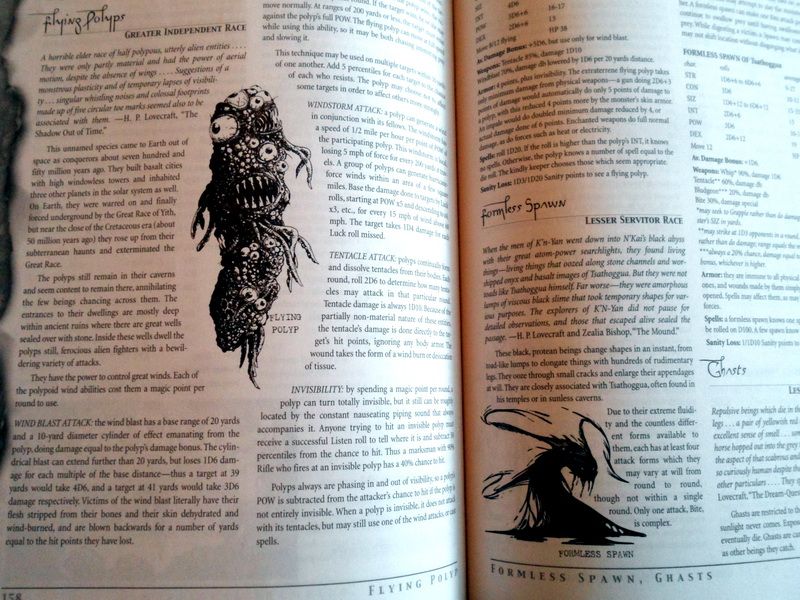
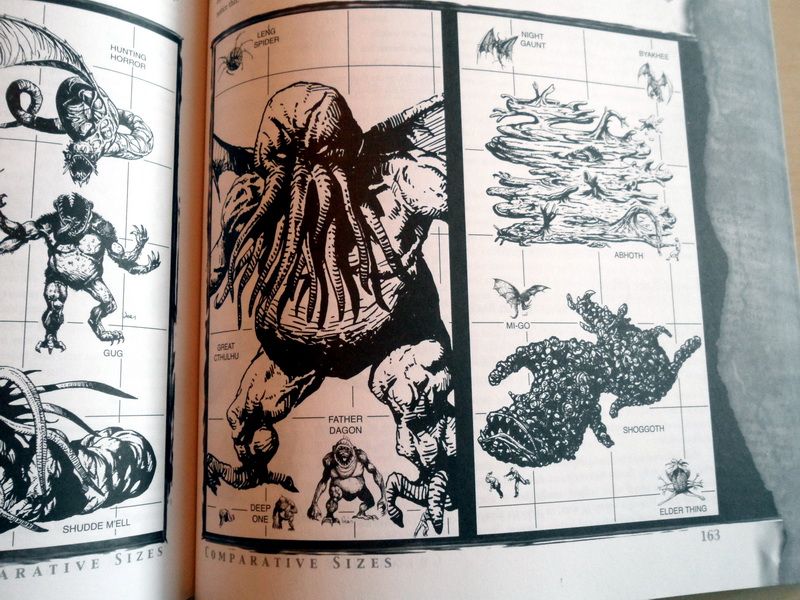
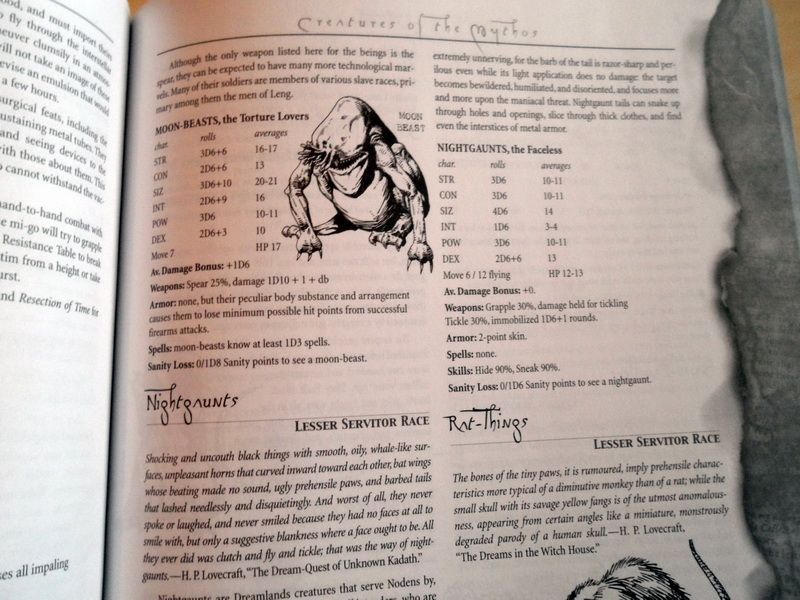
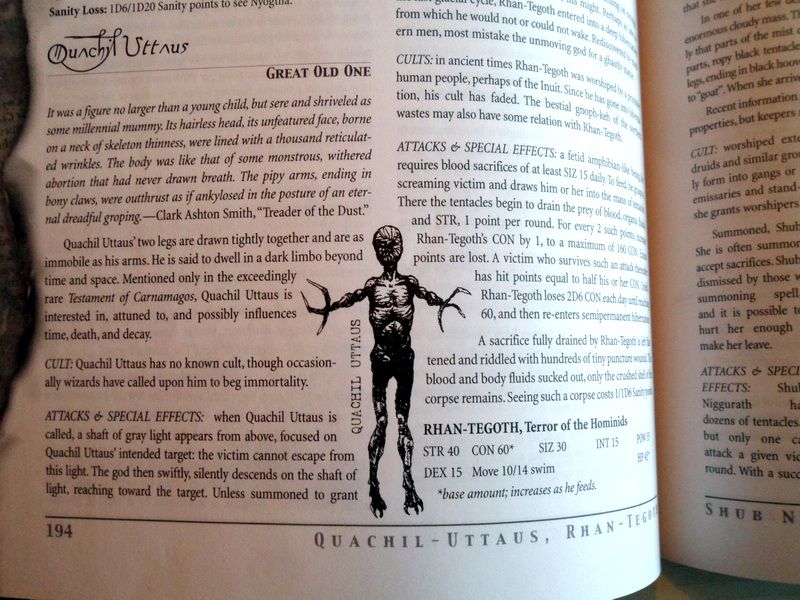
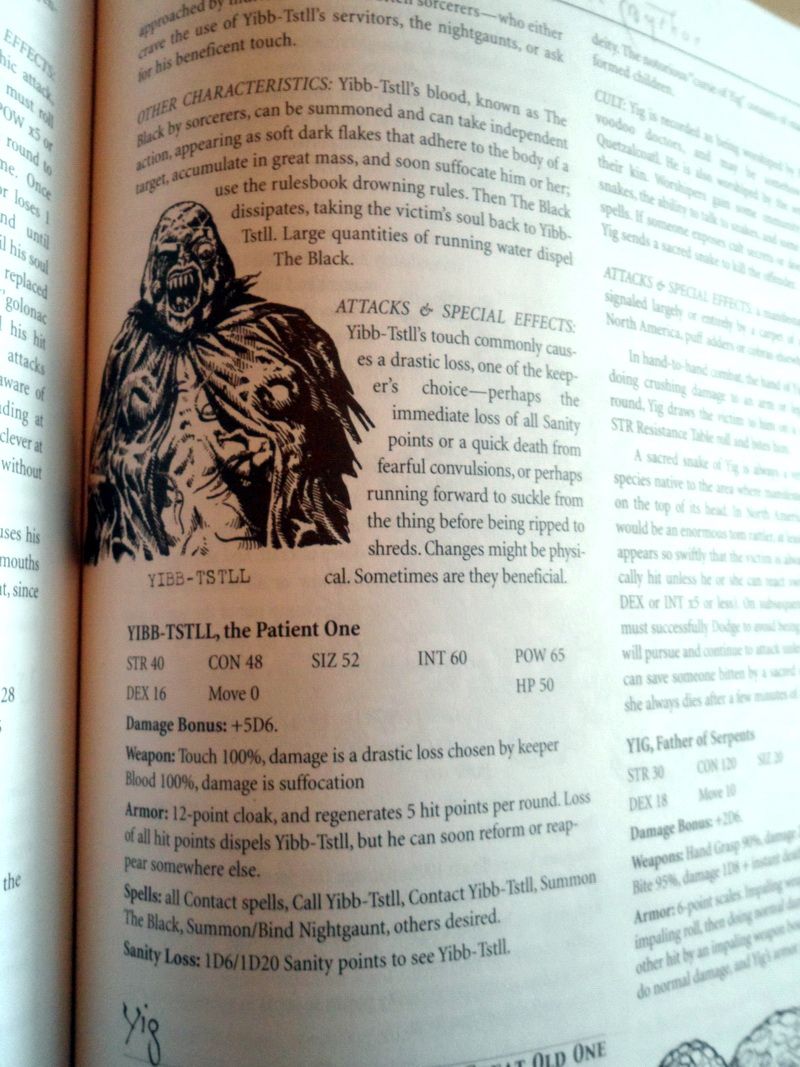
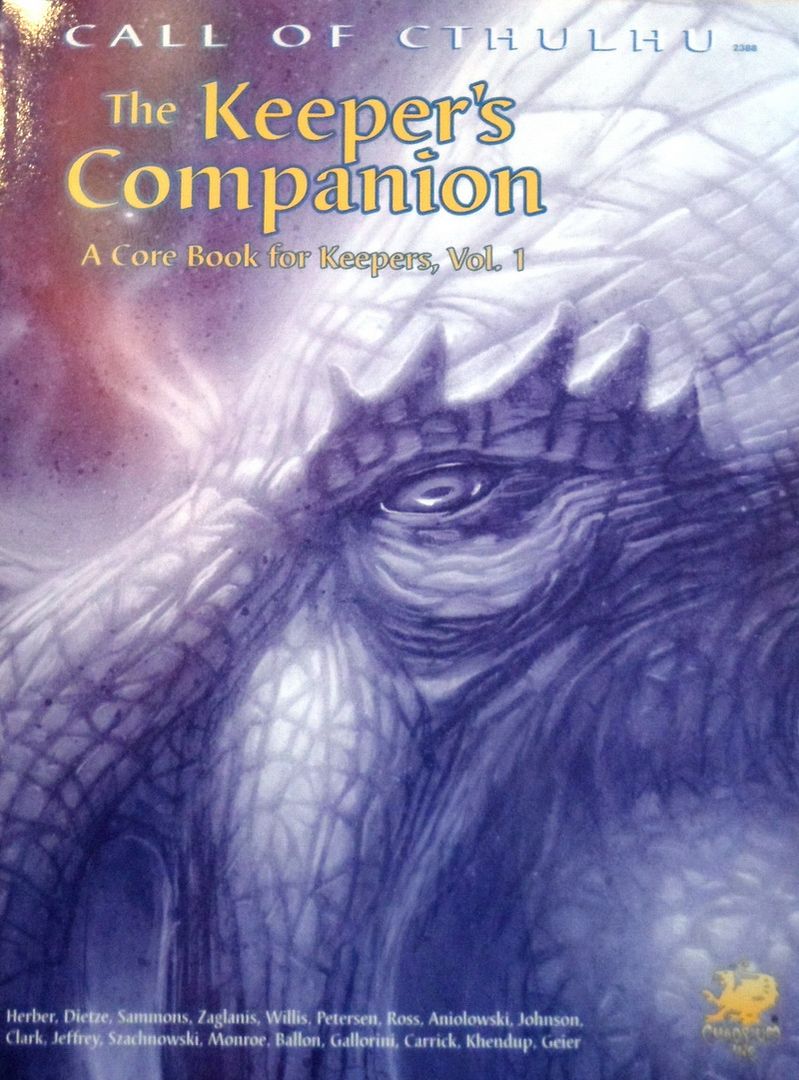
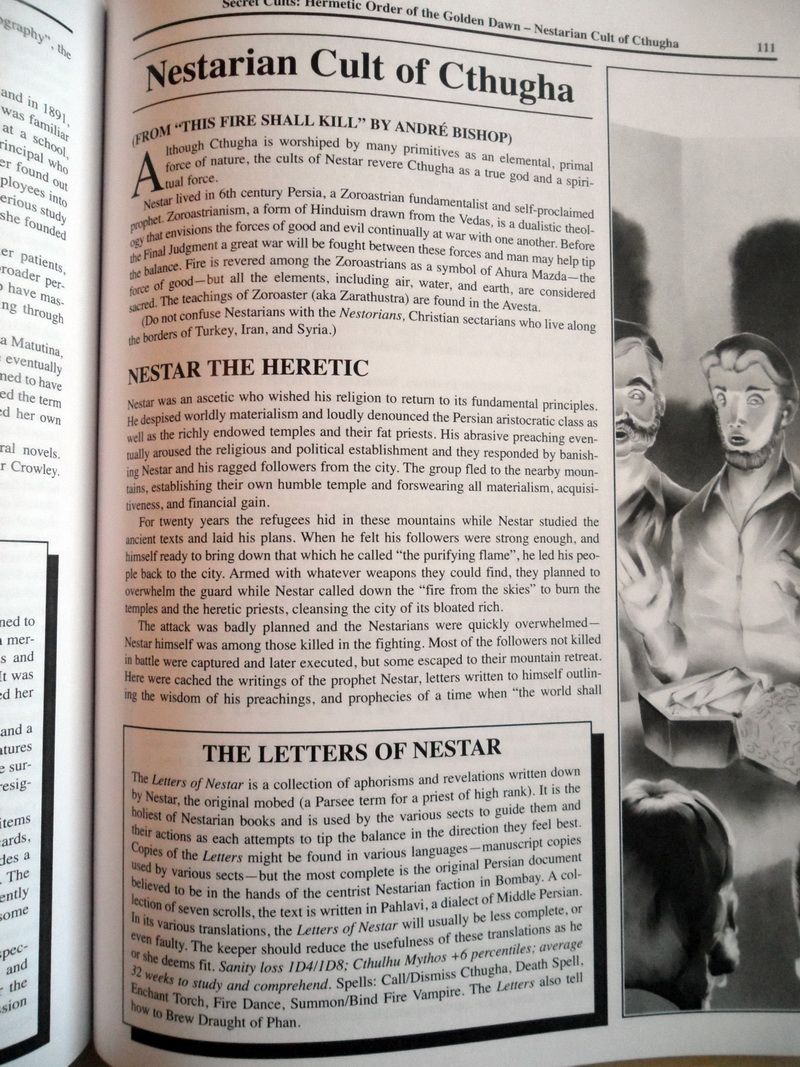
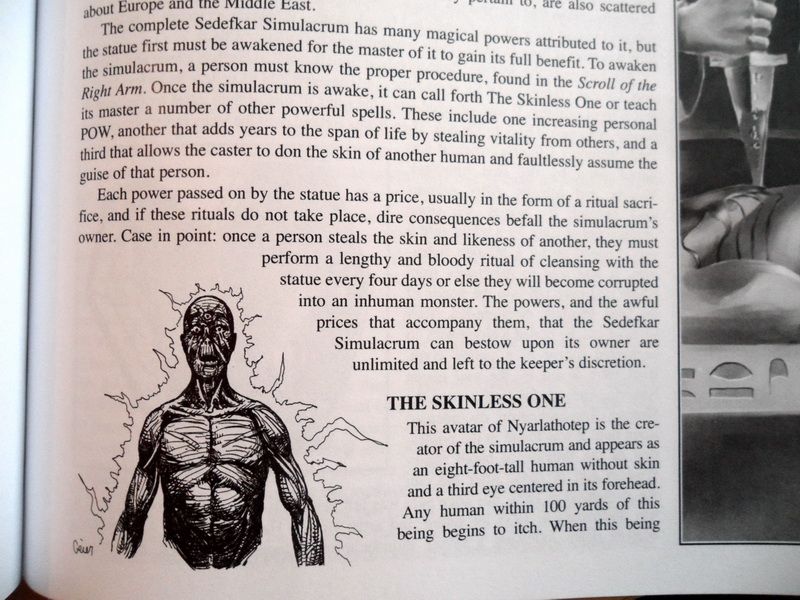
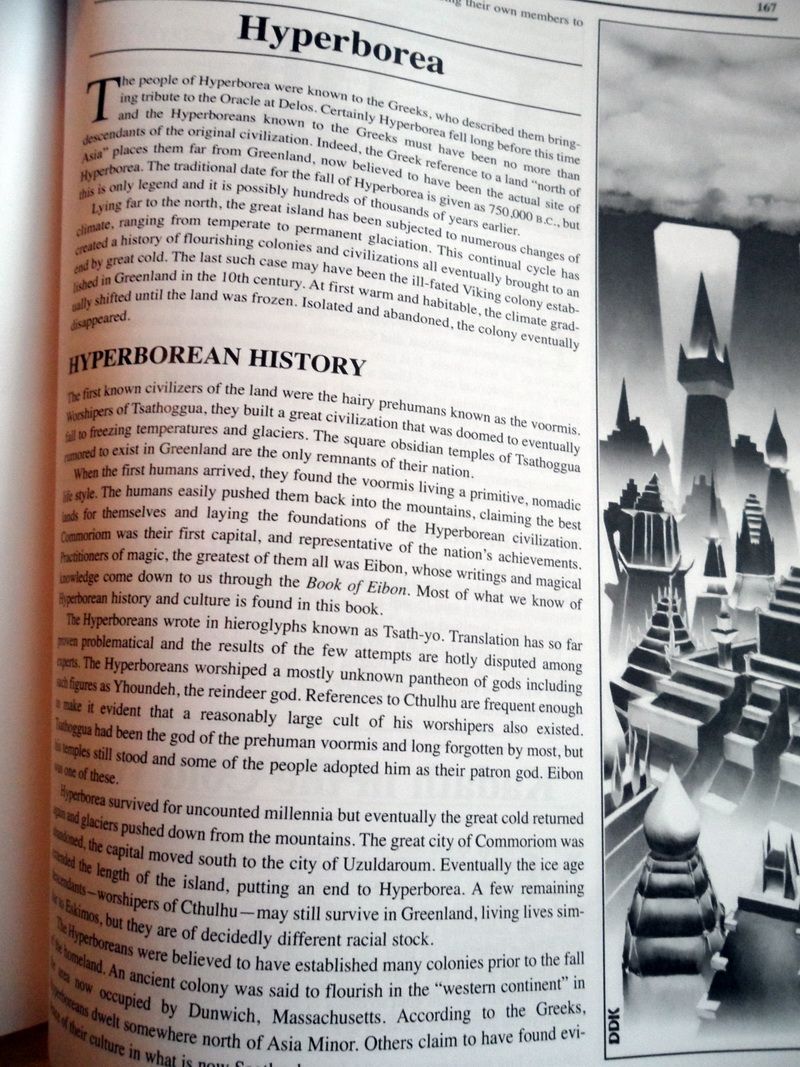
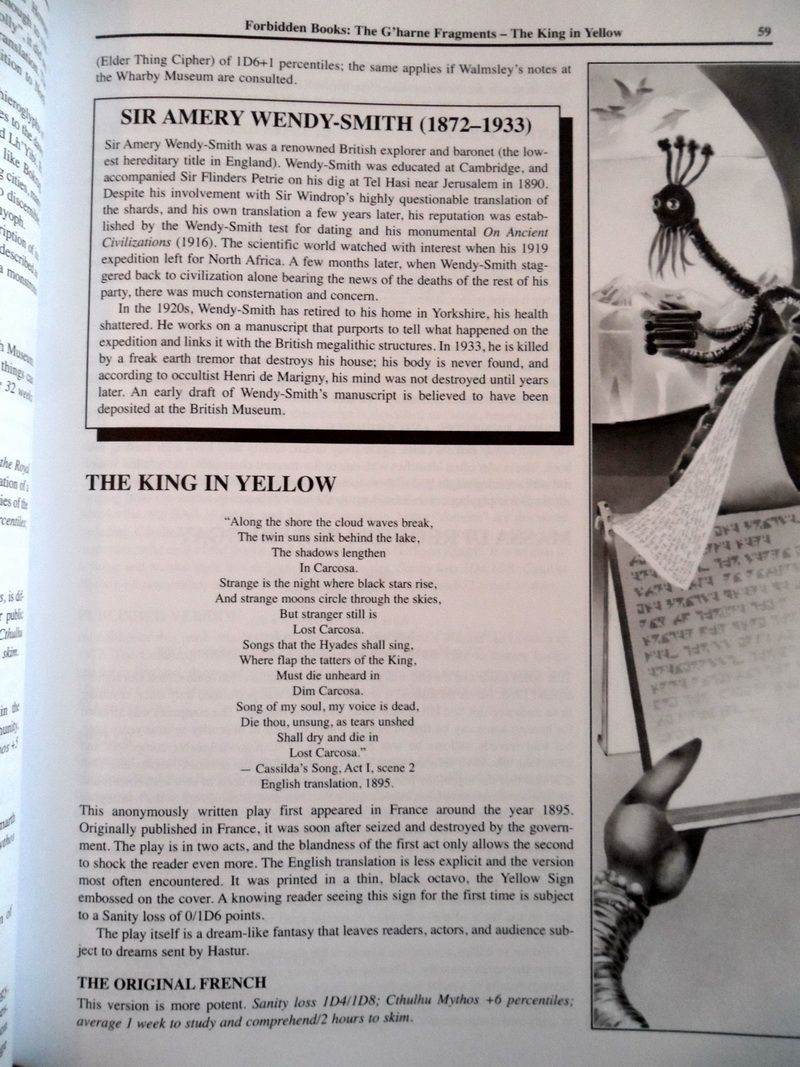
A follow up on my previous entry on Worlds of Cthulhu, having read the magazines I became interested in what more the RPG game Call of Cthulhu had to offer so I bought the main rulebook and a sourcebook. Just as with the Worlds of Cthulhu magazines these books make great reading material, almost like a encyclopedia of Lovecraft monsters, cults and everything else thematically connected to the weird horror of his novels.

The main rulebook, "Call of Cthulhu" contains a lot of information about the great Old ones and creatures dwelling in the dark corners of hte earth while the "Keepers companion" lists a lot of monsters, cults, characters, books and locations. Just as with the Worlds of Cthulhu magazine the books on their own make great reading material if you have an interest for Lovecraft stories and the "mythos" he has created.

There is a ton of useful stuff to pick from and use in games like pulp/horror games like Strange Aeons, especially if you are looking to create your own scenarios or have picked up a grotesque miniatures and don't have an idea what to do with it.

Great reading material and once again highly recommended if you are interested in these type of things.

Thursday, September 27, 2012

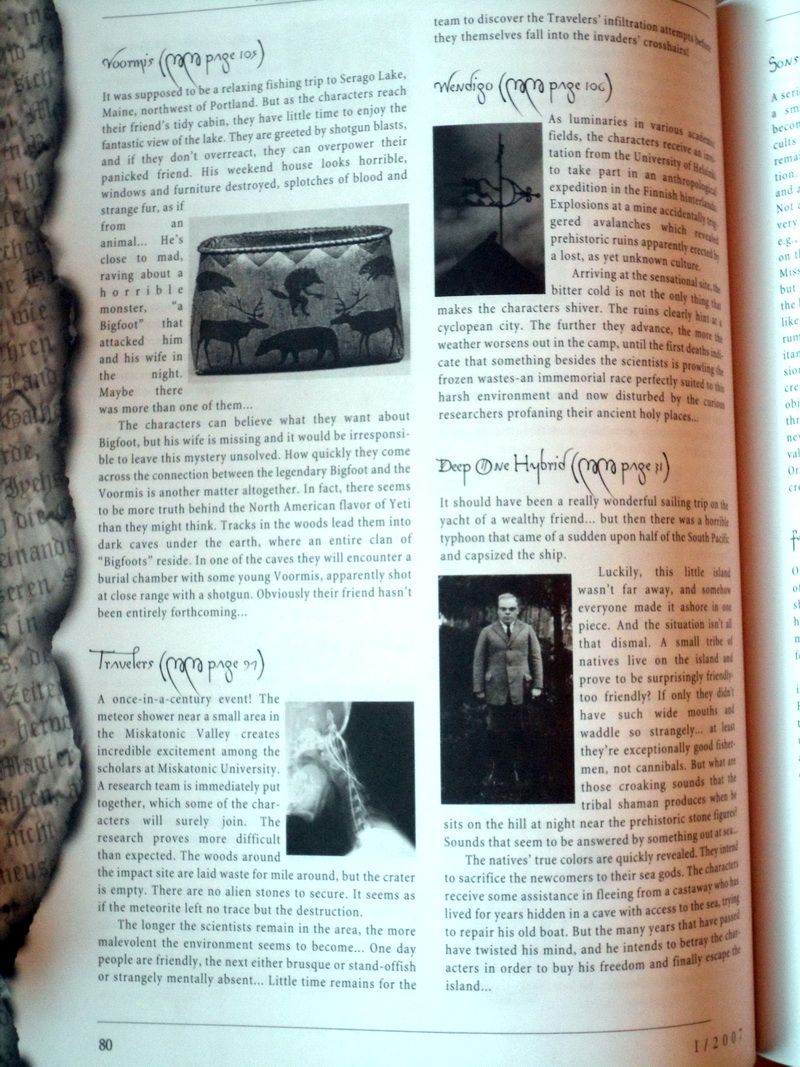
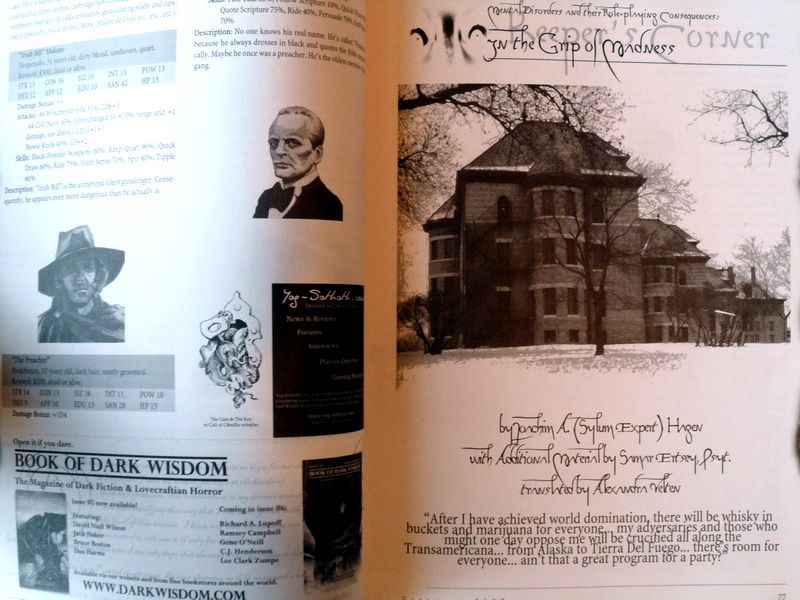
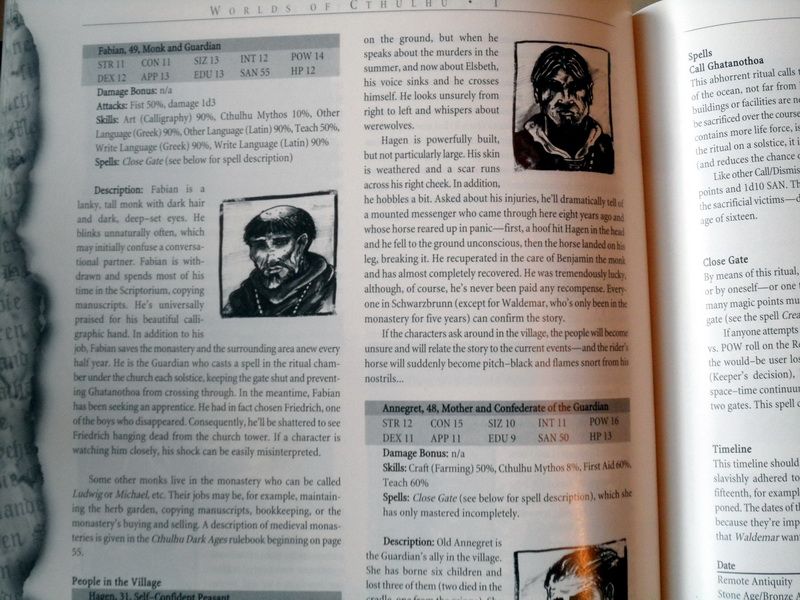
Worlds of Cthulhu magazine

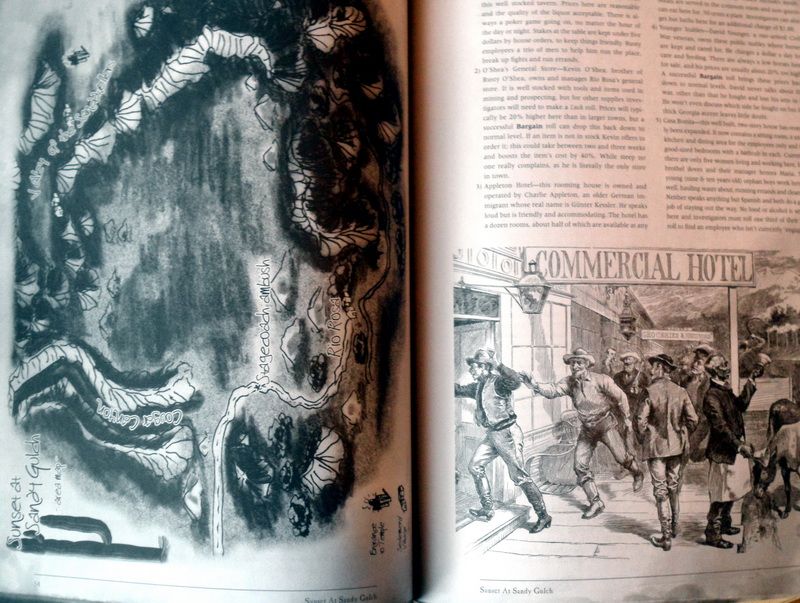
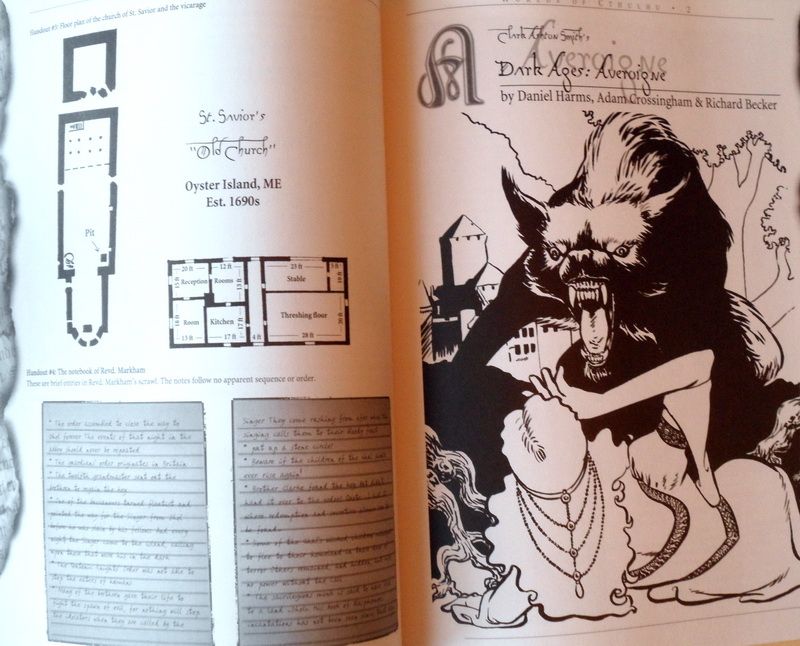
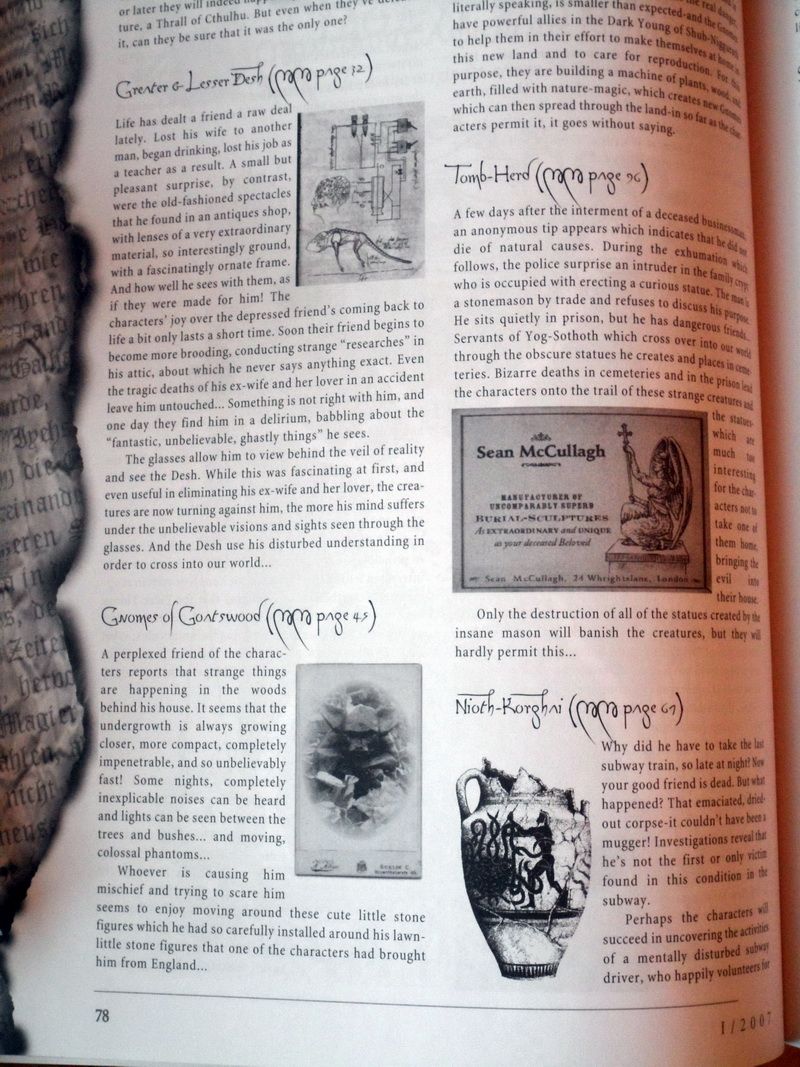
A few weeks ago I bought a couple of "Worlds of Cthulhu" magazines to serve as inspiration for Strange Aeons and Empire of the Dead games. Got the magazines at a sale for a discount price but even at full price they are as thick as most paperback rulebooks out on the market with roughly 120 pages of great content revolving around Lovecraftian adventures of horror.
The magazine is meant to be used as a compliment to the Call of Cthulhu RPG game by "Chaosium" and the content spans from modern to 1920's, medieval and 17th century stuff. The content is also largely made up by RPG adventures and scenarios, describing locations, monsters, agents and other relevant stuff. The modern and future adventures aren't really what interests me as my preference is in the original Lovecraft setting of the 1920's and earlier, mainly because of the decreased efficiency of weapons and more flavorful settings. Luckily there is an even distribution between all eras..

Also, what really matters the most for me as a miniature wargamer is simply the inspiration the content of these magazines provide. Many of the RPG adventures can be translated to the tabletop with little effort. And even if you don't play miniature wargames or have any interest in the RPG aspects they are often great reading material for fans of all things Lovecraft.

I highly recommend checking this magazine out if this is in your area of interest.


Monday, September 3, 2012

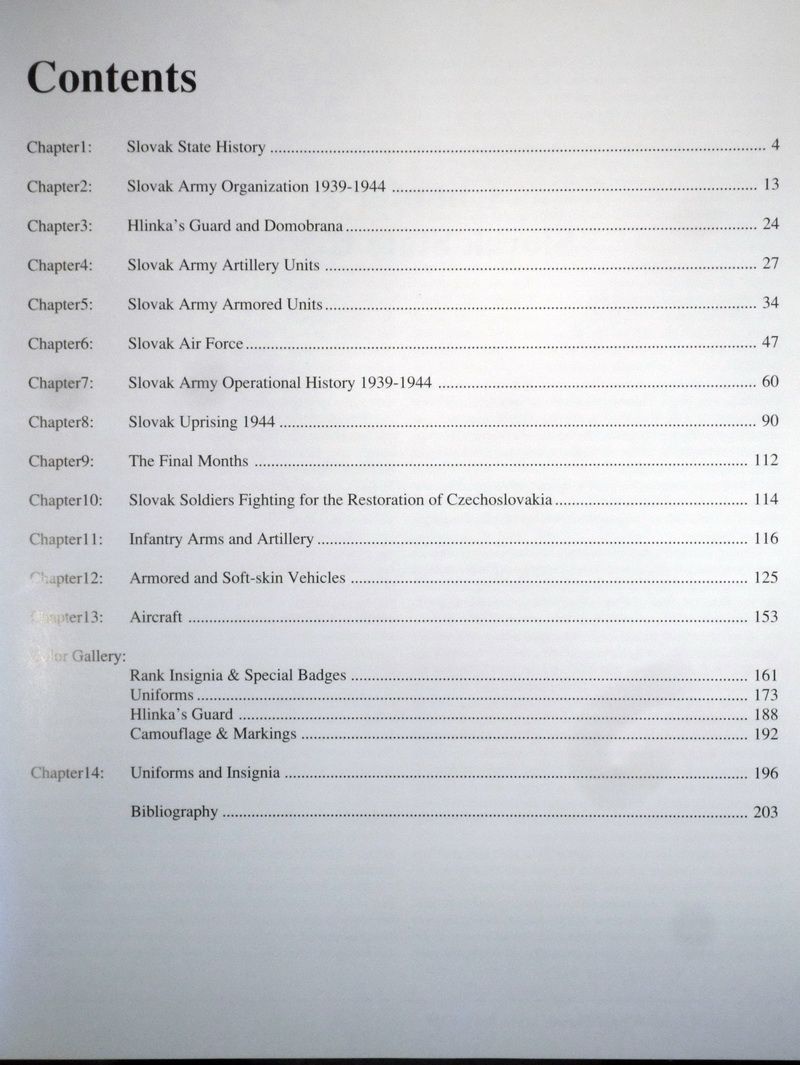
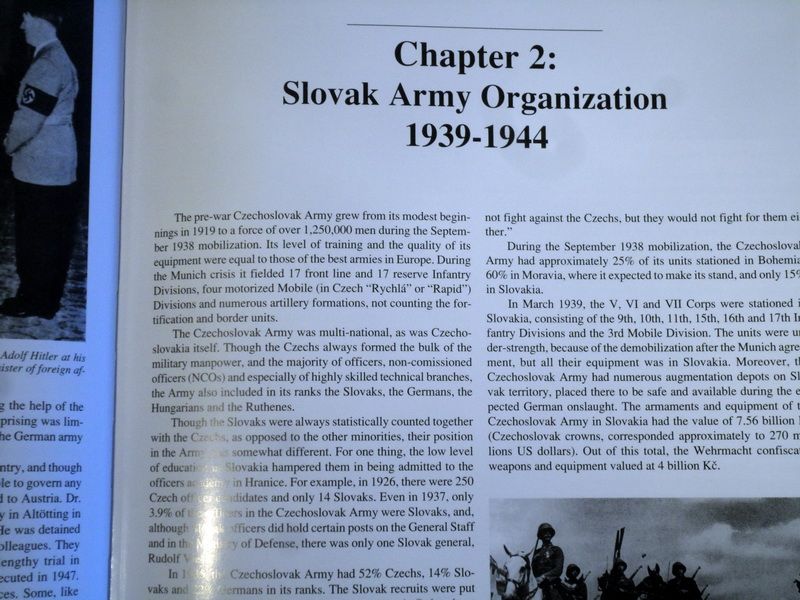
Germany's First Ally (book review)

A couple of weeks back  when I was still working on the early stages of The September Campaign v.2 I got into a discussion with Andreas at our club who's our resident Mid-War Slovak player. He asked if I was going to write in the Slovaks, which had been my plan from the start, and after some more talking about Slovak contributions to the invasion of Poland in 1939 Andreas started to talk about a book he had somewhere at home.

Little did I know then, but research on Early War Slovaks proved to be the hardest thing during the entire project, and while Andreas was looking for his book I scavenged the internet for information on units, weapons, army composition and battles. Ridiculously difficult task but puzzling together information like Dr. Frankenstein puzzled together his monster, I was able to work out 3 Slovak lists based upon what I could find. Just as I had finished the Slovak section, Andreas found his book.

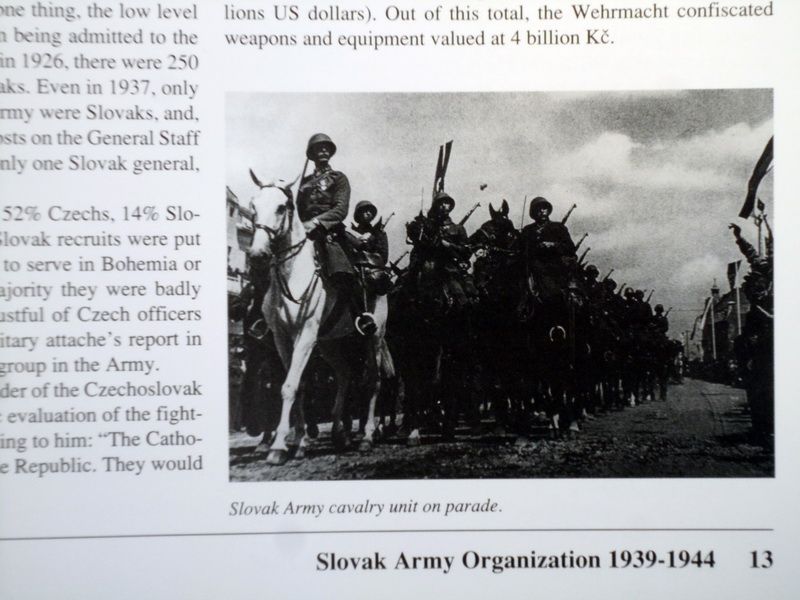
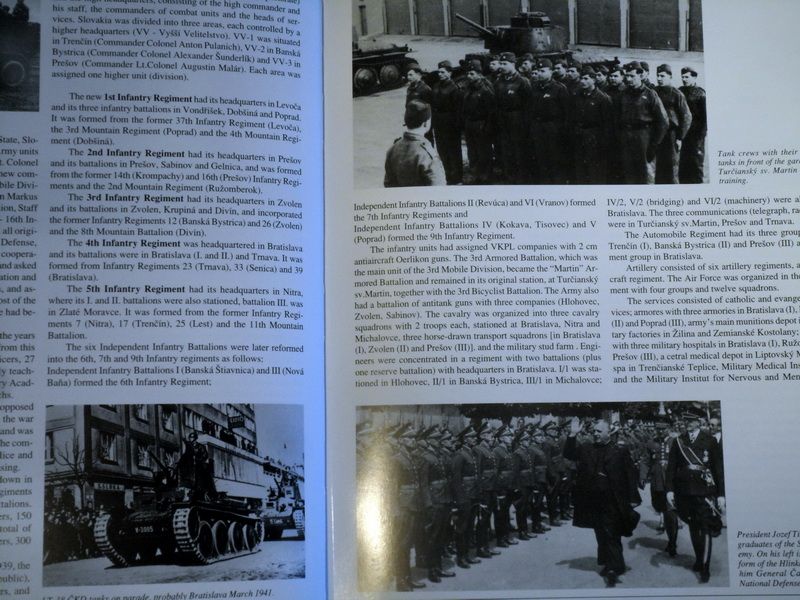
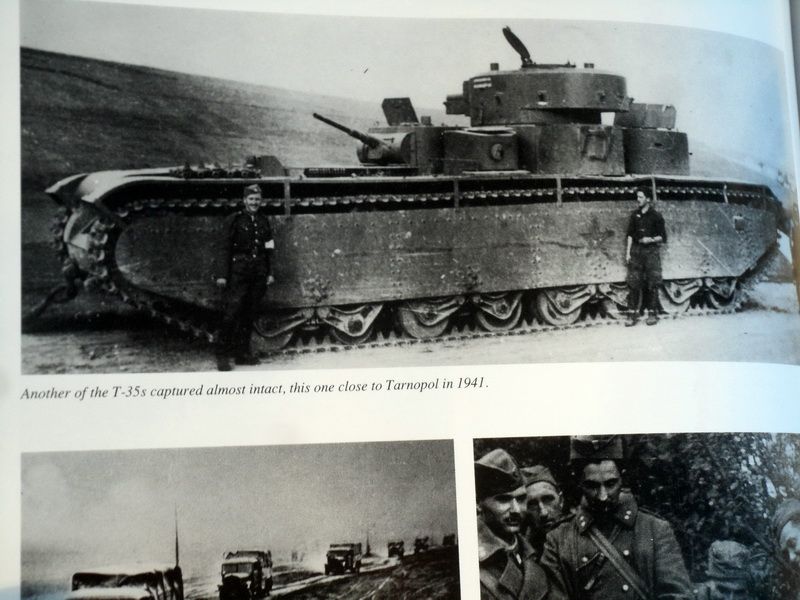
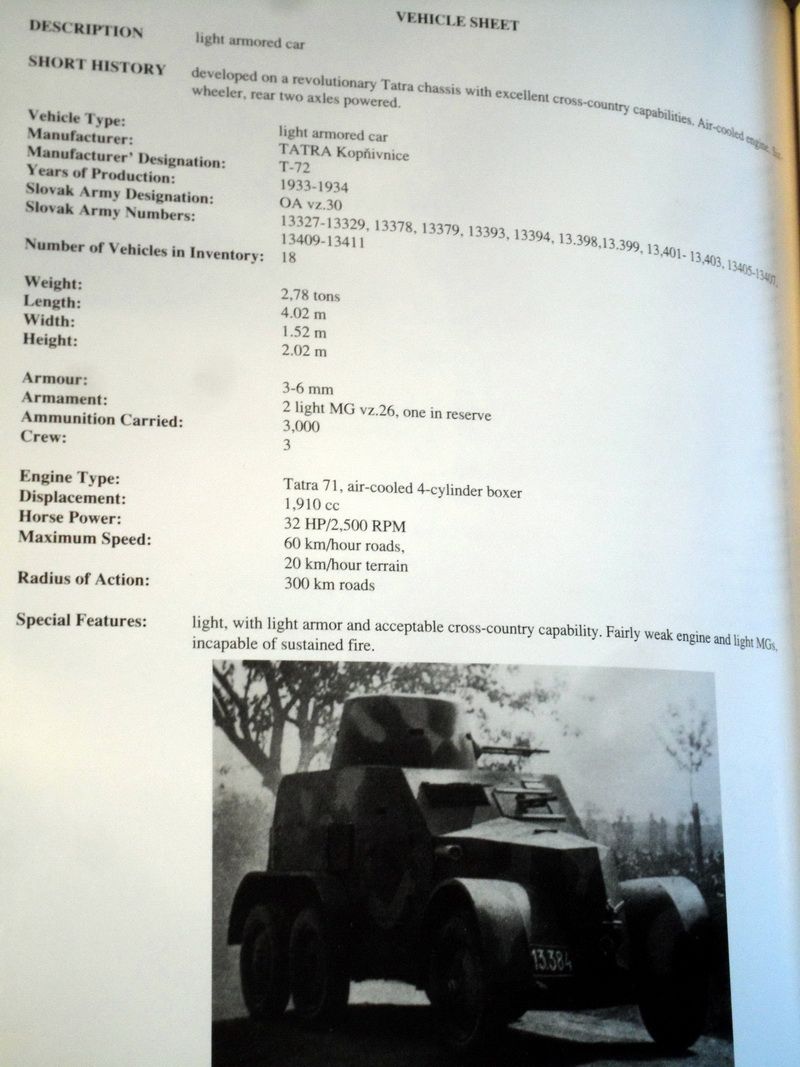
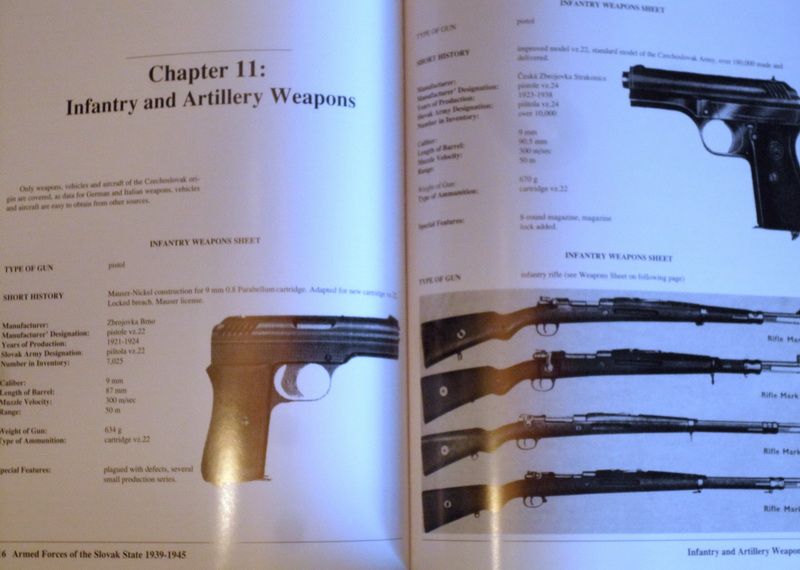
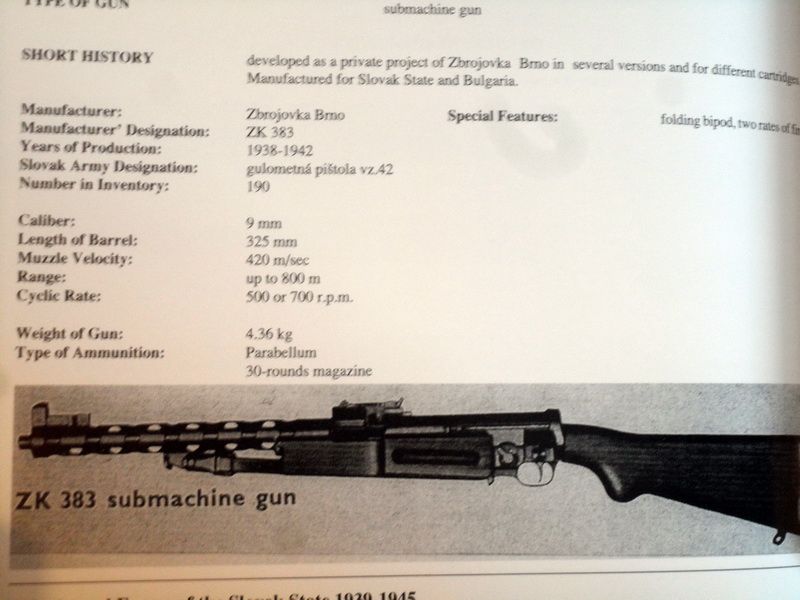
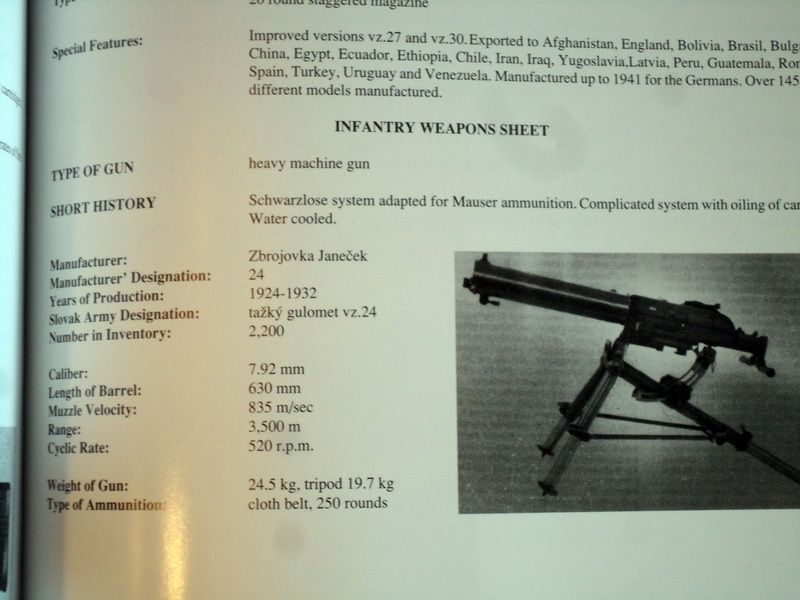
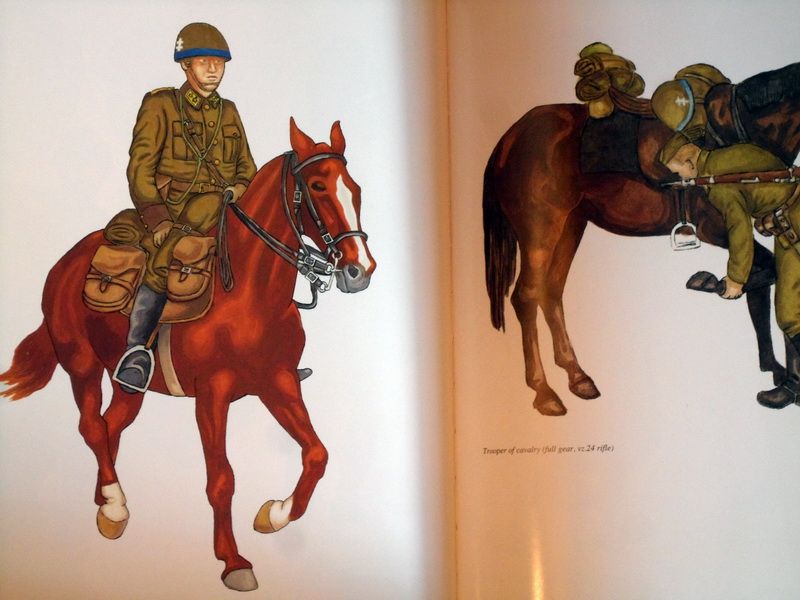
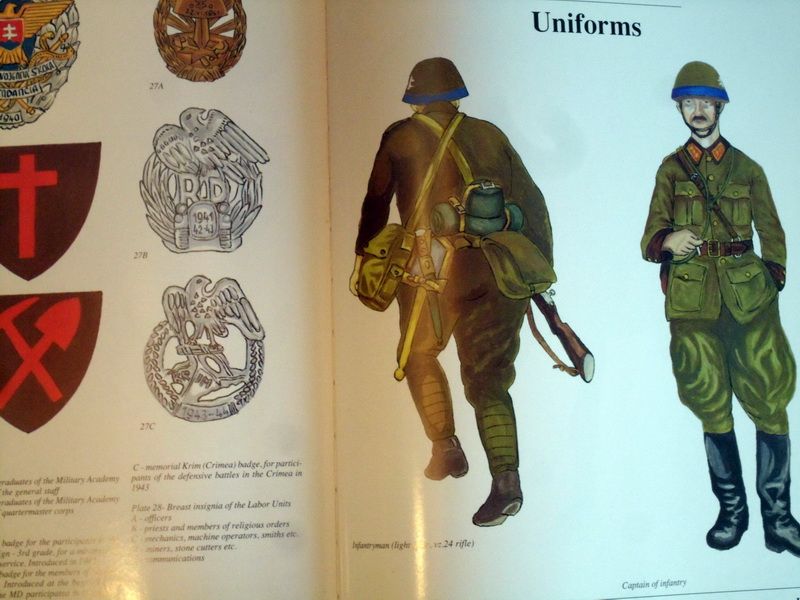
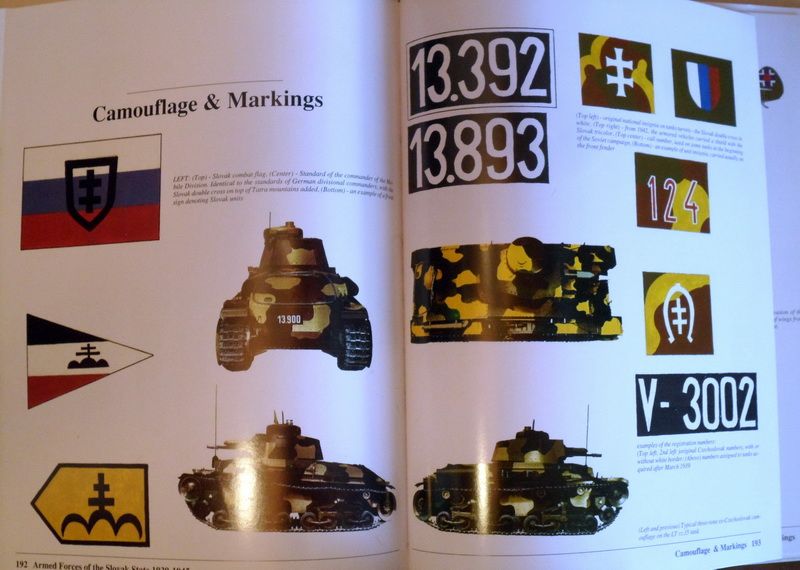
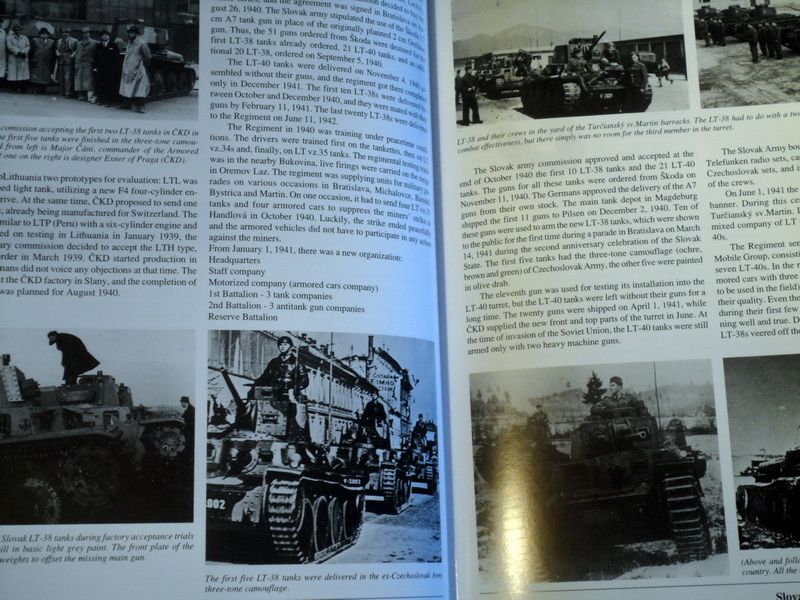
"Germany's first ally" is the title of this book on the Slovak army during WW2, and it's an amazing resource for anyone interested in the Slovak army in Early, Mid and Late War. There are tons of pictures, maps, and
information on Slovak contributions and operative status throughout the years.

Also a rich amount of background describing the Slovak independence just prior to the outbreak of the war. I was mostly interested in the Slovaks after their independence and their part in the invasion of Poland so I did not really read the rest of the book in detail. but it has a ton of detailed information and technical data about all the vehicles and weapons the Slovak army used during the war. It also includes a ton of pictures, most of which I had already seen or found on obscure WW2 sites and forums while working on the Slovak section for my campaign book.

The amount of time I spent looking for scraps of information during my research could have been cut down in half as this book included much of the information I had found myself. Though I was a bit disappointed that it did not include the composition of companies and platoons when it had information about other things such as the artillery and tanks. I mainly used it to double check what I had researched and already written. In any case, this book is a must have, and from what I gather - this seem to be the only book of its kind on this particular subject.

Monday, May 21, 2012

"Ofredsår" / "Years of war" (book review)

Swedish historian Peter Englund has written two companion books about Sweden during the 17th century and the first book "Ofredsår" has a focus on the Thirty Year War. I found this book to be a wonderfull crash course on 17th century politics, tactics and perhaps most of all warfare.

If you thought WW1 (on the western front in particular) was the most meaningless war in human history you will be astonished at the disregard for human life in the armies of the 17th century taking part in the TYW. I've been listening to this lengthy volume as audiobook during my "By Fire & Sword" themed painting sessions over the past weeks. The book may focus on Sweden and TYW but it gives excellent insight into the mindset and warfare of pretty much the entire central and western Europe.

It starts out with descriptions of the battle of Warsaw in Poland and continues with the rampant adventures of Gustavus Adolphus in the German states until his death, then goes on chronicling the continuation of the Swedish involvement in the war under the Swedish generals Johan Banér, Lennart Torstensson and finally Carl Gustaf Wrangel. it also documents many of the famous commanders fighting for other countries such as Wallenstein and Tilly.

As a novice of 17th century warfare I was pretty shocked upon learning several things.

The author raises a lot of points that were known to commanders at this time.

Such as "You need a big army to win decisive battles, however big armies often starve to death due to supply problems in pillaged countryside. Small armies can survive long campaigns but aren't able to either capture strongholds or win any decisive battles".

There were a lot of camp followers and civilians travelling with each army, most of the time the civilians outnumbered the fighting men- this added to the difficulty of supplying the army with adequate amounts of food.

Armies marched up and down the German states for 30 years, burning, raiding, pillaging, collecting war taxes and tributes - after a while only a desolate wasteland remained in which episodes of impending defeat could swing to total victory as the starved small remnant army managed to outlive the fresh huge enemy army arriving in the province only to find itself out of supply and whither down within weeks!

Armies were raised and lost in a sloppy manner, there are numerous tales about the Imperial commander Gallas who was known as the "destroyer of armies". Not because he annihalated his enemies, but because he ruined his own armies by being a complete idiot.

And even when armies were raised, everyone tried to avoid pitched battles as they were extremely risky - instead they tried to use the armies to outmaneuver each other, make their enemies starve and use the military presence in a region for their political gains through diplomacy.

Diplomacy on the other hand during the TYW was a complete joke. Everyone involved stalled any kind of talks as the diplomates were keeping up with news from the front which they tried to use to wheel and deal better arrangements from their enemies. As the war just kept going on and on the diplomates spent most of their times doing ridicilous things such as arguing about who would sit next to whom, on what row and in what order people would arrive to a meeting and who would take of his hat first.

Soldiers went to war wearing their everyday clothes, their "uniform" completed perhaps with a helmet or cuirass. Most of the clothes rotted and fell apart during the long campaigns which resulted in armies that at times looking like a band of homeless people. There is a wonderful description of a battle where the Swedes and their allies were going to fight the Imperial forces. The Swedish army dressed in rags was ridiculed by their allies and enemies, but once the fighting began the superior modern tactics of the Swedes prevailed and whipped the ass of their enemies (while the Swedish allies left the field in panic early on in the battle).


The book is just filled with this kind of amazing and macabre historical accounts, aneqdotes and excerpts from letters revolving around important characters of the time and chronicling the time leading up to and including the entire Thirty Year War. A perfect opening for anyone who want to learn about this period of history and don't know where to start. The book is very well written does a great job of explaining the war, politics and the warfare of this period.

I know many of Peter Englunds books have been translated from Swedish to English but I don't know if this particular book has an English version...