The GSN board specializes in complaints about the network's short lease of Press Your Luck. This got me to plug one of my own faves on the network...
Other poster: I'm not an economic expert, but something tells me that the state of our economy would have minimal to no effect on the asking price of decades old episodes of game shows.
Something tells me that supply and demand rules the world. I really doubt Fremantle is charging "outrageous" prices for shows that nobody - except GSN to a very limited extent - wants.
Sorry to be blunt, but GSN is just covering some off-hours in the morning with cheap programming. Why should they spend a penny more than necessary on small, advertiser-unfriendly audiences? They could probably buy more eps of Press Your Luck for a song, but why sing the song? In the latest published week, February 18-24, PYL averaged 181K viewers with a median age of 102 (slight exaggeration). If GSN bought more eps, that viewership number might leap to...185K.
In the same week Chain Reaction - a show that has endured 88 gazillion rerun cycles, far more than the latest lease of PYL - averaged 369K viewers for its weekday hour. Now there's a show GSN might actually consider making more episodes of. But I'm not holding my breath on that one, either.
Friday, March 1, 2013
Pens Lose; GTOG - or most of it - takes flight to Montreal
By Artistry
As it should be. Anyway, should be a great weekend of live coverage from the boys in Montreal. Stay tuned. GTOG. LGP.
The Pens delivered a real stinker Thursday night in a 4-1 loss to Carolina. The only positive moment of note was a delicious snipe off the blade of Chris Kunitz.
![]() |
| Hands. |
No matter, I told myself. Today the GTOG Executive Team (me, Finesse, Poise, and Chief Technology Officer Eloquence) would set a course for Montreal. This has been planned for months. As soon as we saw a Saturday night road game against the Habs on the schedule, we booked a hotel, bought tickets to the game, and began to prepare ourselves for perhaps the biggest weekend in website history, if not the history of the Internet. Late last night, I reminded everyone to bring their passport. Then I looked at mine. It expired in May 2012.
I explored every avenue to expedite a new passport, failed, went through the five stages of grief, got enormous support from everybody in my hour of despair, and then, after like a two-hour grace period, Finesse started making fun of me.
Here's @gtogartistry getting ready for his flight to Montreal twitter.com/GTOGFinesse/st…
— GTOG Finesse (@GTOGFinesse) March 1, 2013
As it should be. Anyway, should be a great weekend of live coverage from the boys in Montreal. Stay tuned. GTOG. LGP.
Fridaygram: Netizen of the Year, amazing ants, mesmerizing math
By Scott Knaster, Google Developers Blog EditorEach year Reporters Without Borders presents the Netizen of the Year Award to someone who makes a notable contribution in defense of online freedom of expression. This sort of activism is vital, and can be hazardous: bloggers and others are sometimes jailed for what they write online. This year, Internet users (that’s us) get to vote for the winner of the award. There are nine nominees. You can learn their compelling stories and vote for your choice at youtube.com/netizen2013.
The winner will be announced on March 7th and will be invited to receive the award in person at Google’s office in Paris on March 12th, which is World Day Against Cyber Censorship.
Moving from strong online voices to strong insects, researchers have found that Asian weaver ants have an incredibly strong grip, enabling them to hold 100 times their weight with their foot pads. These creatures can even rapidly expand their foot pads if they need more holding power, as when the wind causes the surface they’re standing on to move a bit. This will probably make us feel even worse about dropping our mobile phones.
Finally, spend some quiet time this weekend gazing at these animated Mathematica-based images. They prove that math is beautiful.
Another Friday is here, and we’re back with our Fridaygram, news that's both/either interesting and/or fun. Hold on tight, and enjoy your weekend!
Coupling Money and Victory Points in Mansa Musa
So plenty of games make earning the most money your winning condition. Plenty of games make earning victory points your winning condition. Some games combine the two into one unit of currency. Others include both money and VP, but each focuses on short-term and long-term goals, often at odds with each other.
In Mansa Musa, I was initially thinking of doing the latter, money being what gives you mobility across the map but not in itself leading to victory. Instead, I'm kind of doing this wobbly halfway thing that is inspired by Jaipur's bonus tokens. Imagine a set of currency as follows:
There are $1 bills, $3 bills, $6 bills. Each individual bill has a victory point value assigned to it on the back. In play, each denomination is shuffled and sorted into its own stacks as the general supply. You only ever see the money side of each bill. You only ever look at the VP side of the bills at the very end of the game. Say for example there are nine bills in each denomination, the bills' hidden VP values would be as follows.
$1 $3 $6
1p 4p 8p
1p 4p 8p
1p 4p 9p
1p 5p 9p
2p 5p 9p
2p 5p 10p
2p 6p 10p
3p 6p 10p
3p 6p 10p
In other words, four of the $1 bills are worth 1p, three are worth 2p, and so on. As you earn money, you also earn victory points, but it's never entirely clear how many points you've earned. Collecting lots of money is still clearly a good goal though.
The tension comes when you upgrade to a higher denomination or decide to keep lower denominations. Higher denominations offer much higher point values, but also make your short-term assets less liquid. Suddenly, making change for a $6 actually has tactical importance. You could accidentally be trading 10 VP for 6.
I think balancing this mechanic with some other methods of publicly visible point acquisition will make Mansa Musa a very interesting experience for economic gamers. Now, the perennial question: Has this peculiar money-and-victory-point mechanic been done before?
Science destroys itself
And scientists wonder why the public has so little confidence in them and their magic process:
Whether you adore Lena Dunham or think she's overrated, one thing seems to be in consensus: She's not drop dead gorgeous. She made a hit TV show about being average ("real"), she's constantly scrutinized for wearing not enough or nothing at all, and always has to address her looks on top of her talents.Look, it's really not that hard. If your hypothesis results in the conclusion that Lena Dunham is more objectively beautiful than Jessica Biel, that is not evidence that society's standards of beauty are somehow incorrect or require modification, it is evidence that YOUR HYPOTHESIS IS INCORRECT!
But is Dunham really all that average, or even bad looking? Not according to science.
Beauty, it so happens, is not just a matter of personal taste but rather a matter of measurements, geometry and calculations -- all the stuff you loved in 8th grade math. That science says that Dunham is just like the rest of those Hollywood exquisites, if not even more attractive (gasp). Yes, the frequently body-shamed "Girls" maverick is scientifically better looking than "conventional" beauties Scarlett Johansson, Jennifer Lopez, Taylor Swift, Kim Kardashian, Jessica Chastain, and even Jessica Biel.
Painting Woodland indian flesh (Tutorial)
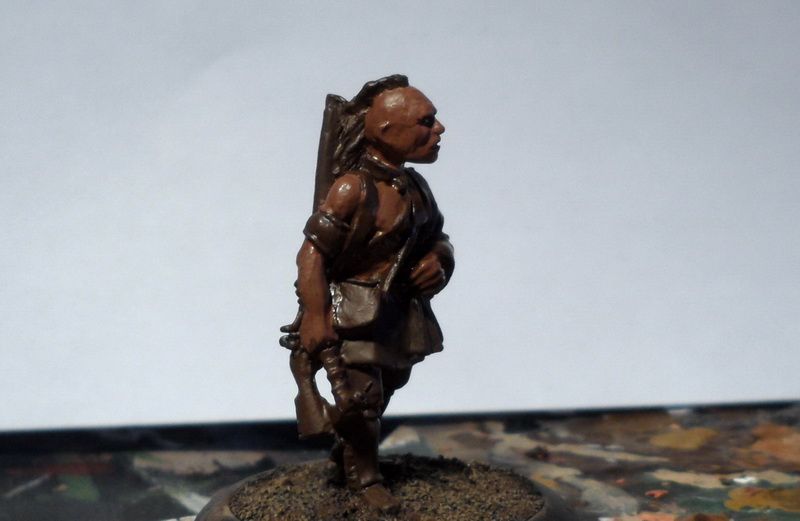
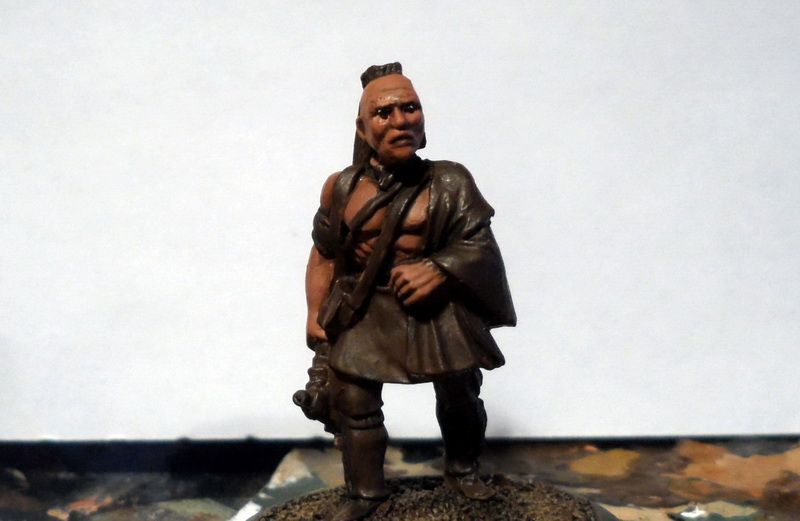
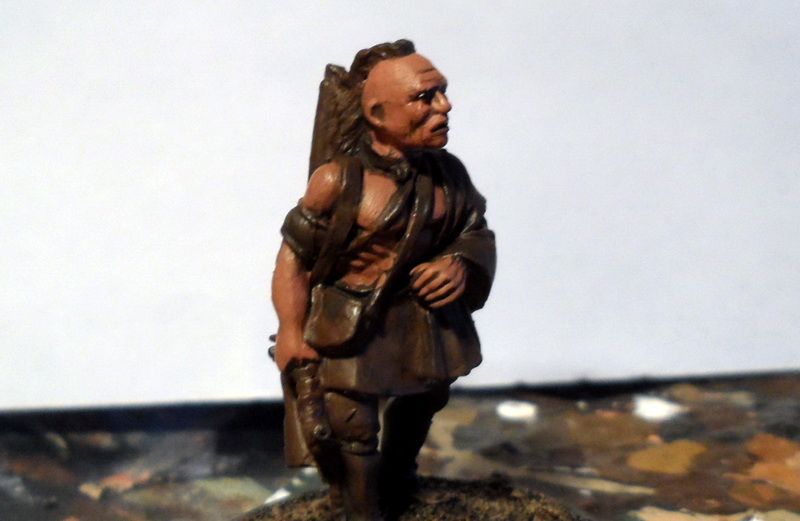
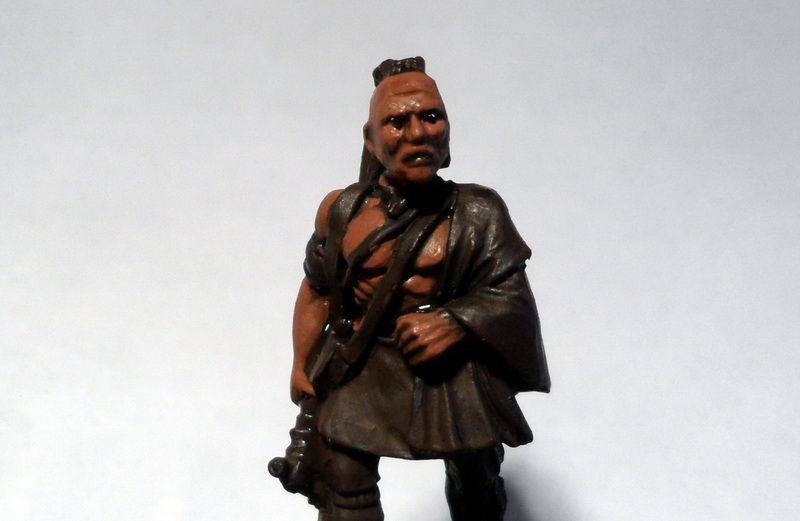
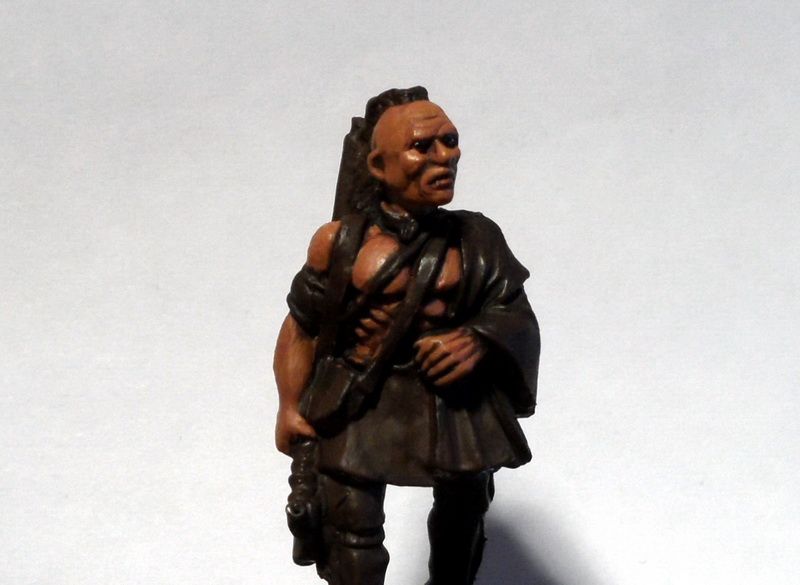
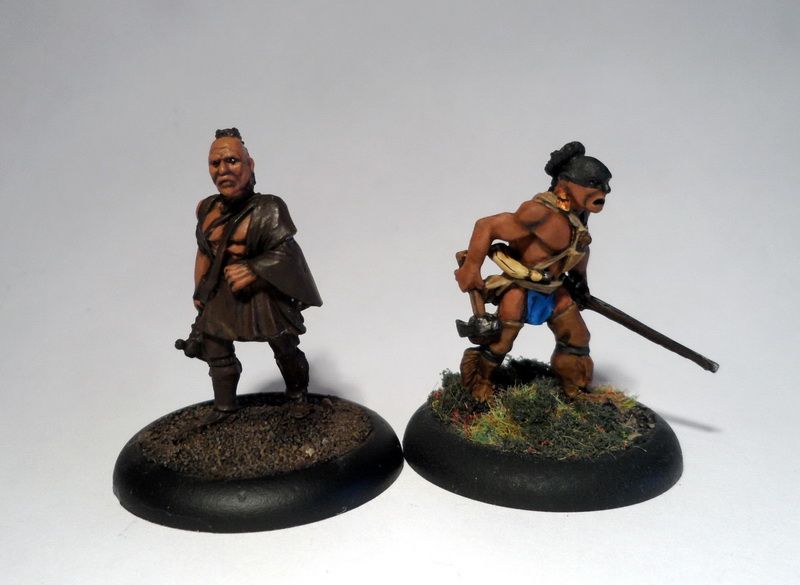
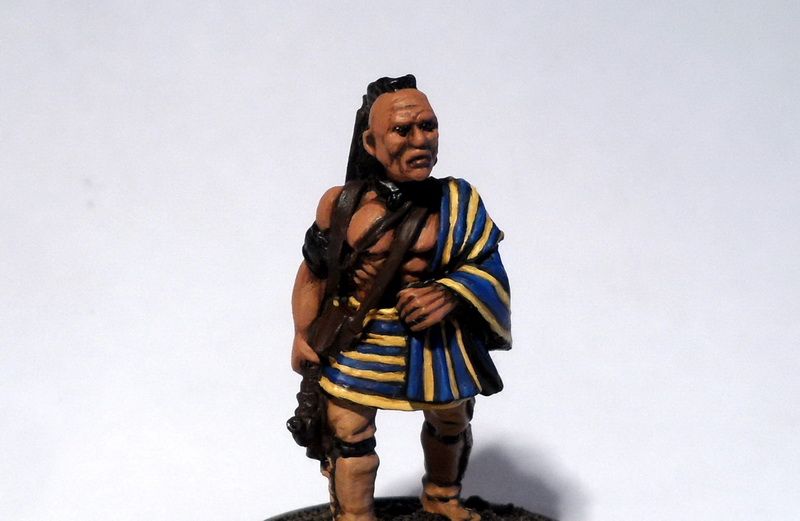
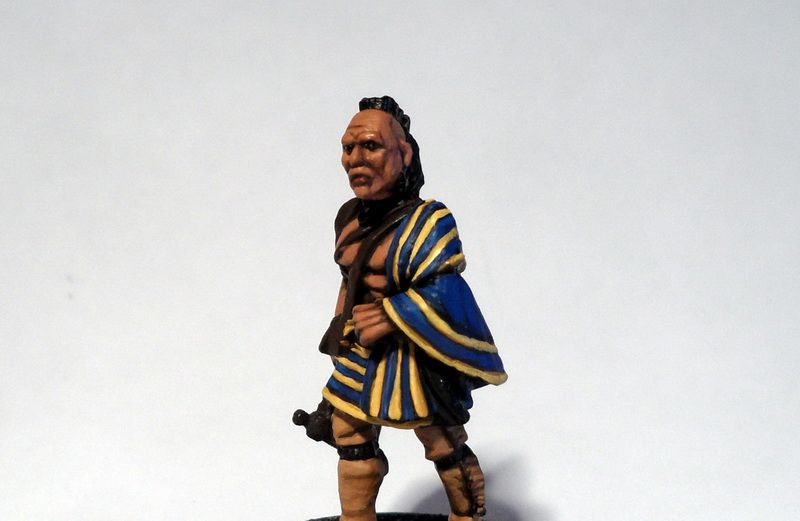
This will be a tutorial showing my latest technique and recepie for how to paint woodland indian flesh. It's been a few years since I painted my native American miniatures for This Very Ground, my skills and style has since then evolved a bit so when I painted Magua from the Last of the Mohicans blister I decided to paint him up the way I would paint indians today rather than mimic my old paintjobs.
Many of the steps are actually shared between my new and old method, and the first couple of steps can be easily used by people who just want a basic paintjob or who have to paint a lot and don't have time to spend hours on a single miniature, the last couple of steps are the advanced/evolved result.
You could most likely find a "indian fleshtone triad" from Wargames Foundry or some other manufacturer, but if you are like me - a person who prefers to spend cash on miniatures rather than owning every shade of each color imaginable (most of which are very used rarely) then you have to learn how to mix your own stuff.
If you are having a hard time mixing large enough quantities or like taking your time with each layer and not having to worry about the mixed paint dry on your palette then you could either mess around with a wet palette - OR use a more convenient method and get something like Vallejo Game Color "Glaze Medium 72069". This can be used as a drying retarder but should be used carefully, a drop or half a drop is enough to keep your mix from drying while not ruining texture and consistency. Also be careful as the drying time of the layers applied on your model increase with the amount of Glaze Medium you are using. It's easy to smear the paint if you aren't careful.
For this tutorial I simply mixed small quantities on my palette using nothing but water. But if I was painting more than one miniature at a time I would use the Glaze Medium.
The following paints are used for the flesh in this tutorial:
Vallejo:
Charred brown
Tan
Dwarf Skin
Citadel:
Averland Sunset (yellow)
The Army Painter Warpaints:
Strong Tone
Soft Tone
Anti-Shine
Step 1
The model is basecoated with black spray, then basecoated with Charred brown.
Step 2
Mix Charred brown and Tan, 75-25 ratio, paint all of the skin evenly but not too thick.
Step 3
Wash the skin with Strong Tone to add deep shading.
Step 4
Mix Charred brown and Tan , 60-40 ratio, paint the muscles in a way so that you leave some of the shading. The paint should be relatively thin but still able to cover well.
Step 5 (Basic paint job ends here)
Use a mix of Charred brown and Tan, but increase the amount of Tan to a 40-60 ratio. You should be able to highlight the muscles and facial features even further. Then wash the flesh with Soft Tone to mute the colors a bit and give them a slightly bronzed tint. My early woodland indians were painted this way and I think that you could well end your painting here if you like the result. If you want to achieve a slightly more advanced end result then use step 6 and 7.
Step 6 (Advanced paintjob)
The reason for the next two steps is to make the skin less dark and a bit more bronzed. I used pictures of Wes Studi in his role as Magua in "Last of the Mohicans" and tried to achieve a similar skintone. Using the following two steps also highlights the model further and enhances details and facial features.
We still use the basic mix of Charred brown and Tan, but now add yellow to the mix in 50-20-30 ratio. This layer is quite thin and required around two brushstrokes to fully cover the previous layer. Make sure that you leave the previous layers visible to create or enhance wrinkles, shading, facial features etc.
Step 7(Advanced paintjob)
For the final layer we add one more paint to the mix. Blend Charred Brown, Tan, Yellow and Dwarf Skin in a 25-25-25-25 ratio. This layer should be very thin and pretty much a glaze. A glace is a thinned down pretty transparent layer of paint. You should be able to touch an area on the model with your paintbrush and rub this thin layer off gently with motion rather than brush strokes.You can trace muscles, brows, cheekbones and such with your brush and see them gradually being highlighted in a subtle manner.
The glaze should be runny enough to rub off effortlessly from your brush - but not too watery as to drip or run once applied. Your best bet is to keep mixing paints and water on your palette until you are confident with the consistency almost rub it off on the areas.
The lips are painted with Tan and then washed with Strong Tone to darken them.
Matt Varnishing
I also use Army Painter's brush on matt varnish called "Anti-Shine". I find it to be a superb and reliable product. Matt varnishing will mute the colors a but but also make the surface a lot smoother. It has to be applied without any thinning and in amounts as if you were basecoating a model. It remains sticky and glossy for about two hours and does sometimes require even more to go dead matt and completely dry. So don't panic prematurely. One thing to know about this varnish is that it goes sticky fast, so make sure you apply it and cover segments of the model at one time. Disturbing a drying layer can make the surface uneven, or if you accidently touch it with your finger you can end up smearing the varnish and the paintjob! So be careful. Also - either base the miniature with flock and static grass before you apply Anti-Shine OR wait until it is 100% dry. I made a mistake once when I varnished the model and then forgot myself and flocked it. I had hell trying to gently remove static grass from the sticky surface.
Many of the steps are actually shared between my new and old method, and the first couple of steps can be easily used by people who just want a basic paintjob or who have to paint a lot and don't have time to spend hours on a single miniature, the last couple of steps are the advanced/evolved result.
You could most likely find a "indian fleshtone triad" from Wargames Foundry or some other manufacturer, but if you are like me - a person who prefers to spend cash on miniatures rather than owning every shade of each color imaginable (most of which are very used rarely) then you have to learn how to mix your own stuff.
If you are having a hard time mixing large enough quantities or like taking your time with each layer and not having to worry about the mixed paint dry on your palette then you could either mess around with a wet palette - OR use a more convenient method and get something like Vallejo Game Color "Glaze Medium 72069". This can be used as a drying retarder but should be used carefully, a drop or half a drop is enough to keep your mix from drying while not ruining texture and consistency. Also be careful as the drying time of the layers applied on your model increase with the amount of Glaze Medium you are using. It's easy to smear the paint if you aren't careful.
For this tutorial I simply mixed small quantities on my palette using nothing but water. But if I was painting more than one miniature at a time I would use the Glaze Medium.
The following paints are used for the flesh in this tutorial:
Vallejo:
Charred brown
Tan
Dwarf Skin
Citadel:
Averland Sunset (yellow)
The Army Painter Warpaints:
Strong Tone
Soft Tone
Anti-Shine
Step 1
The model is basecoated with black spray, then basecoated with Charred brown.
Step 2
Mix Charred brown and Tan, 75-25 ratio, paint all of the skin evenly but not too thick.
Step 3
Wash the skin with Strong Tone to add deep shading.
Step 4
Mix Charred brown and Tan , 60-40 ratio, paint the muscles in a way so that you leave some of the shading. The paint should be relatively thin but still able to cover well.
Step 5 (Basic paint job ends here)
Use a mix of Charred brown and Tan, but increase the amount of Tan to a 40-60 ratio. You should be able to highlight the muscles and facial features even further. Then wash the flesh with Soft Tone to mute the colors a bit and give them a slightly bronzed tint. My early woodland indians were painted this way and I think that you could well end your painting here if you like the result. If you want to achieve a slightly more advanced end result then use step 6 and 7.
Step 6 (Advanced paintjob)
The reason for the next two steps is to make the skin less dark and a bit more bronzed. I used pictures of Wes Studi in his role as Magua in "Last of the Mohicans" and tried to achieve a similar skintone. Using the following two steps also highlights the model further and enhances details and facial features.
We still use the basic mix of Charred brown and Tan, but now add yellow to the mix in 50-20-30 ratio. This layer is quite thin and required around two brushstrokes to fully cover the previous layer. Make sure that you leave the previous layers visible to create or enhance wrinkles, shading, facial features etc.
Step 7(Advanced paintjob)
For the final layer we add one more paint to the mix. Blend Charred Brown, Tan, Yellow and Dwarf Skin in a 25-25-25-25 ratio. This layer should be very thin and pretty much a glaze. A glace is a thinned down pretty transparent layer of paint. You should be able to touch an area on the model with your paintbrush and rub this thin layer off gently with motion rather than brush strokes.You can trace muscles, brows, cheekbones and such with your brush and see them gradually being highlighted in a subtle manner.
The glaze should be runny enough to rub off effortlessly from your brush - but not too watery as to drip or run once applied. Your best bet is to keep mixing paints and water on your palette until you are confident with the consistency almost rub it off on the areas.
The lips are painted with Tan and then washed with Strong Tone to darken them.
Matt Varnishing
I also use Army Painter's brush on matt varnish called "Anti-Shine". I find it to be a superb and reliable product. Matt varnishing will mute the colors a but but also make the surface a lot smoother. It has to be applied without any thinning and in amounts as if you were basecoating a model. It remains sticky and glossy for about two hours and does sometimes require even more to go dead matt and completely dry. So don't panic prematurely. One thing to know about this varnish is that it goes sticky fast, so make sure you apply it and cover segments of the model at one time. Disturbing a drying layer can make the surface uneven, or if you accidently touch it with your finger you can end up smearing the varnish and the paintjob! So be careful. Also - either base the miniature with flock and static grass before you apply Anti-Shine OR wait until it is 100% dry. I made a mistake once when I varnished the model and then forgot myself and flocked it. I had hell trying to gently remove static grass from the sticky surface.
The Unusual: A Strong Warm Front
For those of you west of the Cascade crest, something definitely unusual is occurring: the air is getting warmer and warmer, even after sunset. The reason? The passage of something we get rarely: a decent warm front.
Strong warm fronts are unusual in the Northwest. Our most frequent type of front is a warm occlusion, which brings unremarkable temperature changes, modest winds shifts, and wet weather. Occasionally we get a cold front. But rarely a warm front. For those of you who have not taken Weather 101, consider the classic evolution of a midlatitude cyclone (see graphic). We start with a wave on a stationary front. Where cold air is moving south you get a cold front, where warm air moves northward a warm front. The cold front (blue) moves faster than the warm front (red), eventually catching the warm front and in the process producing an new front that combines the characteristics of both...an occluded front (purple color on the figure). Occluded fronts are boring and uneventful in general.
Frontal cyclones tend to develop over the western Pacific, where fresh cold air from Asia hits the warm waters of the Kuroshio current. The systems age as they move eastward across the Pacific and eventually become weak occluded systems when the reach us. And the low level frontal structures get homogenized during their passage across the vast Pacific. We get wimpy, elderly occluded fronts most of the time.
But sometimes we get lucky and a system revs up over the eastern Pacific and we get a decent warm front...and that happened during the past day. Here is a model forecast for Thursday morning (solid lines are surface pressure, shading is temperature at about 1 km above the surface, 10m winds are also shown). A very nice warm front. Southwesterly winds on the warm side and southeasterly winds on the other. Good temperature contrast (yellow is warmer) and a well-defined pressure trough (area of lower pressure).
As the front went through today along the coast and the Northwest interior winds switched to southerly or southwesterly and temperatures rose. Here is what happened at the UW (times are in GMT, 18 is 10 AM). Temperatures rose during the day into the lower 50s (third panel down), winds shifted to southerly (second panel), and wind speeds increased (top panel).
The profiler at Seattle Sand Point shows the winds and temperatures aloft over time. Very nice transition from modest southeasterly flow to strong southwesterlies and a big increase in temperature.
Behind the warm front is a current of very moist air that extends far back to the southwest (see image for Thursday evening below):
And take a look at the water vapor imagery Friday morning from a NWS satellite (it shows the amount of water vapor in the middle to upper troposphere).....a strong current of water from guess where? Hawaii! (whiter means more water vapor)
Fortunately, for Washington and Oregon most of this stream is heading just north of us, resulting in the heaviest rain over the next 48 h over Vancouver Island and southern B.C. Red colors are 5-10 inches! The Olympics and north Cascades will get a piece of this. Head south to escape it.
The big down side of all this is for skiing....very high freezing levels, warm temperatures, strong winds, and rain on snow is not good. Sorry.
And remember that the NW Weather Workshop is today and tomorrow (see link in the upper right of this blog for more information). It will be a great meeting and one that should be generally accessible to layfolks.
Strong warm fronts are unusual in the Northwest. Our most frequent type of front is a warm occlusion, which brings unremarkable temperature changes, modest winds shifts, and wet weather. Occasionally we get a cold front. But rarely a warm front. For those of you who have not taken Weather 101, consider the classic evolution of a midlatitude cyclone (see graphic). We start with a wave on a stationary front. Where cold air is moving south you get a cold front, where warm air moves northward a warm front. The cold front (blue) moves faster than the warm front (red), eventually catching the warm front and in the process producing an new front that combines the characteristics of both...an occluded front (purple color on the figure). Occluded fronts are boring and uneventful in general.
Frontal cyclones tend to develop over the western Pacific, where fresh cold air from Asia hits the warm waters of the Kuroshio current. The systems age as they move eastward across the Pacific and eventually become weak occluded systems when the reach us. And the low level frontal structures get homogenized during their passage across the vast Pacific. We get wimpy, elderly occluded fronts most of the time.
But sometimes we get lucky and a system revs up over the eastern Pacific and we get a decent warm front...and that happened during the past day. Here is a model forecast for Thursday morning (solid lines are surface pressure, shading is temperature at about 1 km above the surface, 10m winds are also shown). A very nice warm front. Southwesterly winds on the warm side and southeasterly winds on the other. Good temperature contrast (yellow is warmer) and a well-defined pressure trough (area of lower pressure).
As the front went through today along the coast and the Northwest interior winds switched to southerly or southwesterly and temperatures rose. Here is what happened at the UW (times are in GMT, 18 is 10 AM). Temperatures rose during the day into the lower 50s (third panel down), winds shifted to southerly (second panel), and wind speeds increased (top panel).
The profiler at Seattle Sand Point shows the winds and temperatures aloft over time. Very nice transition from modest southeasterly flow to strong southwesterlies and a big increase in temperature.
Behind the warm front is a current of very moist air that extends far back to the southwest (see image for Thursday evening below):
And take a look at the water vapor imagery Friday morning from a NWS satellite (it shows the amount of water vapor in the middle to upper troposphere).....a strong current of water from guess where? Hawaii! (whiter means more water vapor)
Fortunately, for Washington and Oregon most of this stream is heading just north of us, resulting in the heaviest rain over the next 48 h over Vancouver Island and southern B.C. Red colors are 5-10 inches! The Olympics and north Cascades will get a piece of this. Head south to escape it.
The big down side of all this is for skiing....very high freezing levels, warm temperatures, strong winds, and rain on snow is not good. Sorry.
And remember that the NW Weather Workshop is today and tomorrow (see link in the upper right of this blog for more information). It will be a great meeting and one that should be generally accessible to layfolks.
Subscribe to:
Comments (Atom)