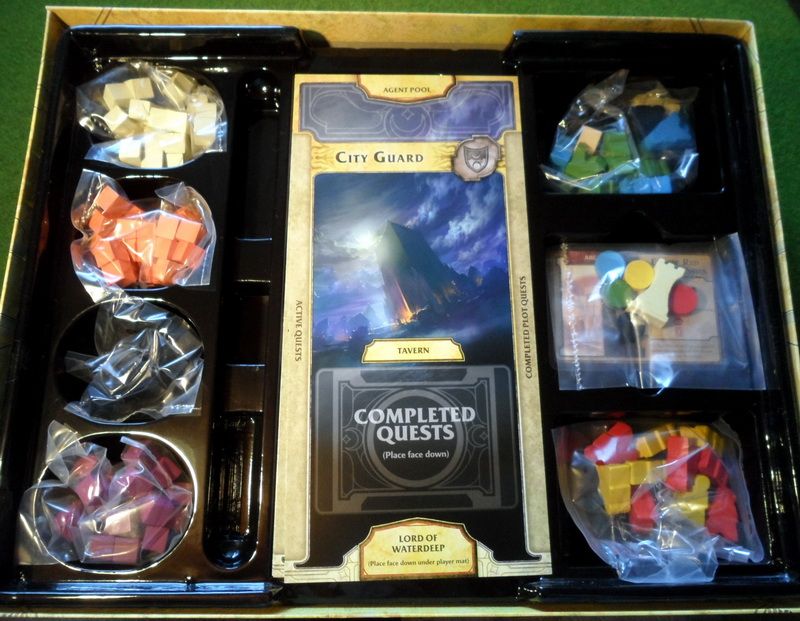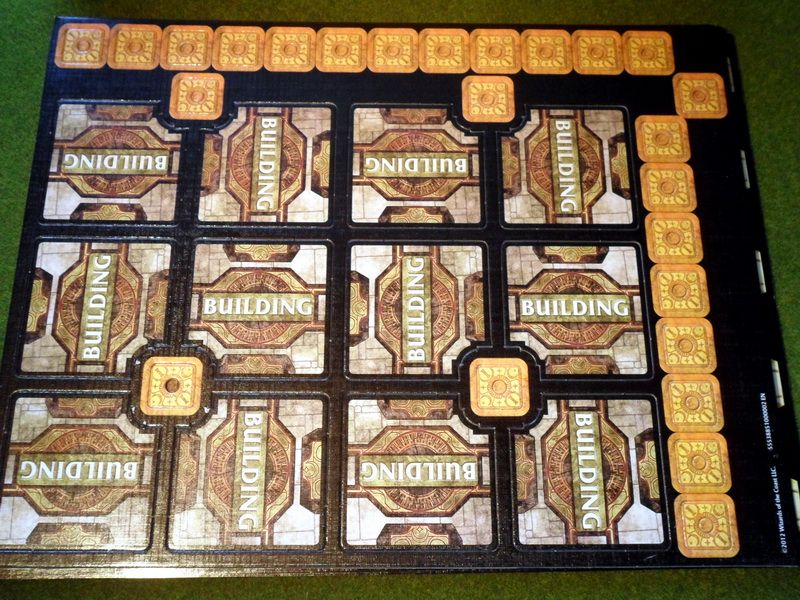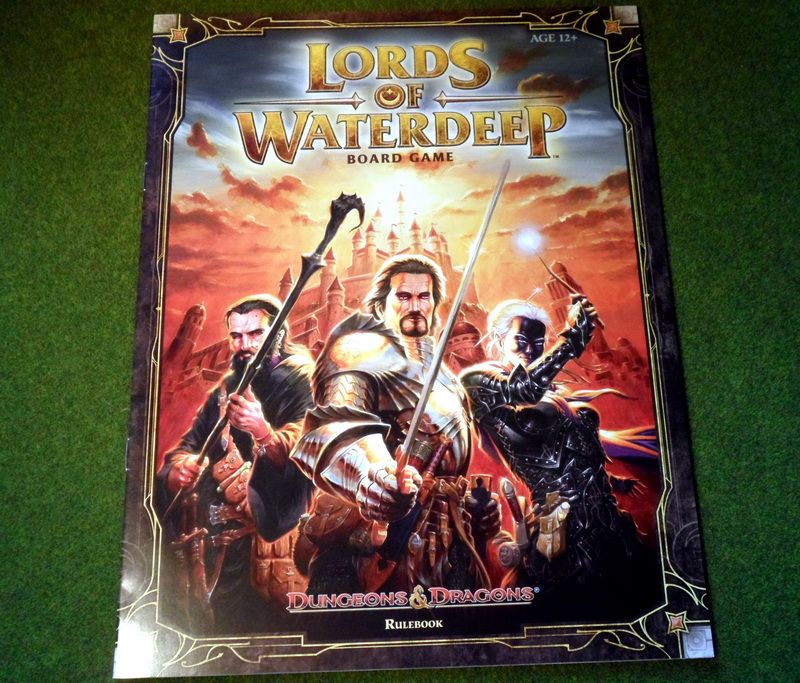
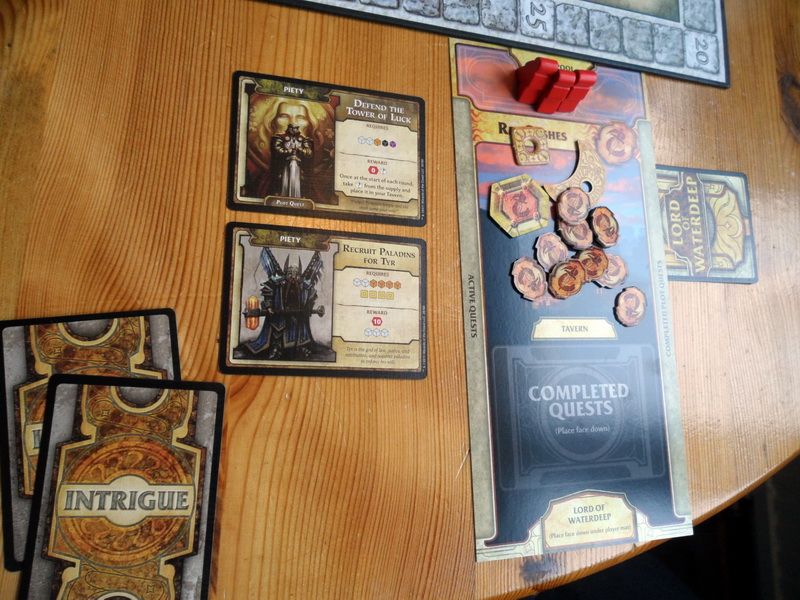
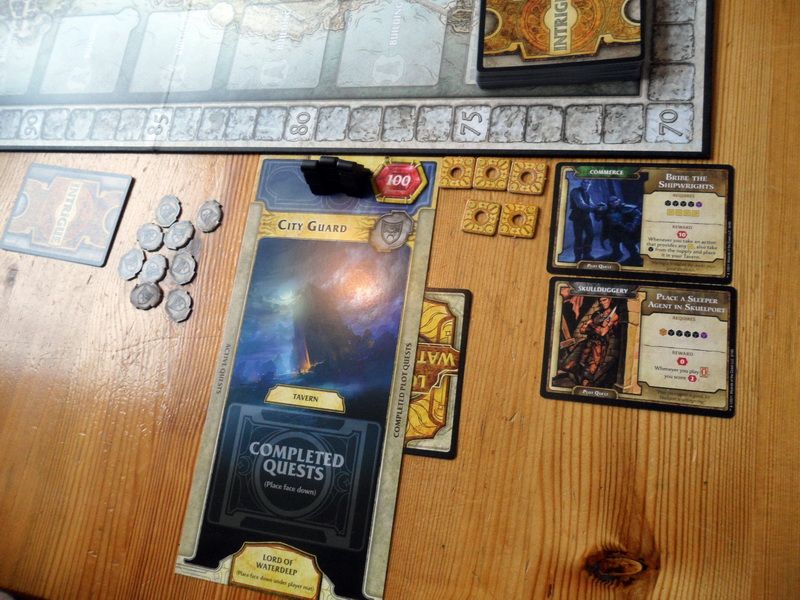
 So I got to play Lords of Waterdeep with my regular boardgame group yesterday where we managed to play 2 games. Lords of Waterdeep is a resource handling worker placement game - with a Forgotten Realms theme that doesn't impact the game play. In fact the fantasy theme is just there to give the game a setting and some cool fantasy artwork more than provide any fantasy specific rules or twists. This theme does so little impact on the game that it doesn't even have any special rules or differences between the factions - which while taken from the Forgotten Realms and probably known to gamers and readers of that universe - don't do much else than provide an alternative name for the different colors that players use for their gaming pieces.
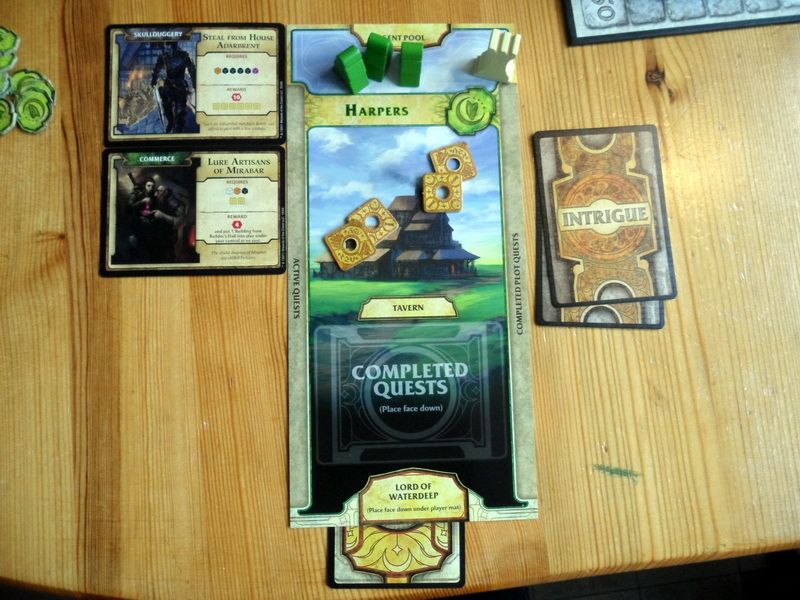
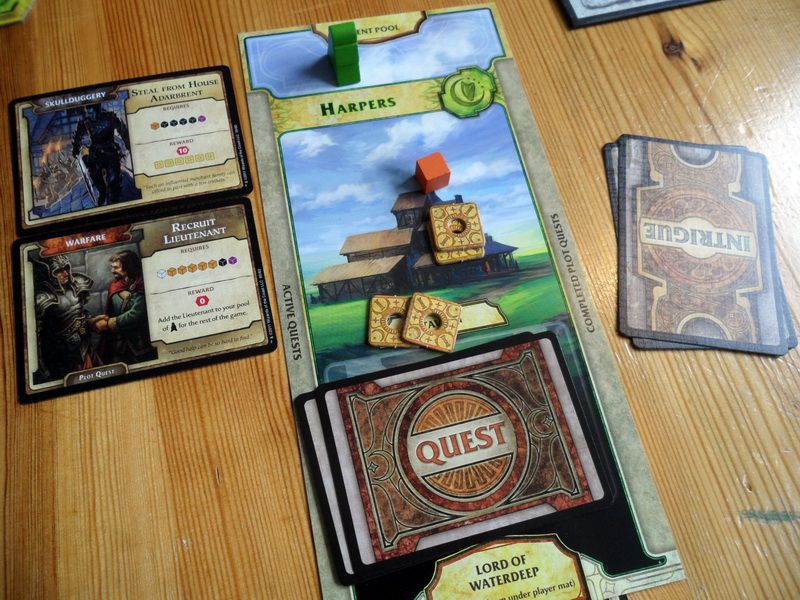 Now this may sound quite awful but the game itself is really good. Players each take up the role of a "Lord of Waterdeep", who are competing for power and glory. You get power and glory by completing quests, quests are not completed by the lords themselves but rather by adventure groups put together by the lords personal agents. This is where the resource handling comes in, as each quests has a list of required resources that needs to be gathered before it can be completed (adventurer types and money) the role of each Lord is to send out his agents to fine comb the streets and locations of the city of Waterdeep and gather warriors, wizards, clerics, rouges and gold necessary to form expeditions for the quests.
 As soon as you have enough resources to complete a quest an agent of yours can pay the required resources from your stash, complete the quest and cash in the victory points and other rewards the various quests yield. It's a very simple game and it plays fast. It is however pretty cool and a bit more complex than you may think.
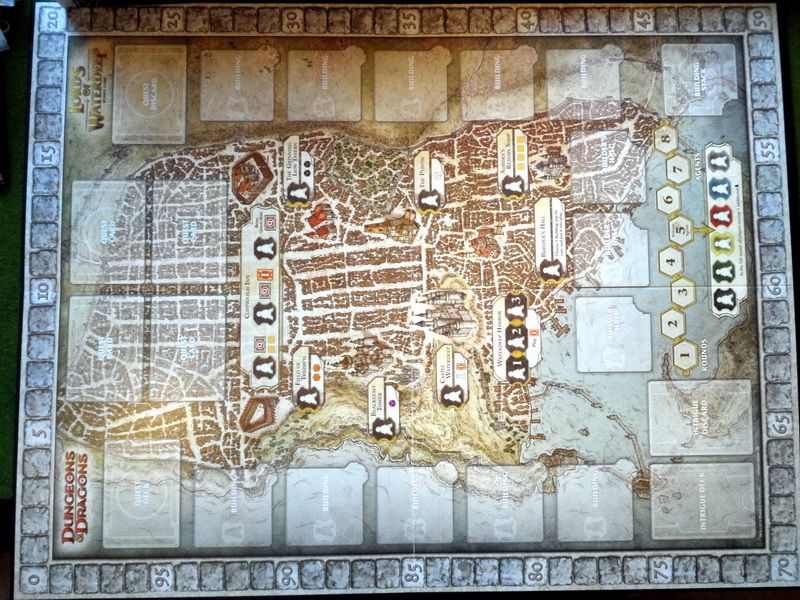
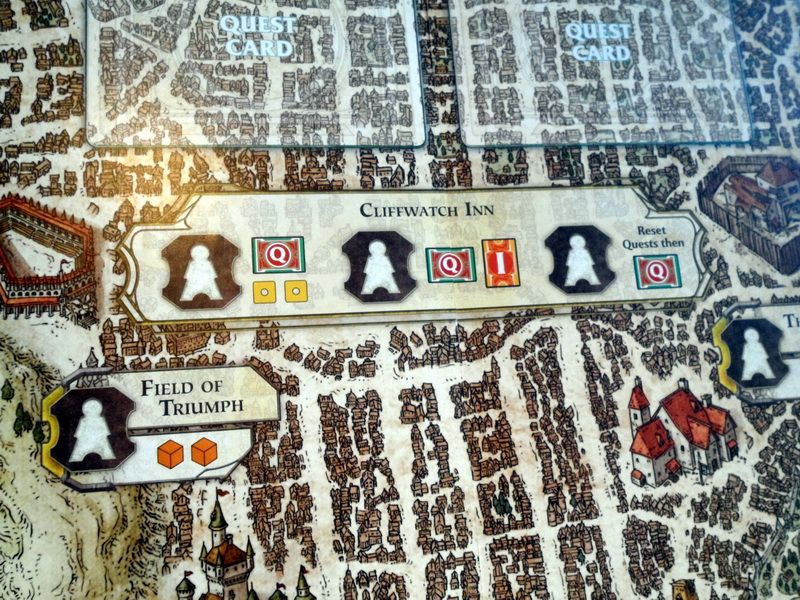
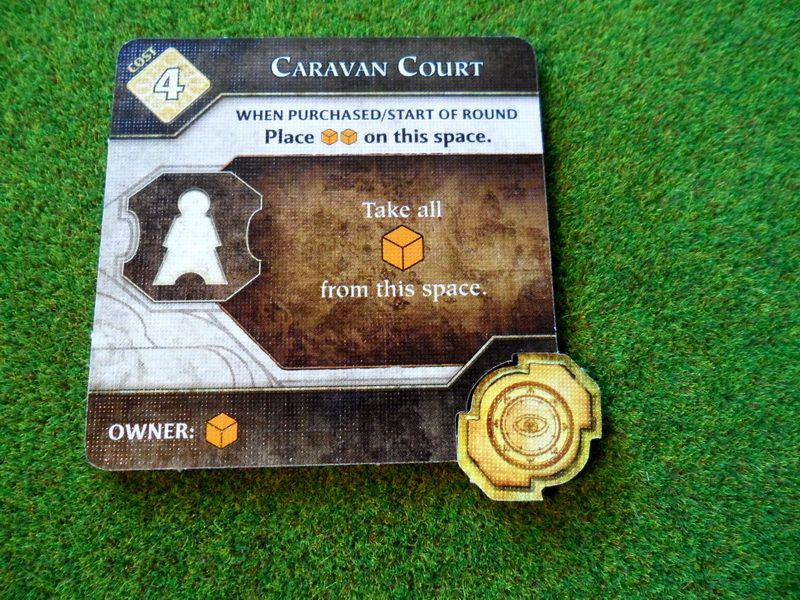
Depending on the number of players, each lord will get a limited number of agents. Agents are placed in locations, and there is often a single slot in each location which makes it very competitive so that player order and turn initiative becomes important. New buildings can
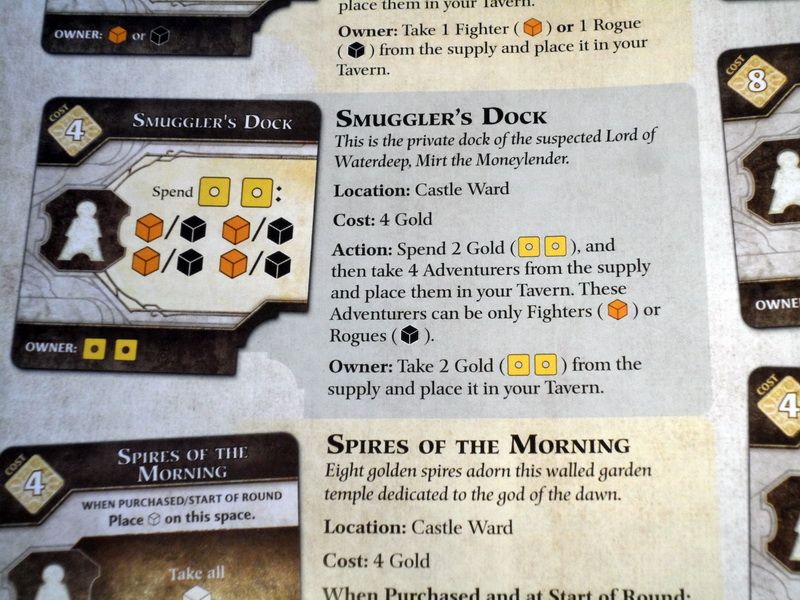
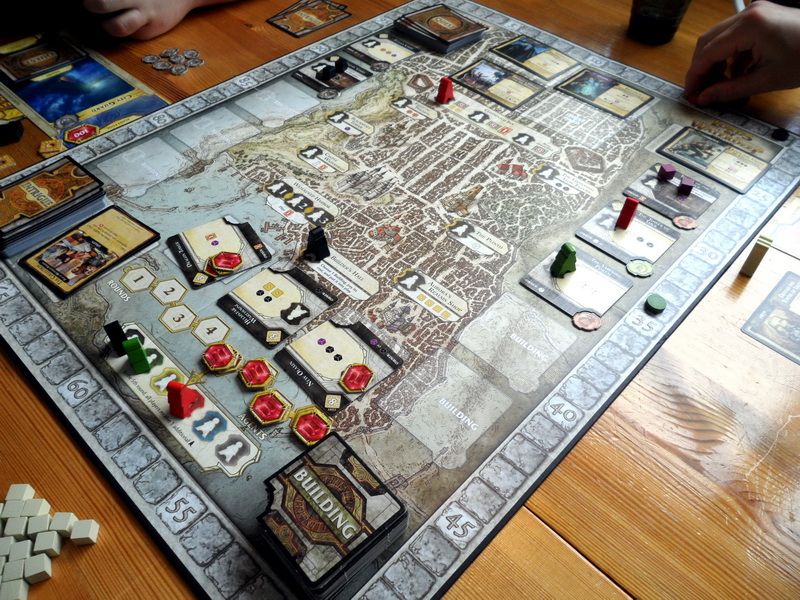 be added to the city if you decide to build some in the "Builders hall", these new buildings are better than the original locations as they provide more resources per visit - but also provide the owner with a "owner bonus" whenever other players are using your buildings. Thus
 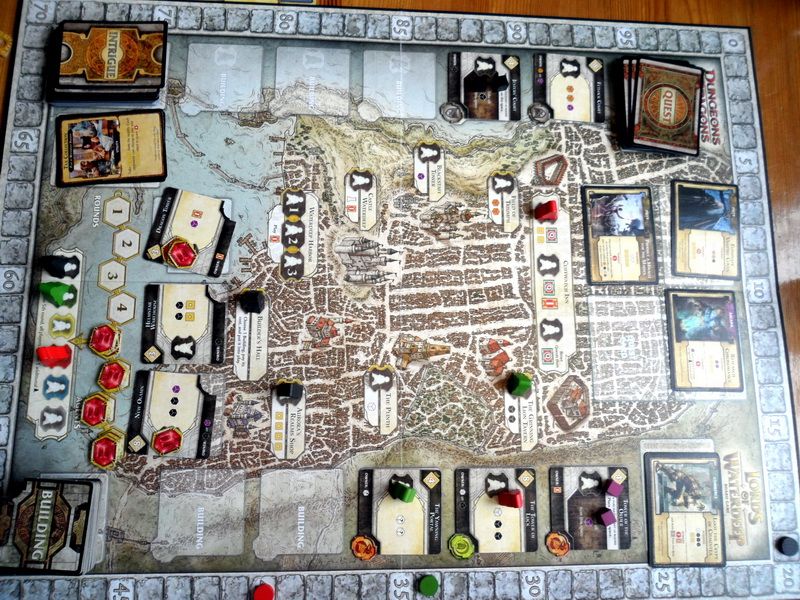 owning a lot of buildings automatically has the opponents contribute to your cause.
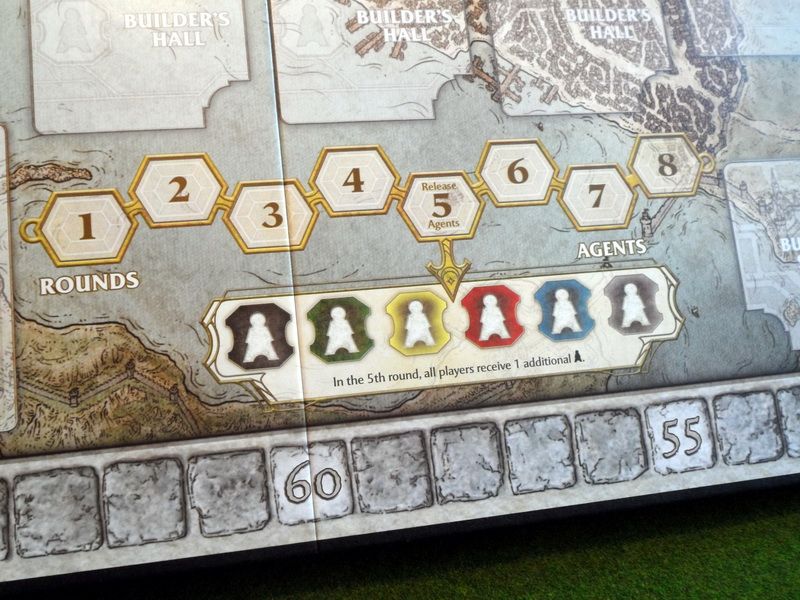
The game really starts getting interesting about midgame when some new buildings have been built and an additional agent has been added to each players supply. This makes competition for resources even tougher and people really begin using the added buildings - but also keep thinking how to gather resources without helping out their opponents by doing so. Long term planning is crucial but fragile.
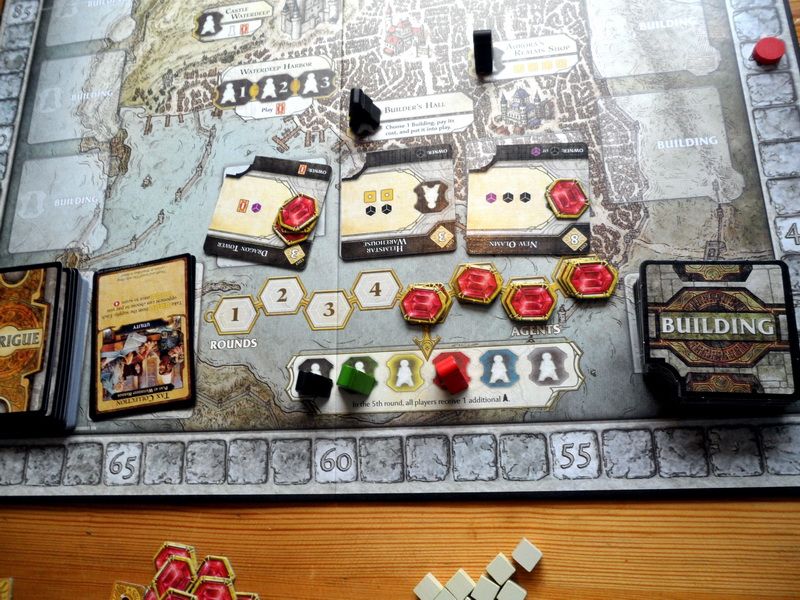 Players can string together several events to cash in a larger victory points bonus - but it also means your plans can be ruined by another player picking a resource or scrapping all existing face up quests in
  the Tavern. You need to keep a cool head and a bit of a poker face not to reveal too much about your lords identity (which remains hidden until the game ends), if people start to notice that you take a lot of Arcane quests they may come to the conclusion that your lord provides a bonus for each such quest that gets completed. They can then screw you over by blocking necessary resources or scrapping quests in the tavern.
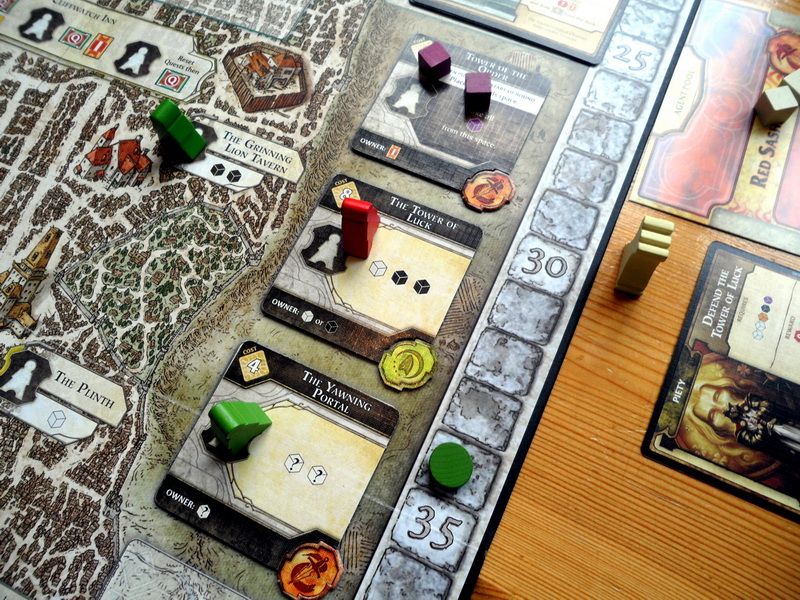
In our last game I had built a building that allowed me to - when visited by an agent - to pick up a quest in the tavern and immediately complete it. If I completed a quest that way I would get additional victory points. However I needed to first gather resources in order to be able to finish that quest, and I could not rush my actions or be too eager doing stuff unless I wanted to reveal my plan. It was a very tense
 turn as I watched the other player putting down their agents on various spots and hoping they would avoid picking the spots where I needed to go!
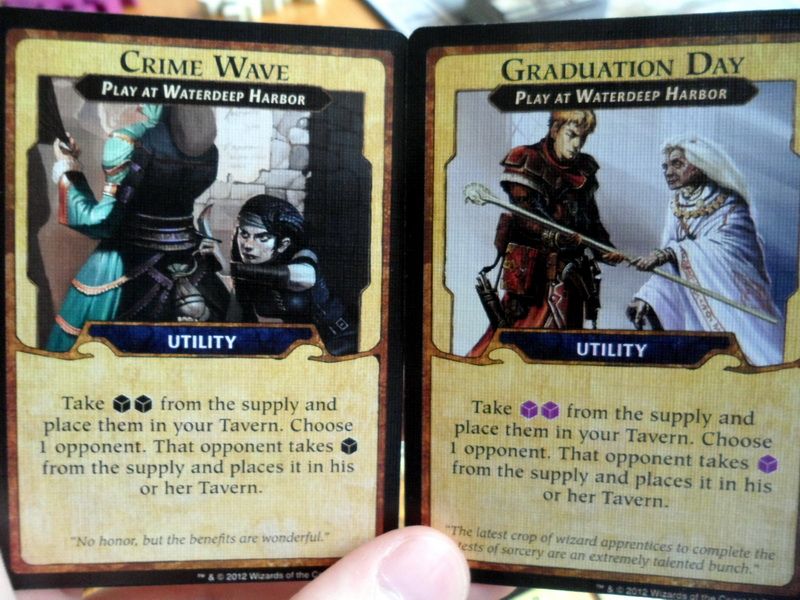
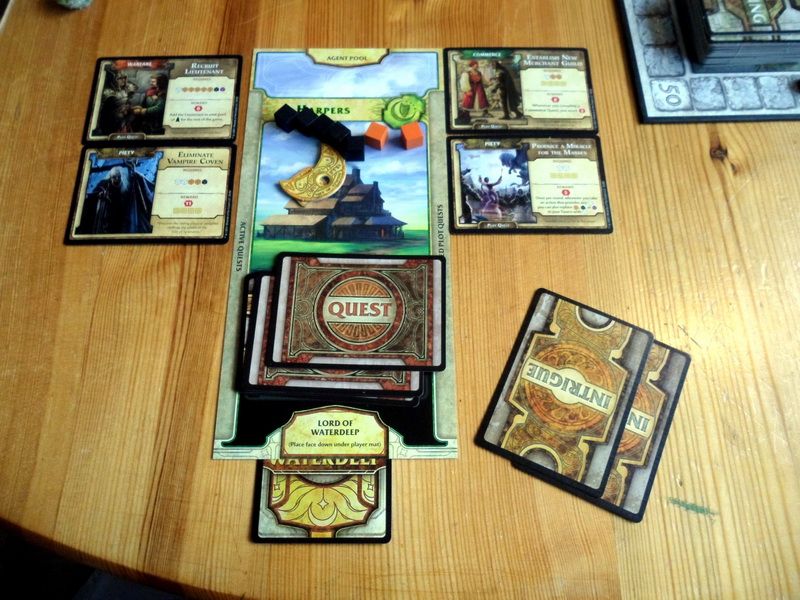
 Much of the excitement comes from players taking turns in placing one of their agents at a time, there are possibilities to play intrigue
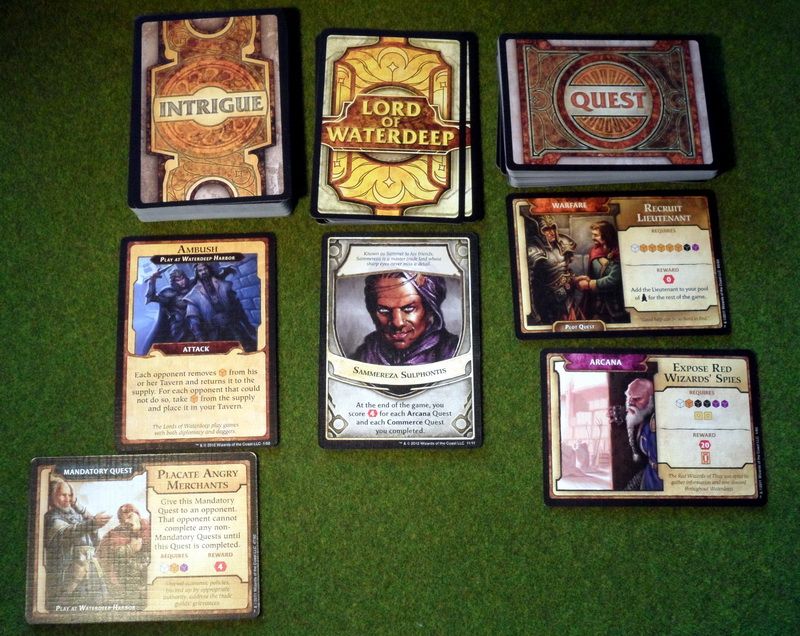
 cards and the whole intrigue part of the game can be very tactical in that your agents that perform intrigue actions can be used twice but their second action is always at the very end of each game turn when many locations are already taken by other players. The intrigue cards are a mix of cards that give you a bonus, cards with a shared bonus between several players, cards that penalize opponents and a real knife in the back card called "Mandatory quest" which is great for draining opponent resources. The mandatory quests are as the name suggest required to be finished before an opponent can complete his other quests. The reward is very poor for the number of adventurers needed, and it can be a setback for players that have a fragile balance of resources and a great way of stopping opponents either early in the game when resources are scarce or in the endgame when everyone is spending their last resources on the final quests in the last turn.
  Lords of Waterdeep is a very fast game, the box says 2-5 players takes 90 minutes. Since you get more agents if you play 2 players, and less agents when you play more than that I think it may be fairly accurate. I would recommend playing it twice in a row if you are learning to play the game or bringing new players into it.
Our first game was quite OK but not really spectacular. However the second game when everyone knew all the tricks and tactics was really damn good and
 a lot more exciting. By that time we all made bold moves, planned ahead and made better use of the first player and intrigue mechanics.
As I said at the beginning of the review, the theme is paper thin. But it doesn't really matter since the game mechanics are really good. This is a game that I think can be played with people that aren't normally board gamers or don't play that much. It's easy to teach, plays fast and has some really good depth once you learn it.
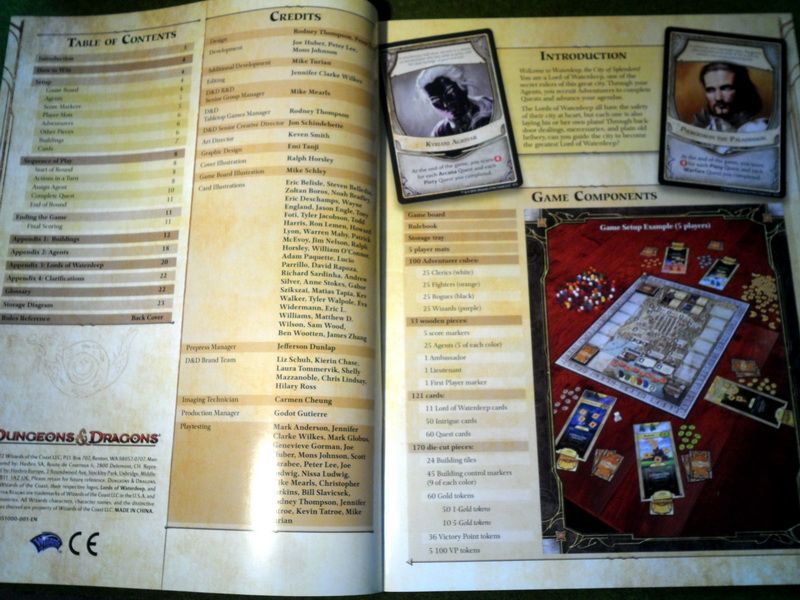
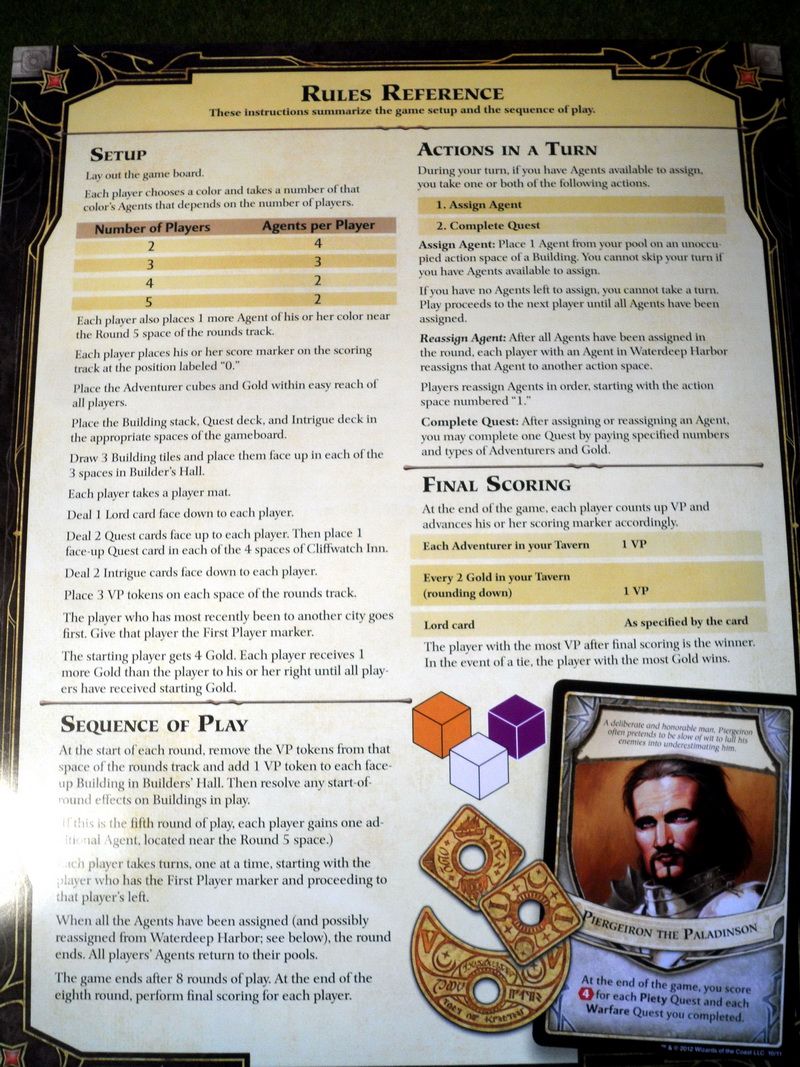
 My only critique I would have is perhaps towards the rulebook, only 4 out of 22 pages are rules (the rest are descriptions of buildings and setup diagrams). While the rules are mostly clear I feel that a few things could have been explained a bit more in depth, most of the flaws are picked up in the FAQ document for this game (and there aren't that many so don't worry). Still they could have added slightly longer explanations of actions and what you can and can't do in the more specialized areas such as Waterdeep harbor where intrigue cards are played or a more clear description on how the "Ambassador" agent works (the text for this entry is quite poorly worded and cut short imo).
But overall this is a very good game, and it's another fairly "cheap" title . I got mine for 285SEK which is a bargain and about the same price as Spartacus. It feels nice to be able to to take a risk buying a boardgame when the price tag isn't overwhelming. Boardgames these days are a huge investment and far from all are really worth the money.
Lords of Waterdeep is a great game and if you like games like Puerto Rico this will surely appeal to you as well. I give it a 8.5/10 and happily play this more often.