Saturday, June 2, 2012

That wonderful shopping round

Remember the interview with Pat Sajak when he fessed up to imbibing a few margaritas during long-ago Wheel of Fortune tapings? Well, if you don't remember it, you're not a game show fan (so what are you doing here?) or you've got a really bad memory.

An overlooked part of the interview was Pat's trashing of the shopping round, which used to litter Wheel like a non-housebroken dog. You know, that thrilling interlude when housewives would slowly pick prizes from the stage. Then Charlie O'Donnell would read War and Peace sized reams of advertising copy.

I bring this up because a thread on Matt Ottinger's board recently got into old Wheel, including the dreaded shopping round. One poster actually had the guts to admit that the old version of Wheel got tedious because of the round. "I found the shopping to be deadly dull. Glad they got rid of it." Admitting that an old version of any show might somehow be inferior to the current version is almost heresy on Matt's super-traditionalist board.

Oh, somebody else suggested a change to the current version's bonus round. To which one of the board's loudest posters elegantly replied that the current bonus round was better, and if you think otherwise, you can "go screw yourselves." Just another day at Game Show Forum.

Empire of the Dead - Alternate activation test results

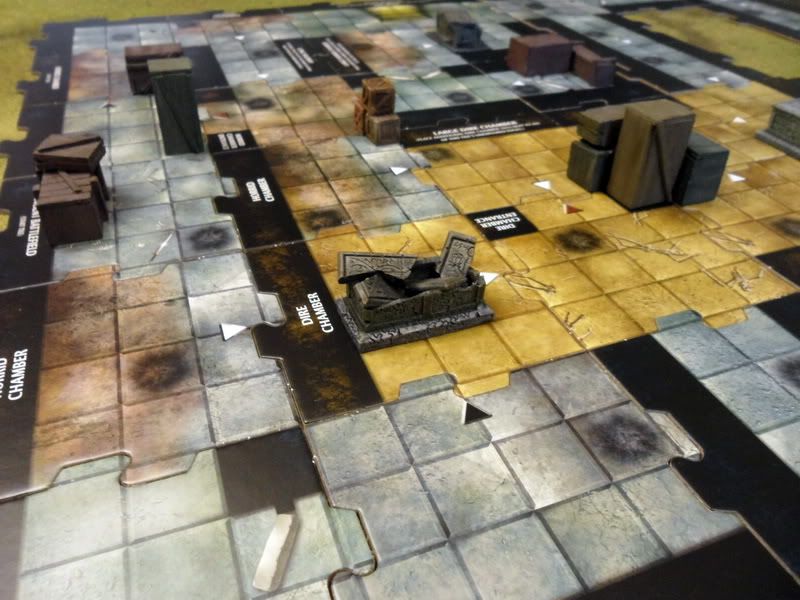
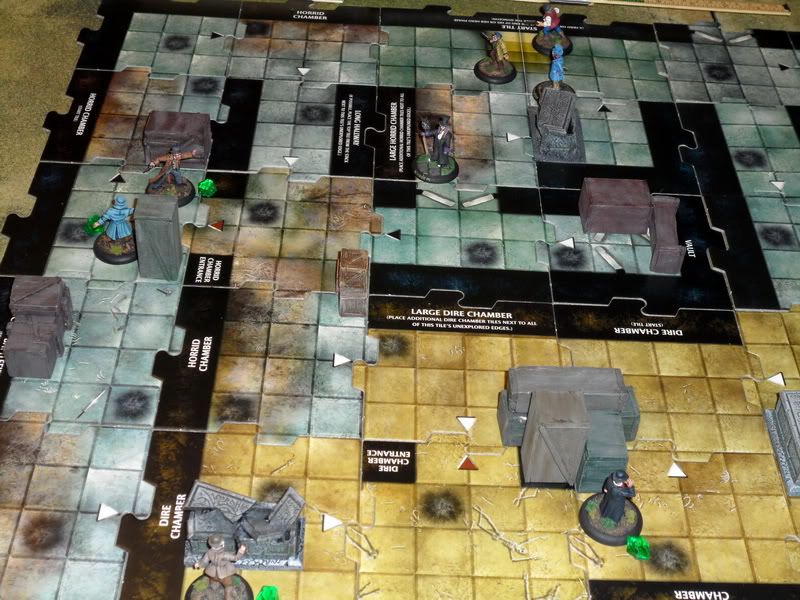
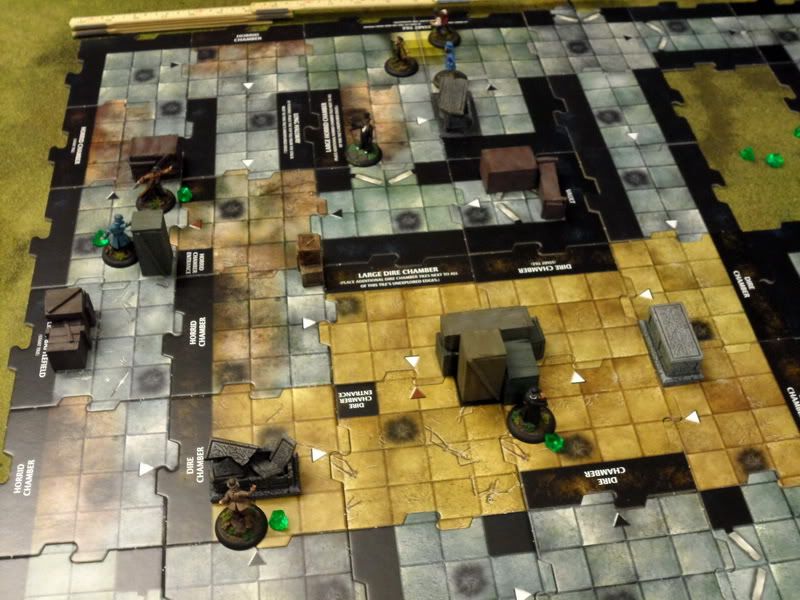
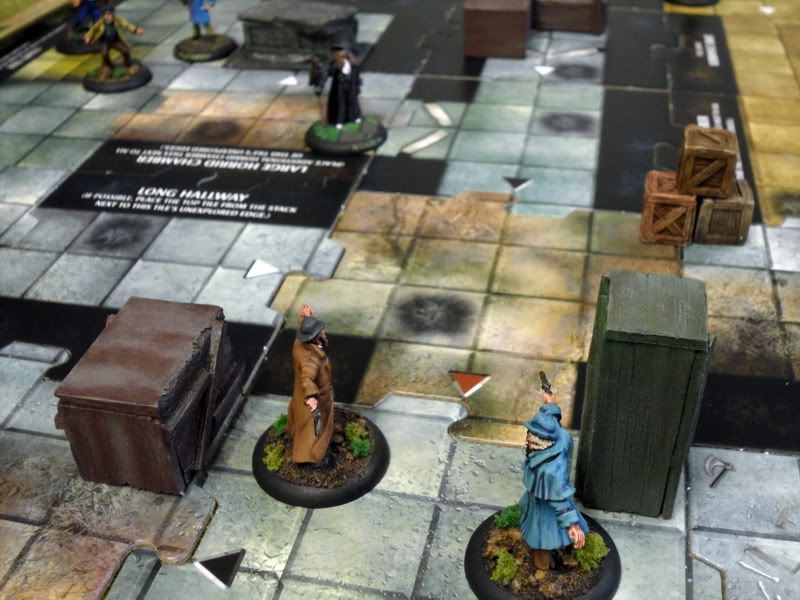
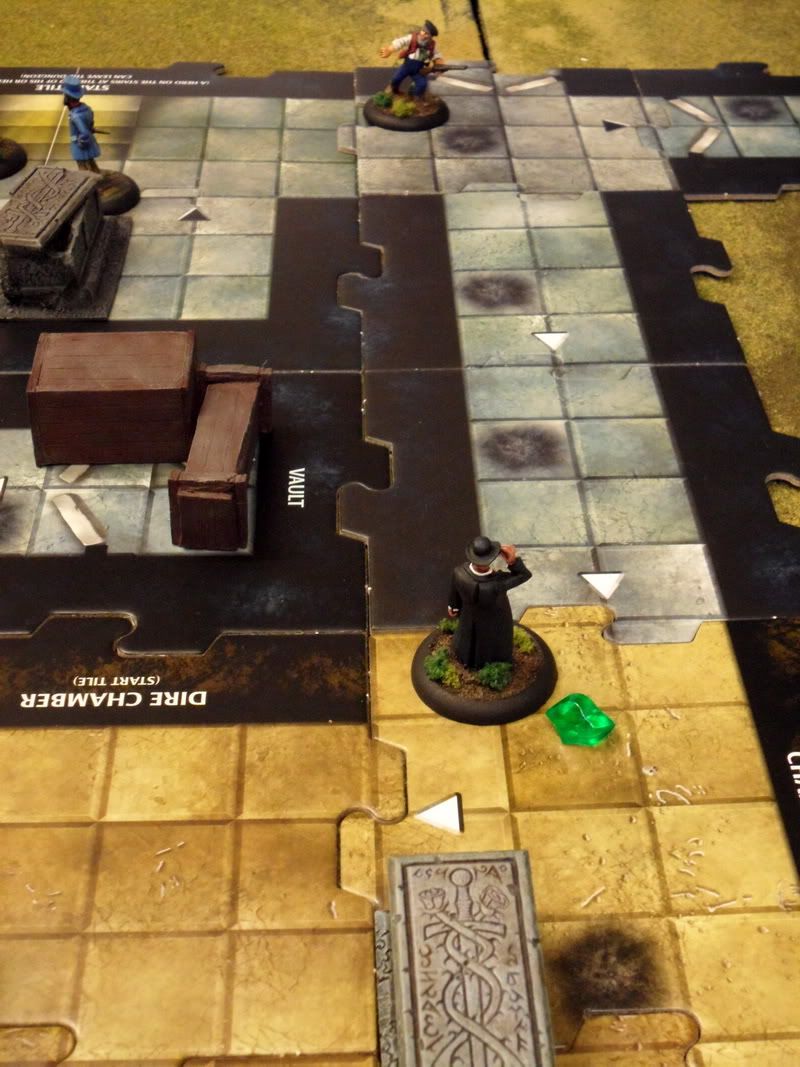
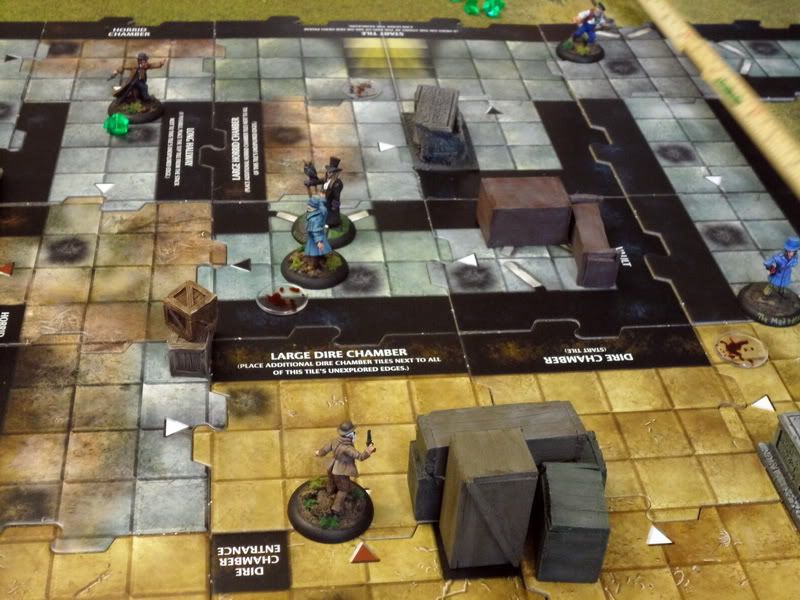
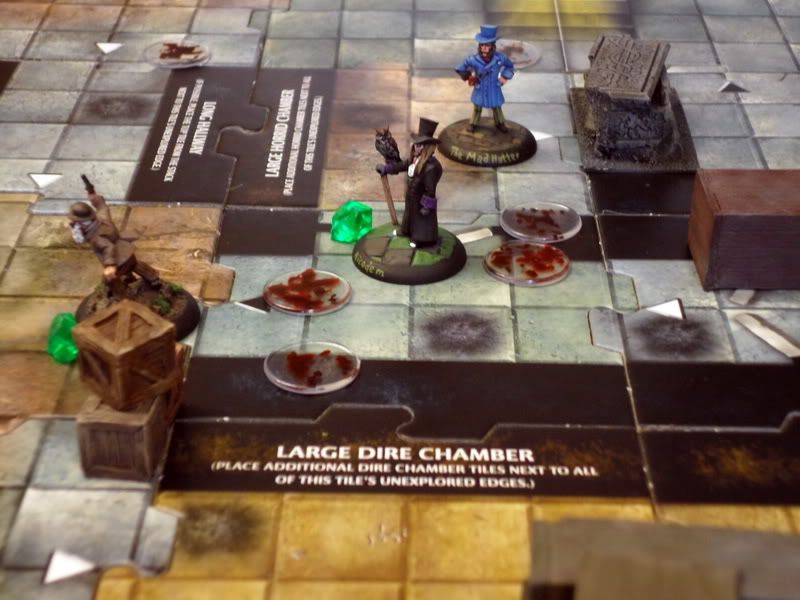
I promised I would try out the rules with alternate activations, so I did just that while me and my friend were at it. We made two small forces outside of the campaign and armed them with generic weapon.

The scenario we used was "Fracas", the basic fight scenario since we were more interested to try out alternate activation than keeping new scenario rules in mind.

Gentlemans Club (no affiliation)

President w Heavy Pistol
3x Membership w Light Pistol

Nosferatu

Graaf
3x Thrall, 1 Shotgun, 2 w knifes

Location: Sewers
Time of day: LoS restriction due to darkness in the sewers.

So, alternate activation. We kind of used ideas from other games such as Secrets of the third Reich. You roll initiative, the winner moves 1 model first, then you alternate in activating 1 model at a time. Below are some things that came up during our rather casual testing session. It is possible to make the game work with alternate activation but it's not a clean transition.


"Delaying activations"
If one player has more miniatures than his opponent, the opponent may choose to delay his activation if he rolls a successful "Bravado check". This delay is only possible as long as one side has fewer miniatures on the table. In this case we both had equal amounts of miniatures. But this could come in handy when you want to force a superior opponent to move his "trash" and start moving his good units instead of becoming out maneuvered.

"Watch & Shoot" (reaction fire)
This was the first thing that didn't work. We came to the conclusion that the best thing would be to play it in a way so that models who had not shot during the current turn were able to make a "watch & shoot" action. However that would also count as an activation (pretty much like in Secrets of the Third Reich). Nothing more can be done by that model for the remainder of the turn.

Charges & Close combat
This was the second thing that didn't work straight away. Close combat in the core rules allow you to quickly and easily gang up on a single enemy model. With alternate activations this becomes difficult since the close combat step is at the end of each players turn sequence. This means that a model that charges an enemy would have to immediately resolve the close combat phase. If the enemy wasn’t defeated - another model could charge into the same combat and support either side, in which case the +1 bonus for each friendly model in combat would be used.

This is really the only 3 areas that I think would pose a problem for those wanting to play this game with "alternate activation" instead of IGOUGO. The main issue is really close combat, since the turn sequence has each player resolve all of their steps before handing the turn over to the opponent in the core rules. Having played both the core rules and trying out this tweak I must admit I prefer the IGOUGO. Alternate activations doesn't really add anything significant - or rather - it doesn't make the experience mind-blowing enough to bother with this tweak. If you are skeptical about the IGOUGO I would advice to still give the game a chance, I myself was positively surprised as I too think alternate activations make a good backbone for skirmish gaming.

Btw, our test game ended in the Gentlemen getting wiped out, 3 men killed and last 1 ran away.

Friday, June 1, 2012

GSN ratings chatter

Douglas Pucci has listed another week of GSN viewer numbers. Your humble blogger and some other posters chew over the figures on the GSN Schedule board...

Douglas just posted the ratings for May 21-27. Haven't had any time to analyze them. But I can say that Steve Harvey's Family Feud and 5th Grader accounted for an almost ridiculous eighteen of the top twenty shows.

Looked at the numbers quick. The viewership averages were 300K/242K prime time/total day for the week. Not bad by GSN standards. Friday prime time continued to stink and Tuesday was even a little worse. Sunday, Wednesday and Saturday prime time were rock solid as usual, and Monday was acceptable.

Other poster: No viewers mean no GSN either. And eventually, that's what's going to happen when Family Feud's ratings fall due to over-abuse of it on the schedule. When that happens, GSN will be left with a hole the size of a crater in its schedule, since most of the current schedule is filled with airings of Family Feud.

If I were running this network, I would use Harvey Feud (and Family Feud in general) just as much as the shows are getting used now. Otherwise, I might be relieved of my duties.

Deal or No Deal took over the network, until it lost viewers as it got old. Then Baggage took over the network, until it lost viewers as it got old. Then Harvey Feud took over the network, until it lost viewers as it got old...

See a pattern here? GSN, like every other cable network, rides their hot show for all it's worth...until it gets old. Then they desperately start looking for another hot show. It's the way of the world in the cable business.

20 Years Ago Today: Where were you?

By Artistry

The day the Penguins won their second Stanley Cup in 1992, I was in Chicago. Where else would I be? My friends and I had scored tickets to a matinee at Wrigley Field from a benevolent Blockbuster executive, who just happened to be sitting next to us for Game 3 between the Pens and Hawks, and who somehow found our presence endearing rather than irritating.  He walked us up to his box on the 3rd base line, told us to help ourselves to food and beer, led us out to the sunshine raining down on his private balcony, and said, "Enjoy, boys." We did.


Later, we made our way over to the old Chicago Stadium, took in the thrilling 6-5 clincher, watched the Penguins hoist the Cup again, and topped the evening by greeting the team and slapping the players' hands as they made their way to the bus.  In no way was that a bad day.

Oh, and I turned up in this video.  Can you spot me half a lifetime ago?  Where were you?

Fridaygram: world wonders, fruit freshness, stunning sky

Author Photo
By Scott Knaster, Google Developers Blog Editor

If you write code, you’re stuck at your desk or laptop for long hours at a time. There’s no substitute for getting out into the world, but when you just can’t travel, you can use our new World Wonders Project to virtually visit amazing sites around the world. World Wonders has used really cool tricycles equipped with Street View cameras to film Stonehenge, the Trulli of Alberbello, the Ogasawara Islands, Shark Bay, Český Krumlov, and many more places. And when you visit, you don’t even get jet lag.


Cesky Krumlov page in World Wonders

When you do leave your home or office, you might go to the market occasionally for fresh fruit and vegetables. Your fresh food experience might improve thanks to new sensors made at the Massachusetts Institute of Technology. These sensors can figure out when fruits and veggies are getting too ripe. The sensors work by detecting ethylene, a gas that helps plants ripen.

Finally, when you’re not at the market or virtually visiting world heritage sites, take a look at this photo of lightning over a rainbow during a storm in China. You can relax and check it out while you’re munching on your fresh fruit and veggies.


Each week we publish Fridaygram, featuring stuff from Google and beyond that you might have missed during the week. Fridaygram items aren't necessarily related to developer topics; they’re just interesting to us nerds. This week we’re giving a special shout out to HyperCard on its (approximate) 25th anniversary. HyperCard, you were awesome.

Three Best Practices of RISK: Legacy-Style Game Design

RISK Legacy:  The Russians and Germans are in a heated struggle - Looks like my RISK: Legacy post got some traction on Google Plus and BGG. What's funny is that the key attributes of Legacy mechanics are something that most traditional RPGs take for granted. In-game choices having persistent effects in future sessions? Pretty standard stuff in the RPG realm. 

Granted, that process usually doesn't involve destroying the actual object.

I think "destruction" is a misnomer in this case. Yes, you do change the game, but whether you consider that "destruction" is a matter of perspective. When I design a new game, I prune off many paths in the process. What Rob Daviau has done in RISK: Legacy is stop juuuust shy of that point in the process.

For example, in the very first game, you have a choice of two faction power stickers to put on your faction card. The one you don't choose is torn up and thrown away. Is that sticker destroyed? Yes. Is the game destroyed? No. The players are simply making the last decisions about how to arrange point values, terrain effects, and faction powers. They join Rob in the game design process. When faced with a choice like the one above, I really feel like I'm creating the game, not destroying it.

So, here are some best practices for making a Legacy-style game as far as I can tell.

1 | Creation
When you can name or label something, that act is satisfying in its own right, even without any mechanical effect. It can be a simple channel for vanity ("Georgetown") or something that reflects actual events in the game ("Dead Man's Valley"). There is great power in naming the unnamed. Don't feel compelled to tack on mechanical effects. Sometimes the warm feeling of seeing a continent named after your child is all you need. Speaking of which, this principle a great way to get kids involved. Kids love naming stuff.

2 | Persistence
Make some choices have repercussions in all future games. The key to making this work is recording that data. This is where computers have an advantage on humans. Still, a good sharpie and some clear terms can help a lot. Who won the game? Make that mean something. Who hasn't won yet? Make that mean something. Are there features on the board to claim? How often is that done? Make that mean something. Are there unlockable components? How often do they get opened? The trick is pacing those changes. Know your game's probabilities and pin your game's dynamism to that curve.

3 | Stasis

There is an endpoint where no further changes can be made to the game. This could be an organic endpoint, like stickers running out or spaces being filled in. It might also be a relatively arbitrary endpoint, like a certain number of sessions. Whatever your terms, this is the point where the players are done designing the game. Make sure the game is playable after this point, just not changeable. You'll still get those voices from the balcony grumbling about wasting money on a game that can't be played after a certain point. Just ignore 'em. ;)


So, am I right? Totally off base? Sound off in the comments!

D10 , the dark horse of wargaming?

I love the D10, and recently I have noticed that the D10 is on the rise.

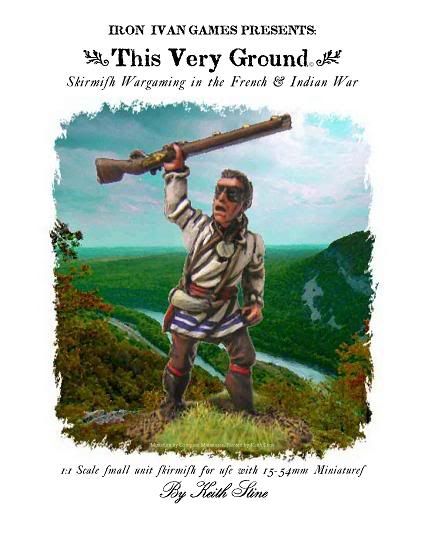
"This very ground", a French & Indian war skirmish game I bought a couple of years ago was really my first exposure to the D10 and ever since I have been hooked and find it superior to the awfully common D6. Just over the past year I have covered several games that use D10 completely or partially.

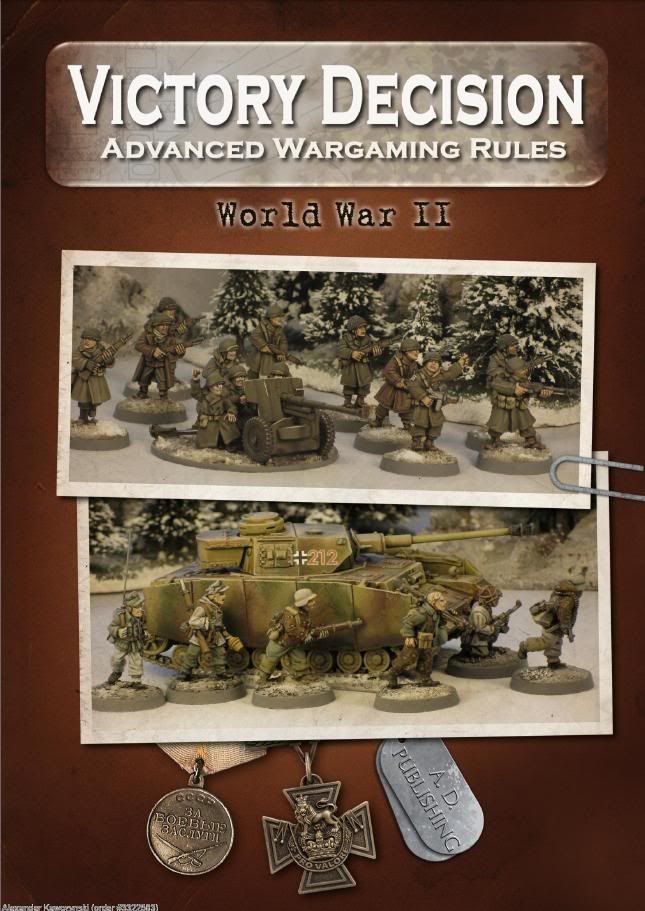
Beside "This very ground" we have "By Fire & Sword", "Brink of Battle" and most recently "Empire of the Dead". Another game that uses D10 albeit in a limited amount (but still) is "Victory Decision".

The interesting thing here is that "This very ground" is a "platoon" scale skirmish game, "Brink of Battle" and "Empire of the Dead" small scale skirmish, while "Victory Decision medium sized skirmish and "By Fire & Sword" roughly on a "company" scale. In short, the D10 has found its way from the smallest to the largest of games.

So what is so fantastic about D10?

In my opinion the D10 has the following advantages

1) 10 sides = 10% per side, making fine tuning of 100% easier and more accurate
2) More sides allow for a broader spread of results compared to D10
3) Modifiers often make their way "onto" the dice rather than adding it to the result on the "outside" which often happens on D6.

Many games which use D6 limit themselves in an artificial way, capping what you can achieve at "6" being the highest. Instead of adding modifiers and allowing an 7+ to hit you are either told "no it can't hit" or forced to reroll the result of 6 where a following 4+ would equal a "7+" result. It just becomes clunky.

D6 also reduces the spread of "skill" within the game. You simply won't have too large a gap between the "best" and the "worst" units. Often the best units will instead have some kind of extra rules to press home their elite rating. If 4+ to hit is the standard, having to roll a 6 may be the worst you can get, 16% chance on a D6. Rolling a single D6 it sure will appear difficult. But roll a slew of D6 dice and you will have a bunch of 6's.

Compare this to having 4+ on a D10 as the standard, and 9+ being the worst you can get. Rollin multiple 9+ results would theoretically spread out the success/failure ratio a lot more making it a lot more difficult to hit with such poor skill rating.

Perhaps what I think is the single most decisive area when using D10 in a game is really how you can fine tune the skill of characters/troops/units in unison with terrain features, range modifiers and additional effects that stack ontop of each other to either increase or decrease the difficulty to make an attack. A D6 is a lot more restricted, if 4+ is the standard "to hit" value then you only have 2 more results that you can fill with effects before you either reach the "cap" or have to go beyond the D6 by making it 7+ or something similar as mentioned earlier.

Equally apparent does it become if you want to tweak something on a D6 either in a positive or a negative way. You realize that you are very confined and the fine tuning will end up being a lot rougher than you may have wanted to achieve - becoming too rough. Hitting things on 3+ instead of 4+ becomes a lot better on a D6 than improving from 8+ to 7+ on a D10 .

Spread of results also makes things like critical success/failure's less common if you use D10 dice. Some games that use D6 offer a "critical hit" when you roll a natural 6, then re-roll it and have it land on another 6. 1/36th chance if you calculate the odds - if the game used D10 a similar procedure would become 1/100th chance of a critical hit. Of course this depends on the game design and how powerful you want your critical results to be. I would think that the less common critical result on a D10 would warrant a more powerful effect than on a D6.

All in all I find the D10, while still being regarded by some like "hipster dice" to be a bit more "precise" in generating desired results. If I designed a game and would want absolute control and results divided equally in percentages to tweak things just a little I would go for the D10. It would also offer more space to apply modifiers to the roll.

I still own more games that use the more popular D6, and don't hate those games for using it. It just often feels like games decide upon D6 dice because "they are more readily available". As if that would be a problem. If you take a plunge into wargaming buying some new dice would probably end up being your smallest expense. As such it is interesting to see the wave of D10 among newer rulesets.

I have previously written about various dice and my fascination of "alternative dice", there were some very interesting stuff in the comments so I'm linking to that post HERE


If you have any interesting gaming experience involving D6/D10 dice or have a set of rules using D6/D10 dice in a unusual/different way then please let me know in the comments below. I'm always interested in new/different stuff  :-)