Showing posts with label #DS13. Show all posts

Thursday, June 13, 2013

Koi Pond & Early Thoughts on Publishing Card Games through Print-On-Demand

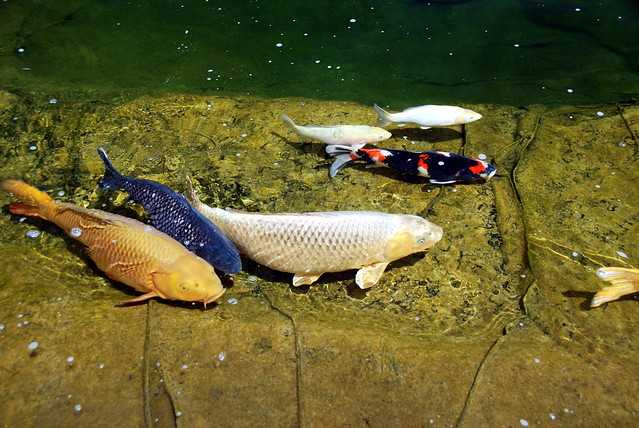
Koi Fish 06

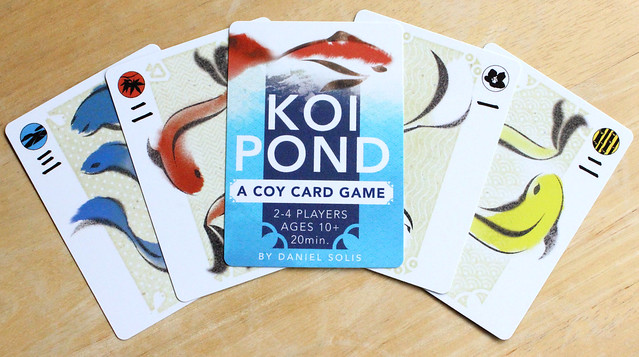
It’s been about six months since I started this whole full-time game designer thing, with Koi Pond being in many ways the flagship project for this experiment. Koi Pond was designed, developed, and published all in the past half-year, thanks to the coincidental occurrence of several factors. Here’s how it all came to pass and my thoughts on where it might go in the future. This is a long post, so here are the takeaways right up front:

  •     I worked fast, playtesting and revising rapidly.
  •     I could make my own art, which greatly reduced initial expenses.
  •     I still hired an editor and got lots of outside readers to review text.
  •     Because I worked so minimally, even modest sales put me in the black.
  •     I’m re-investing those earnings to future products.
  •     POD (unpackaged) cards are still a new model, with a small audience.
  •     The market may grow if POD games get reviewed alongside bigger products.

For another POV, Dave Chalker posted his own thoughts on publishing his game Criminals through DriveThruCards here.


Background

Late last year I decided to resign from the ad agency. I’d worked my way through the creative department and was on the cusp of becoming creative director. It was a sweet gig for a long time, but having that full-time job and doing freelance and doing game design and, oh yeah, maintaining a healthy mental well-being was untenable. I made some drastic changes in my lifestyle, culminating in that resignation.

So, 2013 began with a bit of confusion about what to do next. It just so happened that the Boardroomers were holding a microgame design contest in February. The entries had to contain at least 1 of each of the following components, but no more than is allowed:

  •     Poker Cards  (20 cards at the most, you must use the poker faces)
  •     Cubes  (10 cubes at the most)
  •     Rules  (These must be written out with examples when necessary)

I was having a bit of success with Suspense, so I thought I’d try my hand at another micro.


Searching for a Theme

I designed Love Me Not, as a very, VERY abstract thought-experiment in endgame scoring. I wanted to figure out a scoring method that required you to sort resources between two places, only the lower of the two totals allowing you to score. The game itself was too limited for its form factor and rightfully didn’t win the contest. It did let me explore this notion further.

When I reach points like this in a design cycle, I look for a good meaty theme that will perhaps suggest further secondary mechanics or make the central mechanics feel more meaningful. So, I searched for a theme in which it made sense for players to sort things into different places, but only attain value for those things if instances of those things were present in all relevant locations.

In other words, it felt like being a museum curator. Players would collect precious items and decide to put them out on public display (face-up cards) or keep them in the private archives (face-down cards). Examples of those items needed to be in both the display and archives to be valuable. I explored this idea a bit further, but I was really concerned that Reiner Knizia’s Modern Art was such a prominent game with this theme that I couldn’t escape comparison.


Coy Koi

I looked further afield, examining what it felt like to play with this mechanic. Sometimes this can result in a simple title that in itself provides enough of a theme for the game to make sense. See “Can’t Stop!” as a classic example. When you play Can’t Stop, you really do feel like you can’t stop rolling those blasted dice.

When you play with this scoring mechanic, you feel like you’re keeping a secret. You feel like you’re being coy. Thus, I was tempted to leave the game at that, simply calling it Coy. But I couldn’t resist a pun, so I thought it would be clever to have koi fish on these cards. No real theme aside from that, just fish as a placeholder for a more traditional set of poker suits.

But of course, the idea of a “Coy Pond” or “Coy Koi” or just plain old “Koi Pond” was irresistible. That theme introduced lots of secondary mechanics to explore. What about pests in the pond? What about visitors? What if it’s a competition between koi pond hobbyists?

I developed the idea over the next couple of months at my local game store, UnPub, and PAX East. I got a LOT of help from outside playtesters, which was really invaluable. This is a shorter timeline than my usual development cycle, but I was actually able to fit in more playtests than usual. Actual chronological time didn’t matter so much as actually getting the game to as many table as often as possible.


DriveThruCards

Backing up a bit, throughout 2012 there was talk of DriveThruRPG branching out to print-on-demand card games in 2013. I thought this would be a great opportunity for me during this year-long experiment to try some low-risk projects. Most of the time, as you’ve seen with Belle of the Ball, even a small card game spends years in development and takes just as long to finally be published.

With DriveThruCards, I saw a sales option that could keep pace with my creative output, as long as I devoted strong enough attention to the quality of the product on sale. Originally I was going to publish Suspense with DTC. The art direction was simple and could be done in-house. The rules were easy enough to explain in a short PDF. Plus, the only actual game components were cards themselves.

A happy snag got in the way though. I was fortunate enough that Dice Hate Me decided to pick up the license as a part of the Belle of the Ball family of games, but that left me hunting for another potential product for DTC. The newly christened Koi Pond fit the bill.

Just like with Suspense, I can product the art myself. The rules were relatively simple (though a bit longer than Suspense). The cards were really the only play component (though there were quite a few more than Suspense). Plus, it was a pretty game that I hoped DTC would find valuable as a sales tool for their new POD services, thus driving more in-house sales.


Calling in the Editor

However, I used to have a bad habit of making an otherwise unfinished game look like it’s finished with some pretty graphics. I’ve avoided that pitfall over the past few years and become a better game designer for it. Still I knew I needed help to make sure this was a solid first outing and I was willing to pay for it.

Specifically, I hunted around for an editor for my rules sheet. I’m happy to say that Liz Bauman came to my rescue here. In short order, she found a lot of vagaries that needed clarification and game terms that needed more consistent application. Hire Liz a lot!

I’ve often said that no rules are too short for someone to get them wrong. Hiring an editor (and also getting lots of outside playtesters to read the rules) made the text a lot more clear. Examples of play helped, too. As a matter of fact, I’m still updating the rules sheet after further feedback from early buyers.


Prepping and Publication

With that done, I was ready to actually go live with this thing. Sending files to print is rarely a completely smooth operation. Each printer is basically its own country, with its own customs to learn as you go.

For example, one important thing to note is that the POD printers DriveThruCards hires has a 240% ink threshold limit. My cards were so colorful that their inks were in the 300 range. I needed to tone them down a bit so they’d actually produce properly. It was mainly little things like that.

Otherwise, the file setup was actually easier than with other POD printers I’ve used in the past. SuperiorPOD requires you to set up your own 18-up card sheets. Game Crafter requires you to upload each card face and back individually. DriveThruCards simply requires a multi-page PDF with alternating faces and backs for each card. The latter option is much more amenable to InDesign’s DataMerge tool.

  1. I’d lay out the cards with placeholders for variable data like rank, suit, and art, all pulled from a corresponding spreadsheet.
  2. Once done, I’d export an InDesign file through DataMerge, producing a multi-page document, with one card per page.
  3. From that, I’d export flattened images (with bleed) into a special “Renders” folder. Typically these were JPEGs since they retained the best color.
  4. Then I did a Photoshop batch action that reduced all the ink thresholds in each image file to those designated by DriveThruCards’ specs.
  5. Then I made a brand new spreadsheet. The first cell had the file name for the first card’s face. The second cell had the file name for the first card’s back. Thus, I continued alternating the file names of a card face with the file name of the card back
  6. In a brand new InDesign file, I’d link this spreadsheet with DataMerge.
  7. Again, I’d use DataMerge to export a multi-page document
  8. Finally, that multi-page document could be exported to a PDF suitable for printing.

Phew!

It’s important here to thank Brian Petkash who very patiently talked me through that file setup process and is still diligently answering my pesky questions about how to actually get the file up for sale.


Sales

Unfortunately, I missed DriveThruCards’ “soft launch” period of February through March. I understand sales were slow during this period in general, so perhaps it’s for the best. I had Koi Pond ready that April just in time for their big public debut. Here’s how the numbers break down:

4-2013
31 Sold
$288.72 Retail
$69.80 Royalties Earned*

5-2013
28 Sold
$399.19 Retail
$100.83 Royalties Earned

Grand Totals To Date
59 Sold
$687.91 Retail
$170.63 Royalties Earned

* The first month’s royalties were a bit low because I ordered review copies and expensed the cost to that month’s payout.

Koi Pond launched at the top of the hot list and stayed their for the first week. I kept up the marketing efforts through my blog, my Twitter feed and my G+ accounts. I also got a lot of help from people RTing my links.


Conclusion

Maybe I’m just too indie at heart, but I’m very happy with these numbers. I went into this experiment with a brand new game, an inordinately fast dev cycle, modest potential audience, and zero-to-minimal expenses. My investment of time and capital into this project has been quite met, I think. Anything more will contribute to further self-published card games.

Having the experience of Kickstarting three projects already, DriveThruCards offers me an appealing alternative. Yes, I have fewer sales over a longer period of time, but I also don’t have the stress of stretch goals, income taxes, and fulfillment hassles occupying my time for the next year. Instead, I can keep blowing on this little ember until it lights another fire.

Towards that end, I hope to keep up interest in Koi Pond with reviews and podcast interviews as I develop an expansion for the game, Moon Village. I’ve also already invested some of my earnings into the art for 9 Lives Card Game, currently in public beta. My game still a small fish in a very, very large ocean, but they’re growing!

Sunday, December 30, 2012

2012: A Year in the Game Design Lab

Stone Age dice & meeplesOver the past year, I've posted numerous game ideas in various stages, but all have been considered "in the lab" because they're really not ready for prime time. I just wanted to share my thoughts a bit. Next year I'm ready to actually see some of these ideas come to fruition. Here's a pretty comprehensive list of ideas posted to this blog in 2012.


Games to Prototype and Test
These are games which are to the point where I could make a prototype and actually test at some point.
  • Dung and Dragons/Dragon Ranch has been a long-simmering theme: Hippie co-op farmers raising dragons for their valuable poop. I finally cracked a cool mechanic for this idea, it just needs to get tested and refined. I'm really excited about how these simultaneous actions could interact with each other in unpredictable ways.
  • Wine Collector: This was an experiment in deduction game design. Not sure how well it's actually going to work in practice, but I definitely like the notion of averages being on one side of a card with a single number on the face.
  • Haunted House continued that notion, replacing numbers with shapes. This was inspired by a particular sequence in the latest Mario Party games in which you must repeatedly decide between three doors, only one of which leads to safety.
  • Exodus: Earth wants to be a "worker removal" game, where effects are triggered by removing a meeple off of a space. The eventual goal is to remove all of your meeples from the board before a meteor hits Earth. I just need to figure out the basic mechanics of the thing first.
  • Sidekick Quests: The Card Game came into being when my wife and I visited Lyndsay Peters in Canada. We hacked together elements of Waterdeep, No Thanks and some other stuff to make this hodgepodge of different mechanics. This was eventually streamlined to a much simpler push-your-luck card game that you should see available for beta soon.
  • Pop n' Locke's Last Heist was released as a playtest PDF to Writer's Dice backers early this year, but never saw much testing or discussion. Thankfully Tom Cadorette had a good playtest of it in August. I need to hit the document again to see where things should be tweaked and finally release things thing to the wider public.
  • Proxima-3/3io was ostensibly a board game adaptation of Triple Town. I need to test this set and see how the game feels to play as a multiplayer experience rather than a single-player puzzle.
  • Picker began with some exploration of Libertalia's blind auction mechanics. I still need to figure out how to solve the inherent negative spiral of choices that players have available to them. As it stands, there is still a "correct" choice in every turn. That's not bad, it's just a problem when there is one optimal choice rather than several.
  • Step Right Up is a game about snake oil salesmen hawking their wares on a crowded boardwalk. They sell goods to hire different kinds of goons to do their dirty business. The mechanics feel sound, they just need testing. The theme is unfortunately getting kind of crowded lately, though.
  • Seven Minutes of Terror was inspired by the Mars Curiosity landing and its absurdly complicated landing sequence. I think with some thematic cards and stronger endgame goals, this could be a nice light 10min game.
  • Dead Weight: Parkour vs. Zombies finally got a board game execution this year. It needs testing, but I'm glad I finally put that baby out in the world.
  • The following Thanksgiving, I posted Black Friday, a racing game that was also an auction game. Your position on the race track gave you best pick of items in your space, but you also had to bring back your items to the finish line in order to have the best score without penalties.


Themes in Search of Mechanics
These are game ideas that have a strong theme, but still need mechanical refinement.
  • Swap Clops the Tile Game and Swap Clops the Card Game: I'm really itching to use this fun art that Kari Fry made for me in January. Who doesn't love floating, surly one-eyed monsters? I still think the Clops have potential as a long-term IP.
  • Rulers: This Hunger-Games-meets-Mage idea was one of the rare story games from me over the past few months. This neverseemed to hook folks much, but then again I was lax in my development efforts, too. I'm going to see what I can do to put these out in a more digestible form soon.
  • Towers of Battle was a weird letter tile and area control game idea I posted on February. In hindsight, I must have read about apps like Letterpress and Puzzlejuice when I came up with this thing.
  • Vulture Capitalist/Bird Brands was inspired by No Thanks, Amun-Re, and Empryean, Inc.  I still occasionally get some mechanical ideas that could fit in this silly theme.
  • Dr. Remedy Grove: I had thoughts about this as a game franchise, each entry focusing on ecological themes and components made from sustainable materials. Kind of a Carmen San Diego for ecology.
  • Monks of St. Honorat honor their vow of charity in an interesting way: They earn lots and lots of money from their world-famous wine, then donate it all to their various charities. "Earn more to give more" is an interesting take on Brewster's Millions.
  • Where is the Poison? is inspired by the poison scene in Princess Bride. These mechanics seem good enough, but they could be much more streamlined. I imagine that this could be even as minimal as Seiji Kenai's Love Letter, but it just needs some more attention.
  • The Everywheres was a dimension-hopping game based on the CC-licensed superhero Jenny Everywhere. I really want to explore this game further with a mashup of Split Decision, Talk Find Make, and Thanks and Complaints (below).
  • Thanks and Complaints as a replacement for the typical success/failure binary in role-playing games. It brought to mind much different reactions to typical adventure game violence.
  • This City-Building Tile game is has a reasonable theme already, but I think some more thematic tiles would do wonders to make the game more strategic, too.
  • Asteroid Mining is a pretty cool idea to me and I think I'm close to a good mechanic here. I need to decide what it is you do with the materials you're mining, though. May also need a smaller asteroid belt/card deck.


Mechanics in Search of a Theme
This is by far the biggest category in the lab. These are mechanics that as yet haven't found a good theme with which to be paired.
  • Dice Pool Action-Selection Mechanic: This was posted right after I played Yspahan and saw its very clever dice mechanic in action. I wanted to capture something similar as an action selection device.
  • Dice-matching resource management: I must have been on a dice kick last spring, because here's another dice pool based resource acquisition mechanic. No idea where this one will go, but at the time I imagined it as a game based on Maslow's Hierarchy.
  • Dice Puzzle was eventually cracked by my mathematically inclined friends, but it was a cute diversion. I may revisit the basic interaction again at some point. 
  • 3-2-1 had you roll three dice, keep two results, then give one result to the next player. It brought to mind a lot of co-op potential. Will tinker with this eventually.
  • Legacying was a popular subject last year. I even wrote three best practices for how to do it well, which got noticed by designer Rob Daviau. I look forward to seeing how others use the Risk: Legacy mechanics to design brand new games.
  • Secret Action Selection + Public Negotiation was one of the many mechanics I explored for Dung & Dragons last year. It turned out to have a critical hurdle: If you're co-operating, why keep action selection secret? I never revisited this idea long enough to answer that question, but I should.
  • Player-Controlled Resource Values struck my fancy as I explored stock market themes. In this case, buying and selling a commodity raised or lowered its value on an abstract tracker. The price you pay now influenced the price you'd pay later.
  • Memory + Action Selection was another one of those mashup ideas that never got explored too deeply. It may still have something worthwhile as a kids' game with some additional strategy for adults. Basically, if you found two matching tiles, you could do the action noted on those tiles. Thus, you're not just memorizing placement, but pursuing specific tactics.
  • Multi-Memory: I also explored multi-dimensional memory mechanics in this abstract card game, but it might be too dry a brain burner for the MENSA Select judges.
  • Vases, Crates and Barrels broke down the rarity and distribution of the Yspahan game board into a single deck of cards. I still need to suss out how best to use this information, but it's powerful mojo.
  • Then there was this Yspahan+Knizia+Cosmic Encounter mashup where you negotiated trades for certain goods with the other players. Ultra minimal, but with emergent behavior. (At least, that's the hope.)
  • Chibi Sweeper was a tabletop mashup of Minesweeper and Chibi Robo. Not sure where this one is really going, but once again, I like the idea of knowing half-information, then deciding whether to commit to the second half.
  • Recycling Decks is basically a typical deckbuilder, except your discarded cards go to your opponent. It really needed a strong theme to make that make sense, though.
  • Make Me an Offer was the first in a series of little ideas where I tried to take the basic interaction of games like Apples 2 Apples and Cards Against Humanity into the realm of a Euro board games. Not sure how successful it is without a better theme though. In hindsight, this might be a strong game with a deck of Sushi Go cards. Which led to...
  • A Co-Op/Competitive trading game that could theoretically work as a system for For The Fleet. It just needs more redshirts.
  • I had a handful of trick-taking mechanics this year, but this was the most polished. It just needs a good theme to justify and explain the mechanics.
  • And finally, this worker-placement spillover mechanic was an interesting idea that sparked a lot of discussion for themes. Scientific progress perhaps?
Phew! 2012 was a prolific year for half-assed ideas. That's being generous, most of these are quarter-assed at best. Goal for next year? Add the rest of the ass. Yes.

    Friday, December 28, 2012

    Ch-Ch-Changes

    Hannah Lee Stockdale (@HannahClover)
    Hello, all!

    I don't usually share personal news on this channel, but I think this will be relevant to your interests.

    Effective December 31, 2012, I am resigning from my position as Associate Creative Director and Digital Director at Third Degree. I started as an intern in 2004 and I've learned so much about being a creative in the fast-paced ad business, especially serving credit unions. It's been an enriching experience with more talented people than I can count.

    During those years, I was "art director by day, game designer by night," without either job interfering with the other. On the contrary, working for an agency gave me the security to pursue a game design hobby, while the hobby's community gave me experience in social media that I could bring back to the agency. There was synergy, as ad people on TV like to say.

    Unfortunately, that dual-career lifestyle eventually started wearing on my mind and body. Signs of burnout were evident to all... except to me until recently. If I was going to be the person I really wanted to be in the next nine years, I had to make some big changes.

    My wife and I discussed whether we could afford me spending a year trying to make this game design thing actually happen. If I cut down expenses, keep up freelance work, and budget well, we actually could afford to spend a year on me trying to go pro. So that's what I'm doing in 2013.

    To my freelance clients, I thank you for your putting up with me as I made this transition over the past month. You'll be seeing faster turnaround from me starting next week.

    To fans of my design stuff, you'll be able to see a lot more of my handiwork next year as I take on more freelance jobs in the general geek industry. Look for more RPG layout, logo design, card design, and iconography.

    To fans of my game stuff, I hope I can get your support as I refine the numerous ideas I've posted on this blog. The actual business of selling games to publishers, gamers and backers is an adventure all its own. Thanks for coming along with me. You won't be disappointed!

    Follow my #DS13 hashtag on Twitter to as I discuss this new experiment further. I'll return you to your regularly scheduled programming next week! Thanks for your time!

    -- Daniel

    P.S. The portrait above is by Hannah Lee Stockdale. You should hire her a lot.